
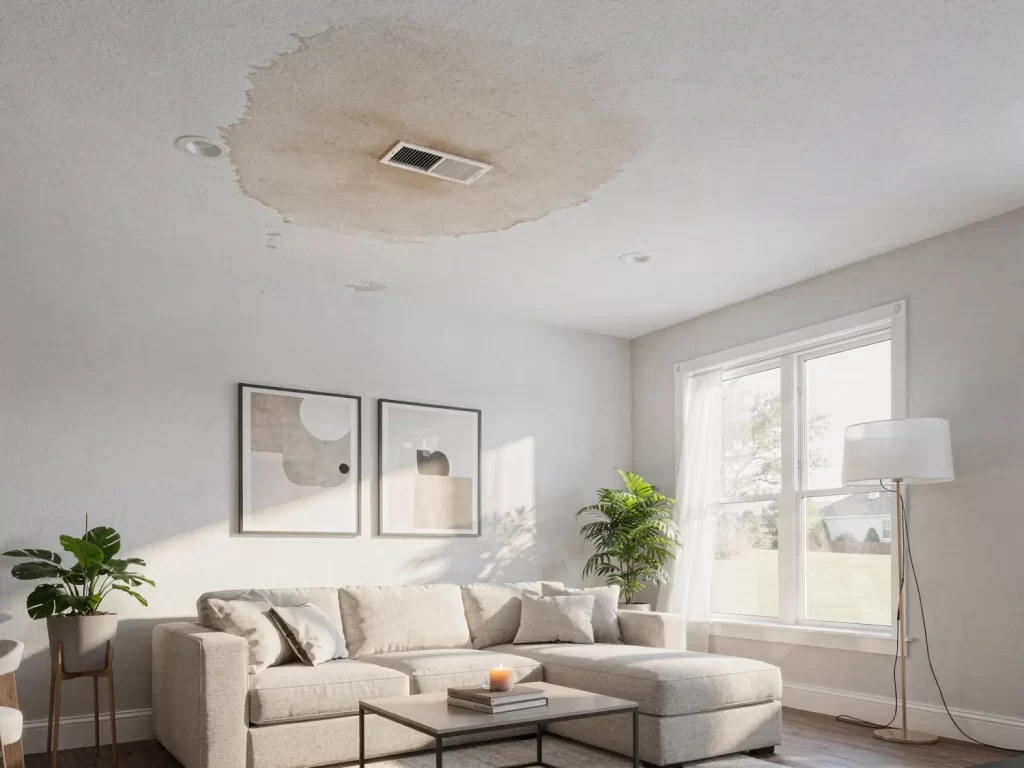
Most people don’t think about their roof until it starts acting dramatic. And by dramatic, I mean water stain on the ceiling, damp attic smell, or that fun little panic moment during the first real rain.
The trouble is, roofs usually don’t go from “totally fine” to “surprise leak” overnight. They drop hints first. Sometimes subtle ones. Sometimes not-so-subtle ones. But if you catch them early, you can often fix the issue before it becomes a bigger, messier, more expensive problem.
That’s the whole point of knowing the signs your roof needs repair before water starts showing up inside your house like it pays rent.
For Bay Area homeowners, this matters even more than people think. Our roofs deal with a weird mix of coastal moisture, warm inland sun, wind, debris, and the kind of seasonal rain that makes every small weakness suddenly very obvious. A roof can look mostly okay from the ground and still be quietly asking for help.
In this guide, we’ll walk through seven warning signs that usually show up before a leak begins, how to tell whether you’re looking at a repair or something bigger, and what to do next without spiraling into full home-maintenance doom mode.
Why Waiting for a Leak Is Usually the Expensive Way to Learn
A lot of homeowners assume no leak means no problem. Fair enough. It sounds logical. But roofs are sneaky that way.
Water doesn’t always come straight through the second damage starts. It can work its way under shingles, around flashing, into underlayment, or along roof decking before it ever shows up inside. By the time you notice a ceiling stain, the roof may have been dealing with moisture for weeks or months.
That’s why small roof issues tend to be so expensive when they’re ignored. What starts as a few damaged shingles or a lifted flashing detail can eventually turn into rot, mold, insulation damage, drywall repairs, and a much larger roofing bill. Not ideal.
Bay Area homes are especially good at hiding roof problems. Mild stretches of weather can create a false sense of security. A roof may survive several sunny weeks just fine, then suddenly fail when wind-driven rain hits the exact weak spot it’s been protecting you from noticing.
At General Roofing, this is one of the most common patterns we see. Homeowners are often trying to be sensible, not careless. They spot something small, decide to keep an eye on it, and then life happens. A few months later, that “small thing” has developed a much bigger opinion.
The good news is that most roofs do give you warnings first. You just need to know what to look for.
Signs your roof needs repair: the early warnings most homeowners miss
1. Cracked, curled, or missing shingles are showing up
This is one of the most obvious signs, but it still gets brushed off all the time.
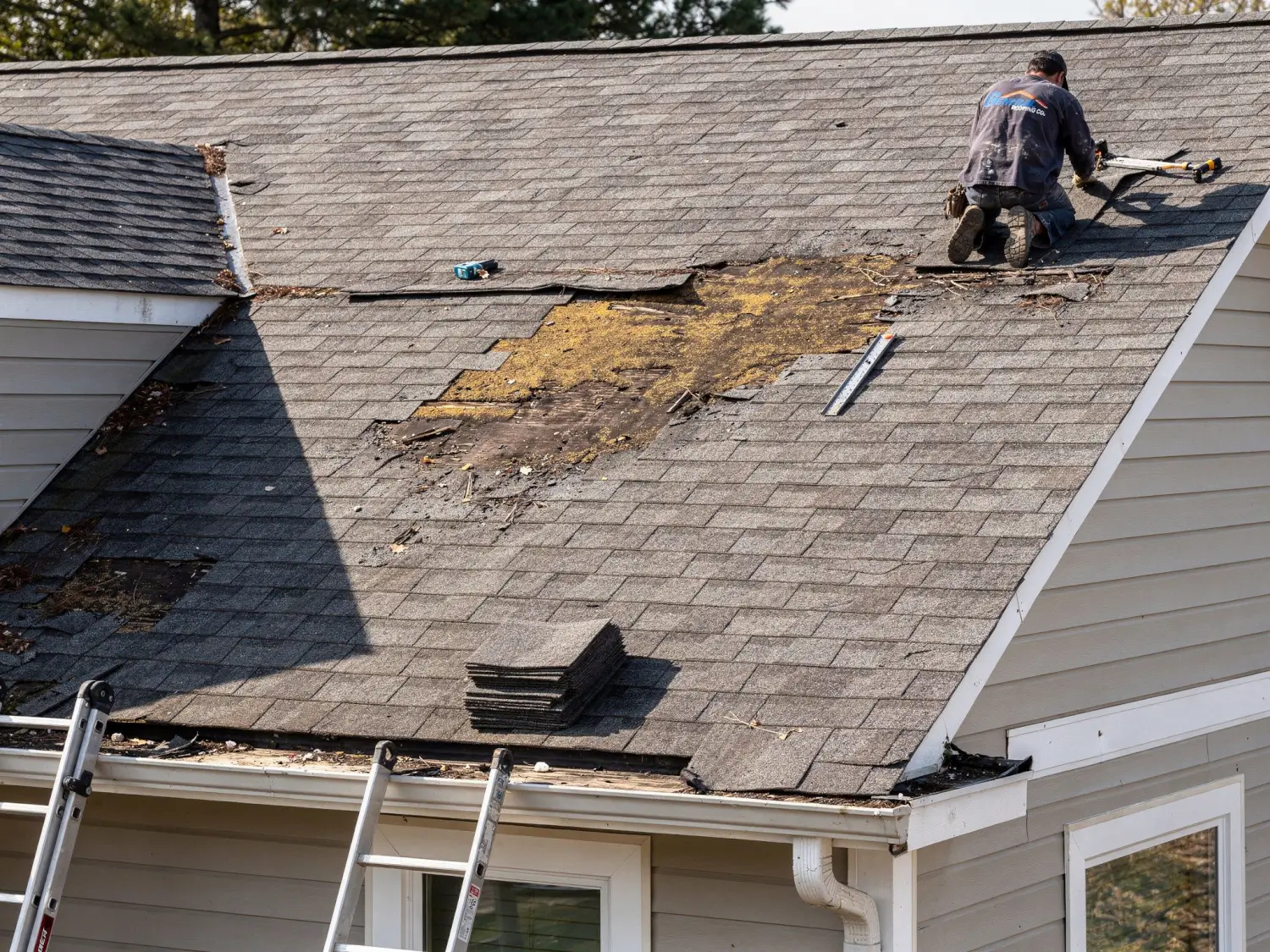
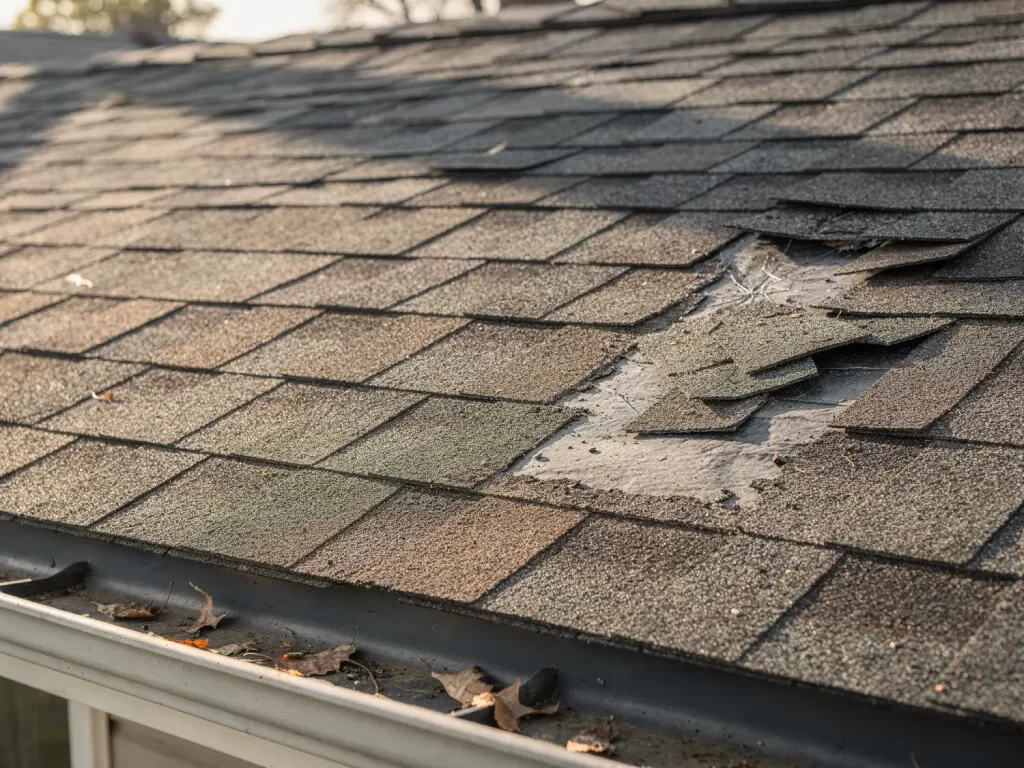
If your shingles are cracked, curling at the edges, losing their flat shape, or missing altogether, your roof is already more vulnerable than it should be. Shingles are your first line of defense. When they start failing, the layers underneath get exposed to moisture, UV damage, and wind.
Curling can happen from age, heat, poor attic ventilation, or normal wear over time. Cracking often points to weathering or brittleness. Missing shingles are a little more straightforward: your roof had a protective layer there, and now it does not.
The important part is that damaged shingles rarely stay an isolated issue for long. Once one section starts failing, nearby shingles often aren’t far behind.
What damaged shingles usually mean for the layers underneath
People tend to focus on the visible shingle because that’s what they can see from the yard. But the bigger concern is what’s happening underneath. If water starts sneaking past the outer layer, it can affect underlayment, decking, fasteners, and nearby roof penetrations.
A few damaged shingles might mean a simple repair. A larger patch of them, especially on an older roof, could mean the material is nearing the end of its usable life.
Either way, if you can clearly see shingle damage from the ground, it’s worth getting checked before the next storm decides to test your luck.
2. Flashing around chimneys, vents, or skylights looks loose
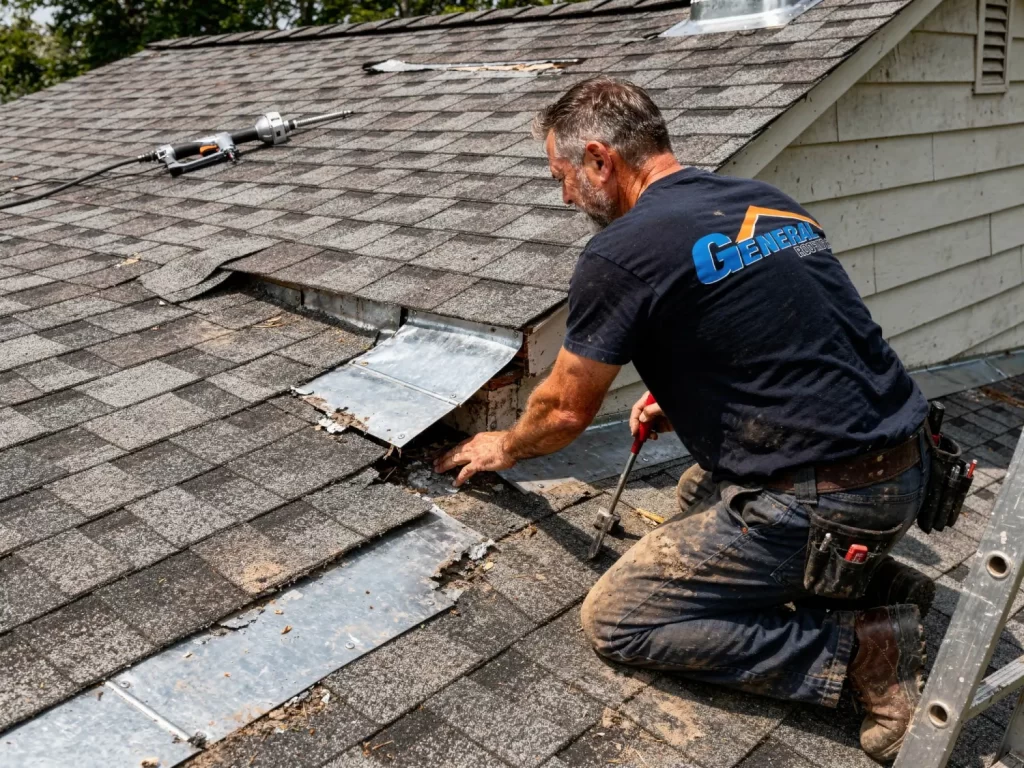
Flashing doesn’t get much attention, which is kind of funny because it does a lot of the difficult work.
Flashing is the metal material installed around chimneys, vents, skylights, valleys, and roof edges to direct water away from vulnerable areas. When it lifts, rusts, separates, or was installed poorly to begin with, water gets an easy entry point.
This is one of those problems that can exist even when the shingles themselves still look decent. A roof can appear fine in the big picture but fail around the details.
If you notice bent metal, gaps, lifted edges, exposed sealant that looks dried out, or staining near roof penetrations, flashing could be the issue.
Why these metal details matter more than people expect
Most roof leaks don’t start in the middle of a perfect field of shingles. They start at transitions, seams, penetrations, and edges. In other words, the places where roofing gets a little more technical.
That’s why a flashing issue isn’t a minor cosmetic thing. It’s often the exact weak point where water begins working its way in.
If your roof has skylights, plumbing vents, wall intersections, or a chimney, those areas deserve extra attention. They’re common trouble spots, especially on older roofs or roofs with repeated patchwork.
3. Your gutters are collecting shingle granules
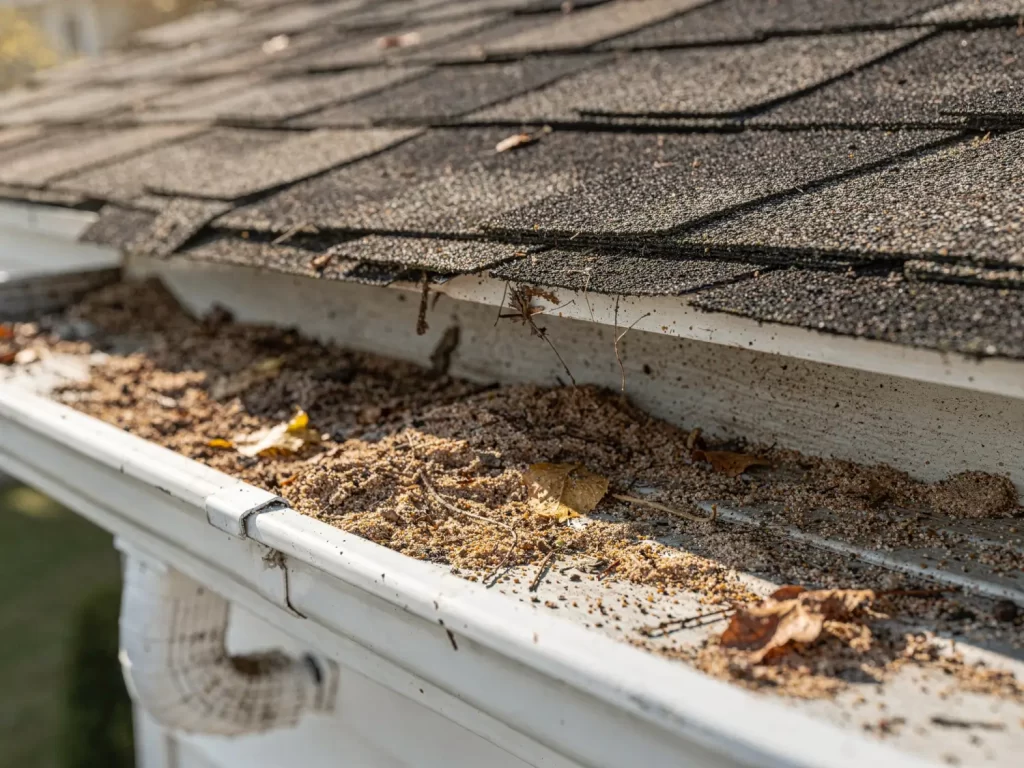
Take a look inside your gutters or at the bottom of your downspouts. If you’re seeing lots of sand-like granules, your asphalt shingles may be wearing down.
Those granules are there for a reason. They help protect shingles from UV damage and weather exposure. As shingles age, they lose more of that protective surface. A little granule loss over time is normal. A lot of it is not.
If you’re finding noticeable granule buildup, especially along with bald-looking spots on the shingles themselves, your roof may be aging out of the “small maintenance issue” zone and into the “let’s talk honestly about its condition” zone.
How to tell normal wear from a roof that’s running out of time
A newer roof shedding a tiny amount of excess granules isn’t unusual. But an older roof dropping a lot of them is a different story.
Here’s the rough rule: if your shingles look patchy, thin, or shiny in odd spots, and the gutters are full of granules, the roof is losing its ability to protect itself well. That doesn’t always mean full replacement tomorrow, but it does mean the material is declining.
It’s one of the quieter signs your roof needs repair, because from the street everything may still look reasonably normal. Up close, though, the wear tells a different story.
4. Dark streaks, moss, or damp-looking patches keep returning
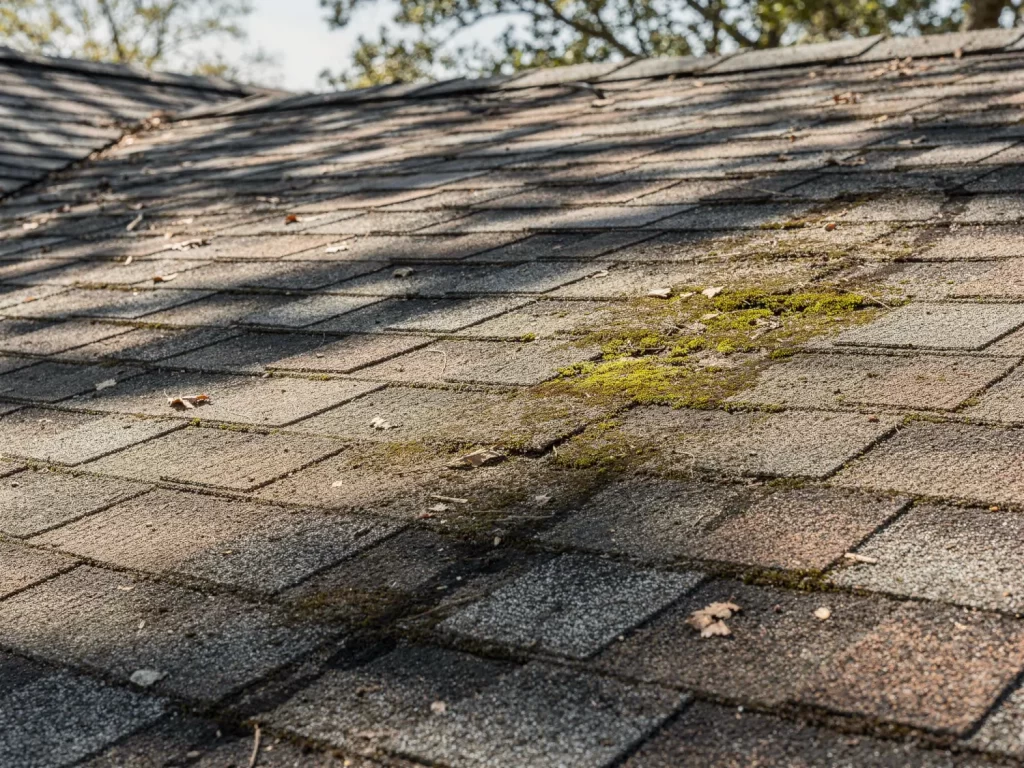
Not every dark patch on a roof means disaster. But some of them are clues you shouldn’t ignore.
Dark streaks can sometimes be algae staining. Moss can hold moisture against the roof surface. Damp-looking areas that keep reappearing may point to trapped moisture, poor drainage, shaded sections that stay wet too long, or failing materials.
The reason this matters is simple: roofs are supposed to shed water and dry out. When part of the roof stays damp too long, materials wear faster. Moisture can also work its way into tiny cracks or openings and gradually make things worse.
In the Bay Area, this comes up a lot because certain neighborhoods and roof exposures stay cooler and damper than others. Shady areas, coastal moisture, and debris buildup can all speed things along.
When surface staining is more than a cosmetic issue
A little discoloration may just affect appearance. Repeated staining, moss growth, or damp patches usually point to a condition worth investigating.
It could mean debris is trapping moisture. It could mean the roof isn’t draining properly. It could mean the shingles or underlayment have started to degrade in one area.
The key is repetition. If it keeps coming back after cleaning, or it seems concentrated in one section, there’s usually a reason.
This is one of those places where a quick inspection can save you from guessing. And guessing, while very human, is not a great roofing strategy.
5. The roofline looks uneven, soft, or slightly sagging
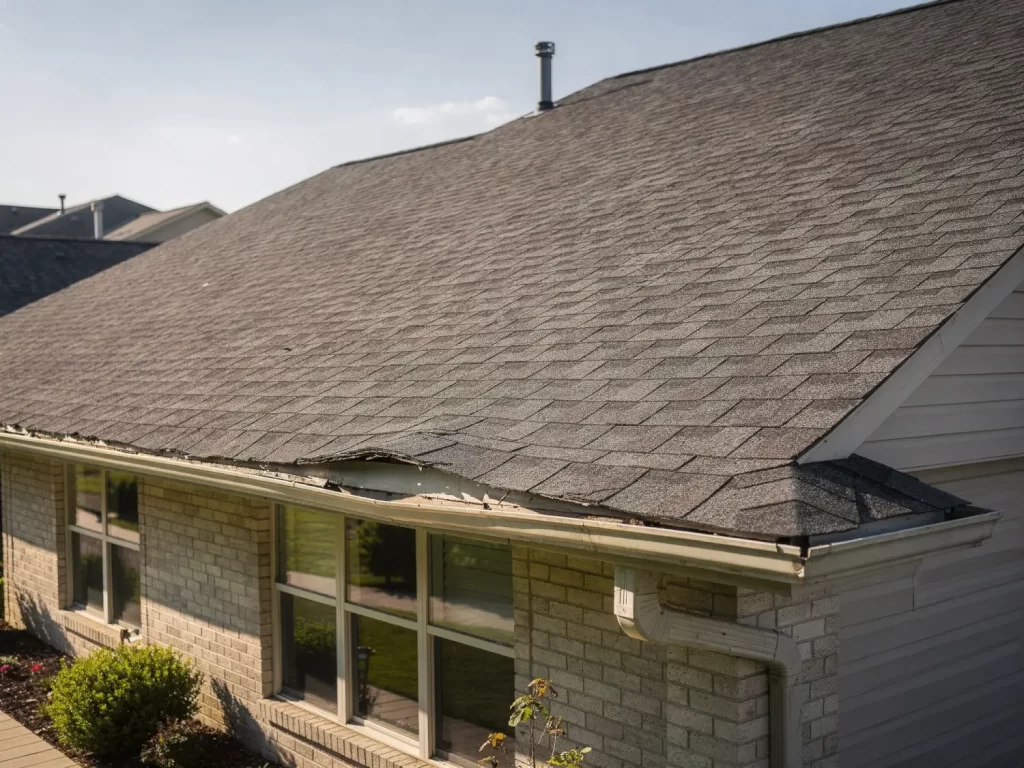
If your roofline doesn’t look straight anymore, that’s not a charming character detail. That’s a red flag.
A sagging or uneven roofline can point to trapped moisture, weakened decking, structural stress, or long-term deterioration beneath the surface. Even a subtle dip deserves attention.
Sometimes homeowners first notice this from the curb. Other times it shows up in photos and suddenly becomes impossible to unsee. Once you see it, though, it’s worth taking seriously.
Why this is never a “maybe later” kind of problem
Some roofing issues can wait a little while for scheduling. A sagging roof section is not one of them.
When the roof structure starts looking soft or uneven, the concern is no longer just exterior material. You may be dealing with compromised decking or framing-related stress. That moves the conversation from routine maintenance to protecting the structure of the home itself.
No need to panic. But definitely no need to ignore it either.
If the roofline looks off, get it inspected sooner rather than later. That kind of problem tends to become more expensive, not less, with time.
6. Your energy bills are creeping up for no obvious reason
This one surprises people.
A roof issue doesn’t always announce itself with visible damage. Sometimes it shows up as comfort problems inside the house. If rooms feel hotter than usual, your attic seems stuffy, or your heating and cooling bills are climbing without an obvious reason, the roof system may be part of the issue.
A roofing system isn’t just shingles. It also includes ventilation, airflow, and the way the structure handles heat and moisture. When ventilation is off or damage affects how the system performs, indoor comfort can suffer.
What ventilation and hidden roof damage have to do with comfort
Poor ventilation can trap heat and moisture in the attic. Over time, that can shorten roof life, stress materials, and make your HVAC system work harder.
Sometimes the issue is failing vents. Sometimes it’s damaged sections allowing heat buildup or moisture retention. Sometimes it’s a roof that has been patched repeatedly without really addressing how the system is functioning as a whole.
You don’t need to treat every high power bill like a roofing emergency, of course. But if rising energy use shows up alongside other roof warning signs, it’s worth connecting the dots.
Homeowners often think of roofing and comfort as separate topics. In practice, they’re more connected than they seem.
Poor ventilation can trap heat and moisture in the attic, which can shorten roof life and increase energy costs. The U.S. Department of Energy explains how proper ventilation helps regulate attic temperature and moisture levels.
7. You keep patching the same spot again and again
This is the sign that quietly tells you the roof wants a more honest conversation.
If you’ve repaired the same area more than once, or if one section seems to develop recurring issues, the problem may be bigger than the latest patch. Repeated repairs can absolutely make sense in the right situation, especially on a roof with good life left in it. But when the same trouble spot keeps coming back, it usually means one of two things: the underlying issue wasn’t solved, or surrounding materials are failing too.
When repeat repairs are a sign the roof wants a bigger conversation
A repair should buy stability, not just time until the next headache.
If you find yourself saying, “Didn’t we already fix that?” the roof may be telling you something pretty clearly. This doesn’t automatically mean replacement. It does mean it’s time to evaluate the bigger picture instead of treating each symptom one at a time.
At General Roofing, we often help homeowners sort through exactly this kind of situation. Sometimes the right answer is a targeted repair. Sometimes it’s smarter to stop spending money on repeat patches and plan for a more lasting solution. The goal is to figure out what actually makes financial sense.
Repair or Replace? How to Tell Which One Actually Makes Sense
This is usually the real question hiding underneath all the others.
If your roof is showing warning signs, do you repair it and move on, or are you better off planning for replacement?
The answer depends on a few things:
- The age of the roof
- The type of material
- How widespread the damage is
- Whether the problem is isolated or recurring
- The condition of the layers underneath
- Your future plans for the home
A relatively newer roof with one localized issue may be a great repair candidate. An older roof with multiple symptoms showing up at once usually deserves a broader conversation.
Roof age, material type, and repair history all matter
A 7-year-old roof and a 27-year-old roof do not get judged the same way. That may sound obvious, but it’s where a lot of homeowners get stuck.
If the roof is older and you’re seeing several of the signs above, the issue may not be the one damaged spot you can see. It may be that the roofing system as a whole is wearing out.
Material matters too. Asphalt shingles, tile, and other systems age differently and show wear in different ways. Repair history matters just as much. If a roof has already had several patch jobs, those repairs may be telling the story of an aging system, not a string of unrelated bad luck.
Why an inspection before rainy season can save serious hassle
There’s never a bad time to understand your roof’s condition, but before rainy season is especially smart.
It’s easier to schedule work before everyone suddenly remembers they have a roof at the same time. It also gives you a chance to fix smaller problems before they get tested by wind and water.
Even if the outcome is “good news, nothing urgent,” that’s still useful information. Peace of mind is underrated, especially when the forecast starts looking dramatic.
What Bay Area Homeowners Should Do Next
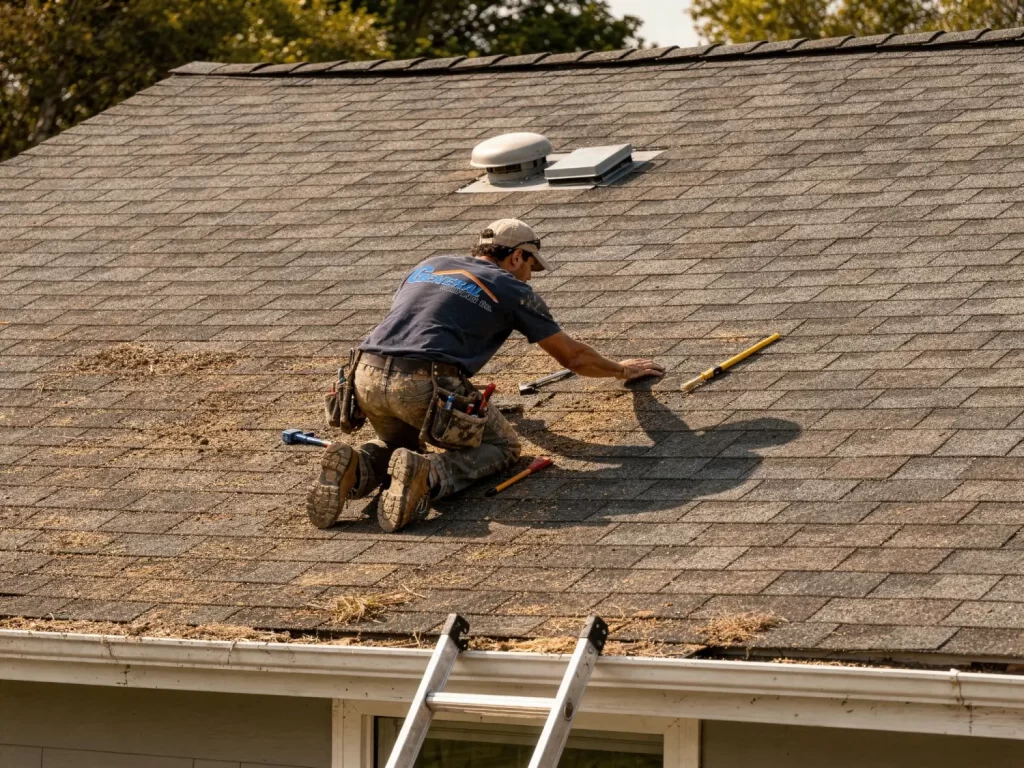
If you’ve noticed one of these signs, don’t assume the worst. Also don’t assume it’ll magically sort itself out. Roofs are not known for handling problems through positive thinking.
The smartest next step is usually a professional inspection. Not because every issue is huge, but because it’s hard to judge roof condition accurately from the ground. What looks minor can be more involved. What looks scary can sometimes be repaired cleanly.
Why local experience matters with roofing decisions
Bay Area roofing isn’t just about throwing material on top of a house and hoping for the best.
Local homes deal with different microclimates, ventilation challenges, sun exposure, moisture patterns, and code requirements depending on where they are. A roof in a foggy area may age differently from one farther inland. A steep roof with heavy tree cover behaves differently from a wide open sunny one.
That’s why experience in the local area matters. You want recommendations based on how roofs actually perform here, not generic advice copied from somewhere with completely different conditions.
A practical next step if you’re not sure how urgent the issue is
If you’re unsure whether you’re looking at a small repair or the start of something bigger, a straightforward inspection is usually the best place to start.
At General Roofing, we help homeowners figure out exactly that. Sometimes the answer is a manageable repair. Sometimes it’s a sign to plan ahead before a leak forces the schedule for you. Either way, having a clear picture beats guessing from the driveway.
And honestly, that’s the whole goal here: less guesswork, fewer surprises, and a better chance of fixing the problem while it’s still small enough to be annoying instead of expensive.
Frequently Asked Questions
How do I know if my roof needs repair even if it isn’t leaking?
Look for visible warning signs like missing shingles, granules in gutters, loose flashing, recurring moss, sagging sections, or repeated repairs in the same area. A roof can have real damage before water ever makes it inside.
Can a roof be damaged without obvious signs from the ground?
Yes. Some issues show up around flashing, under shingles, or in attic ventilation before they become easy to spot from outside. That’s why inspections are helpful when something feels off but nothing looks dramatic yet.
Are missing shingles always an urgent problem?
They should be addressed quickly. One missing shingle might seem small, but it leaves the roof more exposed to moisture and wind damage, especially during rainy weather.
Does moss on a roof always mean it needs repair?
Not always, but it shouldn’t be ignored. Moss holds moisture against the surface, which can speed up wear and expose underlying issues if it keeps returning.
Should I repair my roof or replace it?
That depends on the roof’s age, material, condition, and repair history. A newer roof with isolated damage may be a strong repair candidate. An older roof with multiple warning signs may need a bigger plan.
How often should a roof be inspected?
A good general rule is to have it checked periodically and after major weather events, especially if the roof is older or already showing signs of wear.
Can roof problems affect energy bills?
Yes. Hidden damage, poor ventilation, and roof system issues can all affect attic temperature and indoor comfort, which may increase heating or cooling costs.
Final Thoughts
The biggest mistake homeowners make is waiting for a roof problem to become obvious. By then, it usually has.
Knowing the signs your roof needs repair gives you a chance to act earlier, spend more wisely, and avoid the whole “why is there a stain on my ceiling?” experience. Cracked shingles, loose flashing, granules in gutters, recurring moss, uneven rooflines, rising energy bills, and repeat patch jobs are all worth paying attention to.
None of these signs automatically mean disaster. But they do mean your roof deserves a closer look.
And if you’ve been noticing a few of these at once, that’s usually your cue not to put it off. A timely repair is almost always easier than dealing with water damage after the fact.
Recent Comments