
If you’re pricing out a commercial roof, you probably don’t want a long poetic speech about “protecting your investment.” You want the number.
Fair enough.
For many low-slope commercial roof replacement projects in California, a straightforward replacement usually lands around $8 to $12 per square foot for common membrane systems. Built-up roofing often lands around $8 to $10 per square foot, while metal panel systems can jump to roughly $16 to $22 per square foot. And that’s before the fun extras show up, like tear-off, wet insulation, deck repairs, edge metal, access issues, and code-related upgrades.
So yes, commercial roof replacement cost per square foot is a useful starting point. It just isn’t the whole story. The real price depends on what roof system you choose, what’s happening underneath the old roof, and how complicated your building is to work on.
Average commercial roof replacement cost per square foot
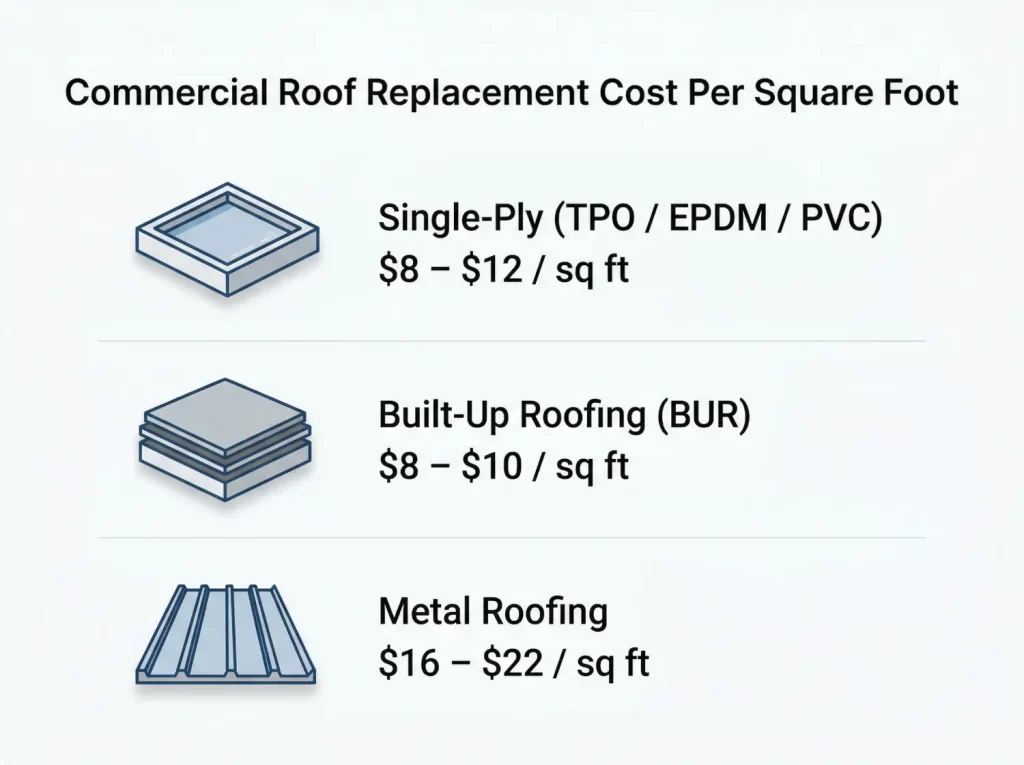
Here’s the quick version most owners are looking for:
| Roof system | Typical installed range |
|---|---|
| Single-ply membrane (TPO / EPDM / PVC) | $8.04 – $10.29+ / sq ft |
| Built-up roofing (BUR) | $7.91 – $9.82+ / sq ft |
| Metal panel roofing | $16.30 – $21.87+ / sq ft |
Those are good baseline ranges, not universal promises. A clean, simple roof with easy access and minimal tear-off usually behaves better than a crowded roof full of penetrations, old wet insulation, and “surprises” no one ordered. Site conditions and project options can move real numbers up or down.
If you’re comparing cost per square foot commercial roofing options, a simple rule of thumb is this: single-ply is usually the value lane, BUR is the heavier traditional system, and metal is the higher-ticket long-game play.
Flat roof replacement cost for commercial buildings by material
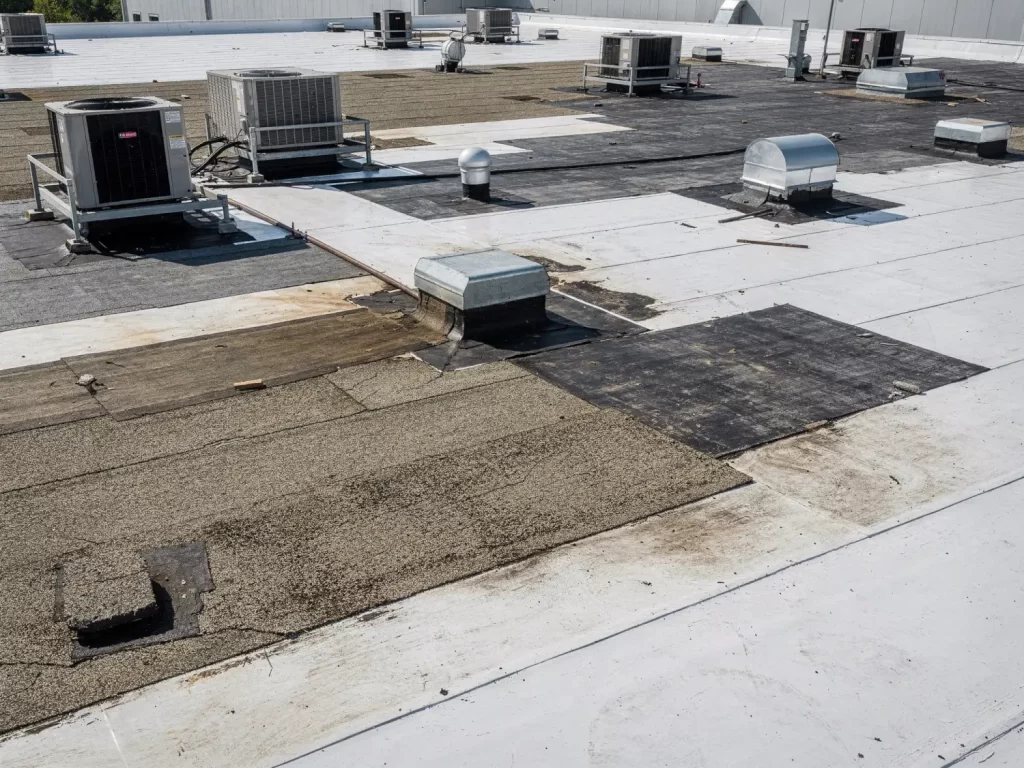
Most commercial buildings in California are low-slope or flat, so this is where the conversation usually gets real.
TPO roof cost per sq ft
If you’re looking at tpo roof cost per sq ft, TPO is usually one of the more budget-friendly single-ply options. It’s popular for a reason: it’s reflective, widely used, and generally seen as a strong value choice for low-slope commercial roofs. In real-world quotes, TPO often lands near the lower end of the single-ply range, assuming the roof isn’t unusually complicated.
TPO tends to make sense for owners who want a practical system without wandering into premium-PVC pricing for benefits they may not actually need.
PVC roof cost per sq ft
PVC roof cost per sq ft is usually a step up from TPO. That’s especially true on buildings where grease, chemicals, or tougher rooftop conditions are part of the deal. Restaurants, food production buildings, and some industrial properties often lean this direction because PVC offers stronger chemical resistance than many other single-ply options. In practice, that usually pushes PVC closer to the upper end of the membrane range.
So yes, PVC usually costs more. But sometimes it earns that higher price instead of just looking fancy on paper.
EPDM roofing cost
EPDM is still a solid commercial option, and it keeps showing up because it can be cost-efficient and dependable when it matches the building. It has been used in commercial roofing for decades, and certain EPDM systems are specifically marketed for cost efficiency and lower life-cycle cost. In many quotes, EPDM competes closely with TPO, though the final number depends a lot on attachment method and project details.
If your building doesn’t need PVC’s chemical resistance, EPDM may be one of the cleaner value plays.
Built-up roofing cost
BUR is the old-school multilayer workhorse. It’s not the flashy option, but plenty of owners still like it for redundancy and familiarity. For 2026, vendor-neutral install estimates put built-up roofing around $7.91 to $9.82 per square foot as a baseline. Once you start layering in tougher tear-off conditions or added insulation work, that number can climb.
BUR can still be a very good fit. It just depends on the building, the use, and whether you want a heavier traditional assembly or a lighter single-ply system.
Commercial roof replacement cost by building size
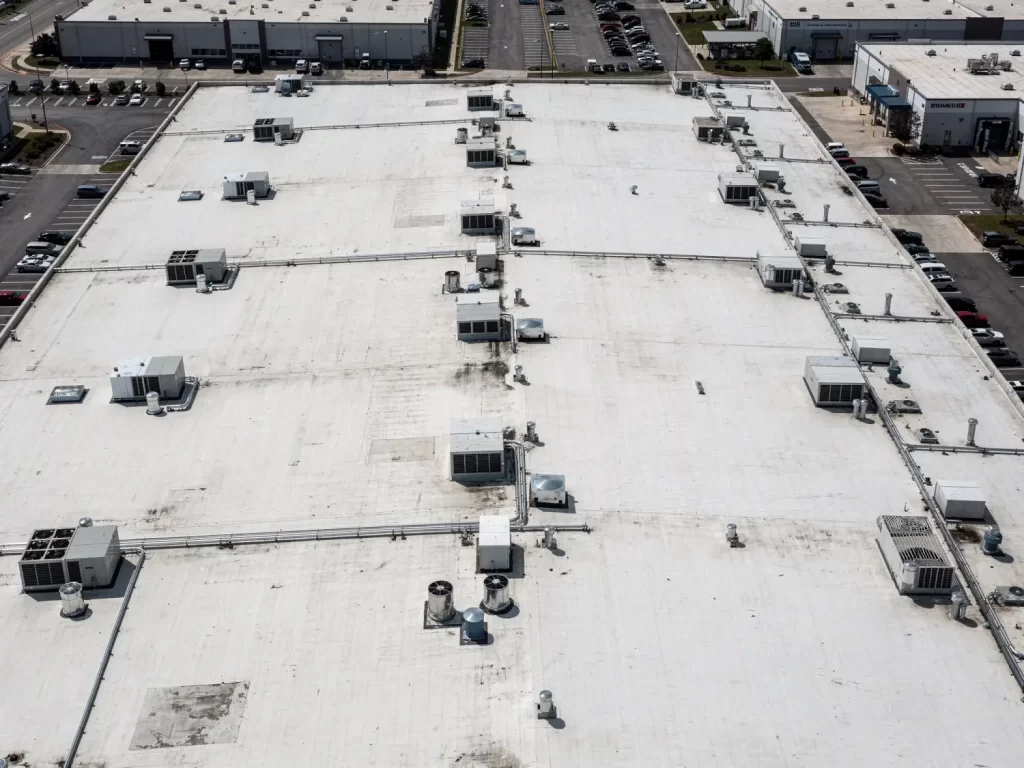
Per-square-foot pricing is useful, but owners usually want to translate it into a total budget they can actually react to.
Here’s what common membrane-system pricing looks like when you stretch it across real building sizes:
| Building size | Approx. membrane replacement total |
|---|---|
| 10,000 sq ft | $80,000 – $120,000+ |
| 25,000 sq ft | $200,000 – $300,000+ |
| 50,000 sq ft | $400,000 – $600,000+ |
| 100,000 sq ft | $800,000 – $1.2M+ |
That means warehouse roof replacement cost adds up fast, even when the per-square-foot number looks reasonable at first glance. A 50,000-square-foot warehouse roof doesn’t need a dramatic price per foot to become a serious capital project. It just needs 50,000 square feet. Math can be rude like that. The totals above are simple extensions of the common membrane replacement range, so metal systems, heavy tear-off projects, and code-driven upgrades can go noticeably higher. (Homewyse)
What affects commercial roof replacement cost
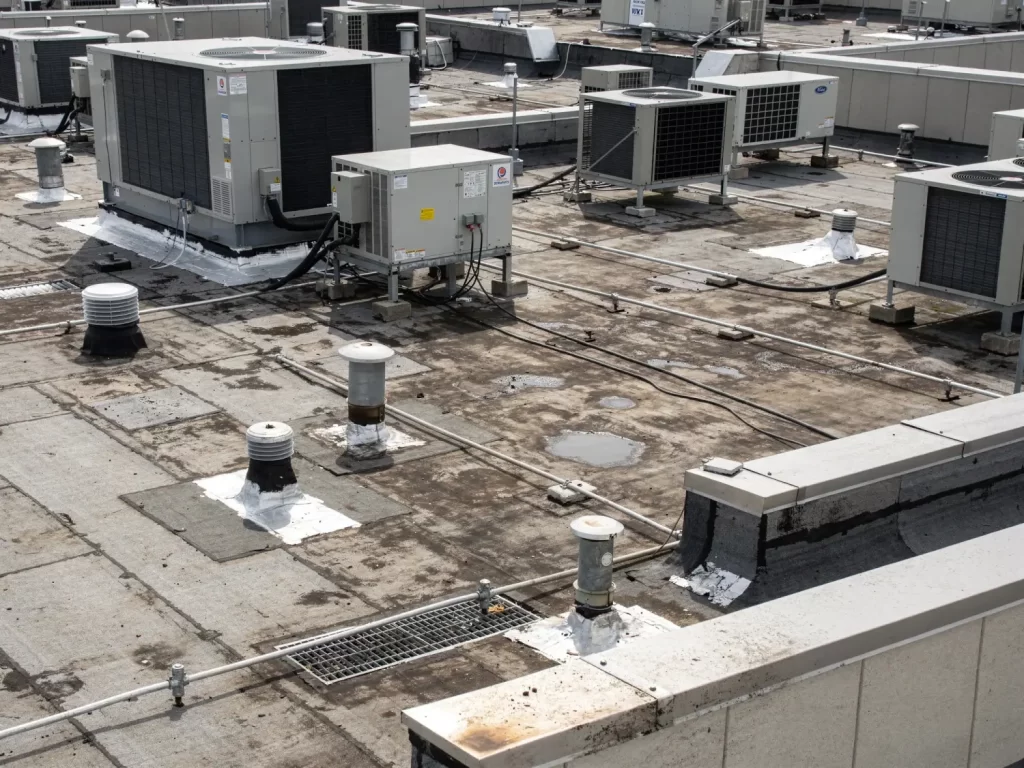
This is the part that separates a quick online estimate from a real proposal.
The biggest cost drivers are usually:
- the roof system you choose
- whether you’re doing a full tear-off or an overlay
- the condition of the insulation and deck
- the number of penetrations, curbs, drains, and edge details
- building access, staging, and safety requirements
- whether work has to happen around tenants, equipment, or business operations
- California code and energy-compliance requirements
California adds another layer because the 2025 Building Energy Efficiency Standards took effect on January 1, 2026, and low-slope replacement roofs generally have to meet cool-roof requirements under Title 24. That can affect membrane choice, product selection, and how the scope gets built.
And if you’re wondering why commercial roofing cost in California feels higher than the numbers you find in random national blog posts, labor is a big piece of it. California roofers average about $30.31 per hour, compared with $24.51 nationally. In the Bay Area, the averages run even higher at about $38.72 in San Jose-Sunnyvale-Santa Clara and $36.67 in San Francisco-Oakland-Hayward. That doesn’t magically set every quote, but it does help explain why Bay Area replacement pricing tends to land toward the higher side of the range.
Repair vs. replacement: when replacement actually makes sense
Not every aging commercial roof needs to be replaced tomorrow morning. Sometimes repairs or restoration are the smarter move. In fact, roof coatings and restoration can be a cost-effective alternative to full replacement in the right situation.
But there’s a point where repeated repairs stop being disciplined and start being denial with invoices.
And when leaks keep showing up, it helps to understand what those repair costs can add up to over time. Our post on Roof Leak Repair Cost in the Bay Area breaks that down.
Replacement usually deserves a serious look when:
- leaks keep returning in the same areas
- the insulation is wet
- seams or flashings are failing across multiple zones
- the roof is near the end of its service life
- repair costs are stacking up without fixing the bigger problem
At General Roofing, that’s usually how we frame the conversation: not “replace it because replacement sounds exciting,” but “does it still make financial sense to keep feeding repairs into this roof?” If the answer is yes, great. If not, better to know before the next storm makes the decision for you.
How to reduce commercial roofing costs without getting cute
There are smart ways to lower cost, and then there are expensive ways to pretend you lowered cost.
The smart ways usually look like this:
1. Don’t wait for full failure
A roof that gets replaced on your schedule is usually cheaper than a roof that fails on its own schedule. Emergency leak response, wet insulation, damaged interiors, and rushed work are not famous for saving money.
2. Maintain the roof you already have
Regular maintenance helps catch issues early, extends roof life, and may be required to keep manufacturer warranties in good standing. That part matters more than owners sometimes realize.
If you’re trying to avoid a premature replacement, our Repairs & Maintenance services are usually the first place to start.
3. Pick the right system, not just the cheapest one
TPO may be the better value play for one building. PVC may be the smarter call for another. EPDM may be the better fit somewhere else. The “cheapest” roof on bid day is not always the lowest-cost roof over its actual service life.
4. Plan ahead instead of budgeting by panic
This is where asset planning helps. If you want to spread capital decisions out more intelligently, our Asset Management approach can help you look at roof condition, remaining life, and timing before things get messy.
Commercial roof replacement cost in California and the Bay Area
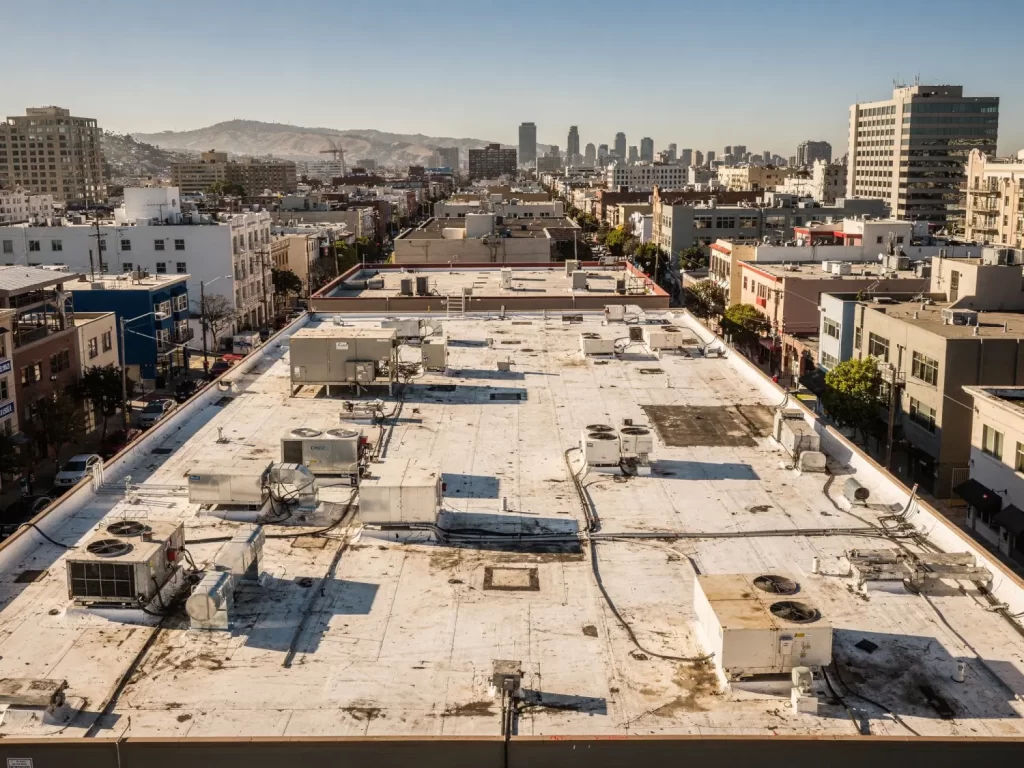
Here’s the practical version: California pricing is not just “national pricing with sunshine.”
Between labor, access, permits, energy compliance, and building complexity, commercial roof replacement cost per square foot in California can climb quickly, especially in the Bay Area. The East Bay, Peninsula, and South Bay are not bargain-basement labor markets, and commercial roofs around here often come with real-world complications like tight access, occupied buildings, rooftop equipment, and code-driven product requirements.
That’s also why broad national averages can be misleading. They’re fine for a first glance. They’re not what you should base a capital plan on.
What to do next if you want a real number
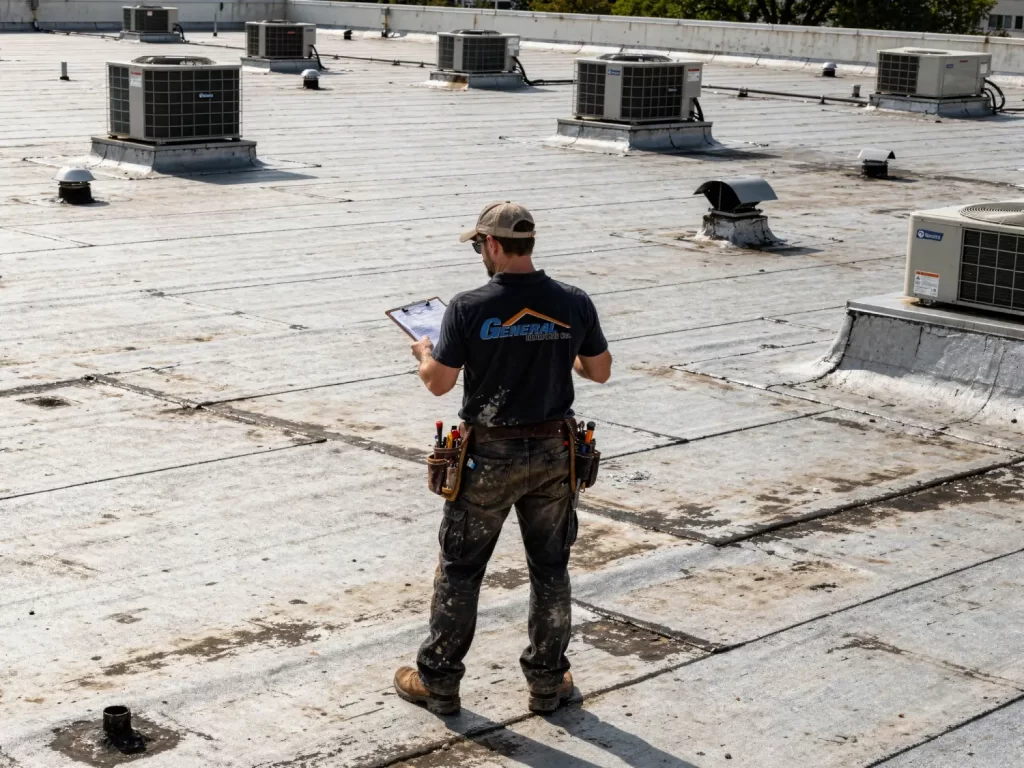
If you just want a rough planning number, the ranges above should help.
If you want a number that actually fits your building, the next step is not another generic calculator. It’s a real inspection and a real scope.
And if you’re still early in the process, our guide on roof inspection cost can help explain what an inspection usually includes and what affects pricing.
At General Roofing, we’ve been installing and repairing residential, commercial, and industrial roofs in the Greater East Bay Area since 1924, and we handle both commercial roof system replacements and long-term maintenance planning. We also offer product and installation warranties, and we design maintenance programs to help extend roof life where that makes sense.
So if your building is somewhere between “this roof is fine” and “please don’t let it rain,” we can help you sort out which bucket it actually belongs in. For full replacement planning, our Roof System Replacements page is the best next stop.
FAQs
What is the average commercial roof replacement cost per square foot in 2026?
For many low-slope commercial projects, a practical starting range is about $8 to $12 per square foot for common membrane systems. BUR often lands around $8 to $10, while metal panel systems can run roughly $16 to $22 or more.
What’s the flat roof replacement cost for a commercial building?
For many commercial flat roofs, the conversation usually starts with single-ply membrane systems like TPO, PVC, or EPDM, and those commonly cluster in the broader membrane replacement range. The final number depends on the system, insulation, tear-off, and roof complexity.
Is TPO cheaper than PVC?
Usually, yes. TPO is commonly positioned as the more cost-effective single-ply option, while PVC tends to cost more because of its stronger chemical and fire-performance profile.
How much does a 50,000-square-foot warehouse roof replacement cost?
Using a simple membrane replacement range, a 50,000-square-foot warehouse roof replacement cost often starts around $400,000 to $600,000+ before bigger complications are added. Metal systems, wet insulation, deck repairs, and access issues can push it higher.
Why is commercial roofing cost in California usually higher?
A big reason is labor and compliance. California roofer wages run above the national average, Bay Area metro wages run higher still, and 2026 projects also have to account for current Title 24 energy-code requirements on low-slope replacement roofs.
Can maintenance lower long-term replacement cost?
Yes. Regular inspections and maintenance help catch issues early, extend service life, and may be needed to keep manufacturer warranties valid. That won’t make replacement free later, but it can help you avoid paying for it earlier than necessary.
Final thoughts
Commercial roof replacement cost per square foot is a great starting metric. It just shouldn’t be the only one you look at.
For many commercial roofs in California, a realistic first-pass number is somewhere around $8 to $12 per square foot for common membrane systems. But the price gets shaped by the real stuff: tear-off, insulation, access, code, rooftop equipment, and whether the building is simple or a full-time chaos generator.
That’s why the best estimate is never the one that sounds the nicest. It’s the one that matches the actual roof.
Recent Comments