
Nobody wants to hear “you need a new roof” when they were hoping for a simple repair. Fair. Roof replacement is a bigger project, and it is not something most people are excited to spend money on.
But the opposite can be just as frustrating. You pay for a repair, it holds for a little while, then the next storm comes through and the same stain shows up on the ceiling again. Now you are back where you started, except you have already spent money trying to avoid the bigger fix.
That is why the roof repair vs replacement question matters. It is not really about which option is cheaper today. It is about which option makes sense for the roof you have right now.
Roof repair vs replacement: what is the difference?
A roof repair fixes a specific problem.
That might mean replacing a few missing shingles, sealing a small flat roof puncture, fixing flashing around a chimney, repairing a leak near a vent, or correcting a drainage issue before it causes more damage.
A roof replacement means the existing roof has reached the point where small fixes are not enough anymore. Depending on the roof, that may involve removing the old materials, replacing damaged decking or insulation, installing new underlayment, updating flashing, and putting on a new roof system.
A repair is usually the better choice when the roof is still in decent shape and the damage is limited. Replacement starts to make more sense when the roof is old, worn out, leaking in several places, or has hidden moisture that keeps spreading.
Pretty simple in theory. Less simple when you are staring at a water stain and trying to guess how bad things are.
When roof repair usually makes sense
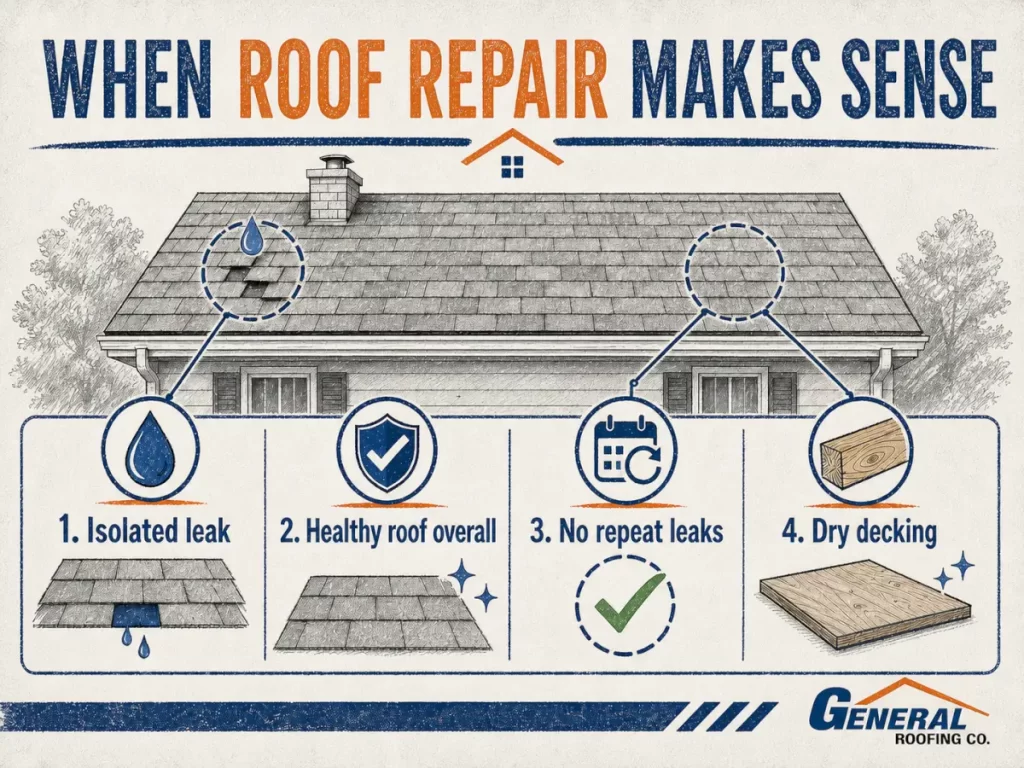
Roof repair is often the right move when the issue is small and the rest of the roof still has life left in it.
Say your roof is not that old, but one pipe boot cracked. Or one section of flashing pulled loose. Or a branch damaged a small area during a storm. In those cases, replacing the whole roof would usually be unnecessary.
Repair may make sense if:
- The roof is still within its expected lifespan
- The damage is limited to one area
- You have not had repeated leaks
- The roof surface still looks healthy
- The decking or insulation underneath is dry
- The repair should last long enough to be worth the cost
This is where a real inspection helps. A leak does not always start directly above the stain. Water can travel before it finally shows up inside. That is one reason our roof repair and maintenance services focus on finding the source of the problem, not just patching the most obvious spot.
When to replace a roof instead
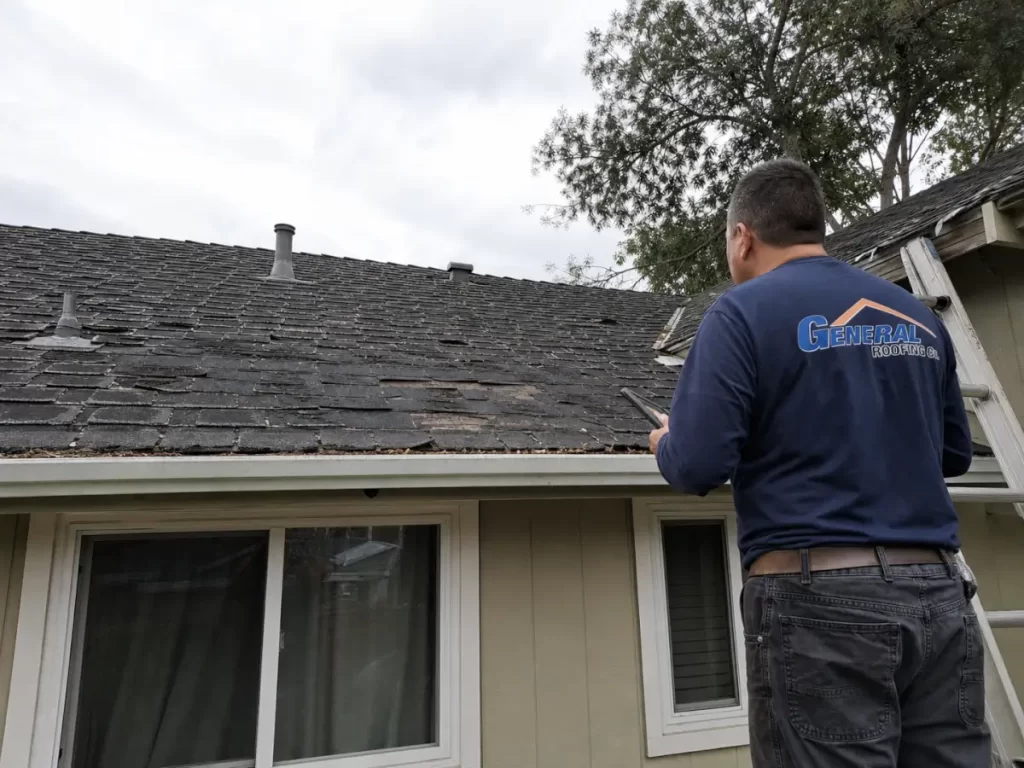
Replacement becomes the better option when the roof is not failing in one place anymore. It is failing in a bunch of little ways at the same time.
That can look like recurring leaks, curled shingles, cracked roofing material, failing seams, soft decking, heavy granule loss, ponding water, or old repairs that keep opening back up.
Some of the clearest signs you need roof replacement include:
- Leaks in more than one area
- A roof that is near or past its expected lifespan
- Shingles that are curling, cracked, brittle, or missing granules
- Sagging areas or soft spots
- Flat roof seams that are splitting or pulling apart
- Wet insulation under a commercial or low slope roof
- Repairs that do not hold for long
- Too many old patches across the roof
Age matters, but it is not the only thing that matters. A younger roof with poor installation or storm damage can need replacement earlier than expected. An older roof that has been maintained well may still have some useful life left.
Manufacturers such as Owens Corning point to warning signs like cracked shingles, curling edges, missing granules, and age when deciding whether a roof may need replacement. Code can also come into play, especially when a roof has multiple layers or hidden damage. The International Code Council outlines requirements for roof assemblies and reroofing, so replacement is not always as simple as covering up what is already there.
For roofs that are past the repair stage, our roof system replacement services cover residential, commercial, and industrial projects.
Roof repair vs roof replacement cost
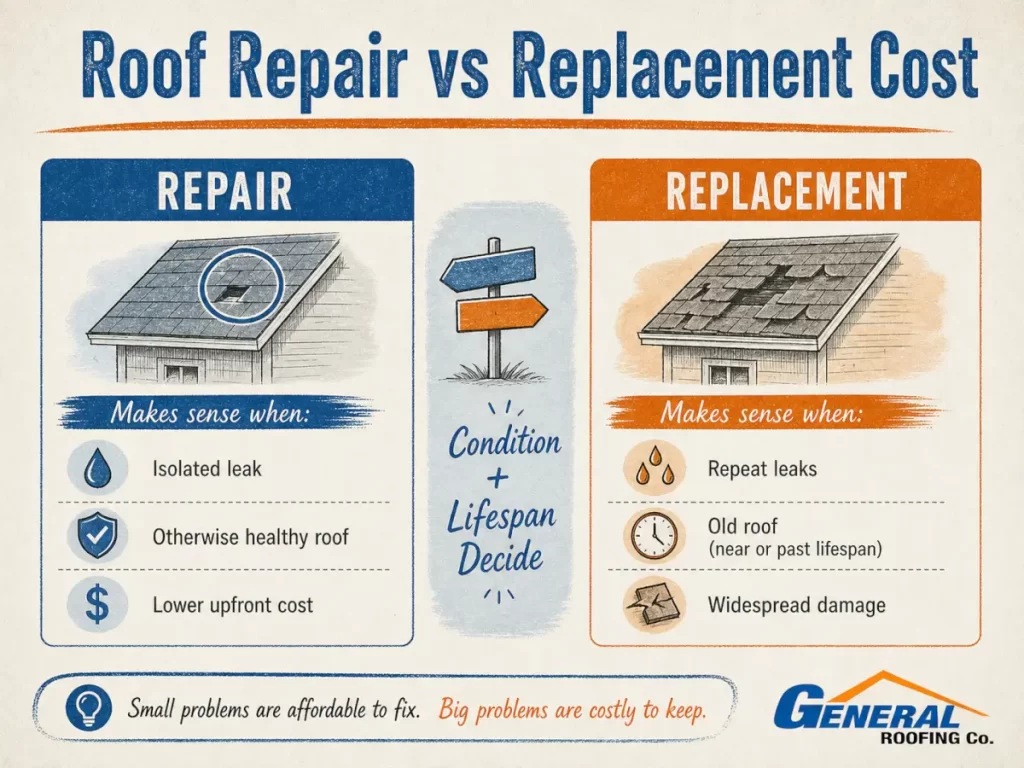
Roof repair usually costs less upfront. That part is obvious.
The part people sometimes miss is how quickly repeat repairs can add up. One repair on a healthy roof can be money well spent. Three or four repairs on a roof that is already wearing out can turn into a slow, annoying way to pay for the replacement you were trying to avoid.
Here is a simple way to look at it:
| Roof condition | Repair usually makes sense | Replacement usually makes sense |
|---|---|---|
| One small leak | Yes | Usually no |
| A few missing shingles | Yes | Usually no |
| Repeated leaks | Sometimes | Often |
| Roof near the end of its life | Sometimes | Often |
| Wet insulation on a flat roof | Rarely enough by itself | Often |
| Widespread cracking or curling | Usually no | Yes |
| Old roof with many patches | Usually no | Yes |
| Healthy roof with isolated storm damage | Often | Sometimes |
The repair makes sense when it buys real time. Not a few weeks. Not one more rainy season if the roof is already struggling. Real time.
Replacement makes sense when the roof is going to keep costing you money anyway.
For commercial buildings, cost depends on the roof system, access, tear-off, insulation, decking, drainage, and code requirements. We go deeper into that in our guide to commercial roof replacement cost per square foot.
Should I repair or replace my roof?
The honest answer is: it depends on the rest of the roof.
One leak does not automatically mean you need a new roof. But one leak on an old, brittle, patched-up roof is not the same as one leak on a roof with ten good years left.
Ask these questions:
- How old is the roof?
- Has it leaked before?
- Is the damage in one place or several?
- Are the materials still flexible and intact?
- Is there moisture under the surface?
- Will a repair actually last?
- Are you planning to keep the property long term?
A repair is usually the better call when the roof is younger, the issue is isolated, and the rest of the system looks solid.
Replacement is usually the better call when the roof is older, the damage is spread out, or you are starting to recognize the roofer’s truck a little too well.
Commercial roof repair vs replacement
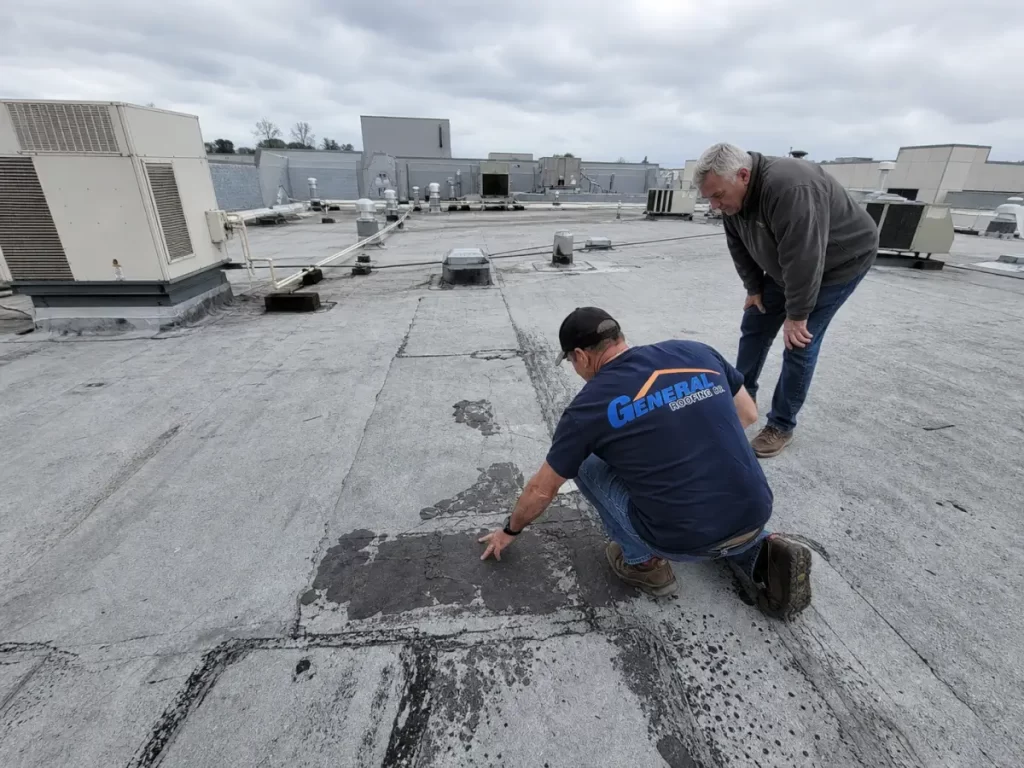
Commercial roof repair vs replacement can get complicated fast because the roof is protecting more than the building itself. It may be protecting tenants, inventory, equipment, electrical systems, records, or daily operations.
A commercial roof repair may work when the issue is contained. A small membrane puncture, an open seam, loose flashing, or a clogged drain can often be handled without replacing the whole roof.
Replacement becomes more likely when there is wet insulation, repeated leaks, widespread seam failure, membrane shrinkage, large areas of ponding water, or too many old patches.
Business timing matters too. Sometimes the practical choice is to make a controlled repair now and plan replacement during a slower season. That can be reasonable, but only if the roof is stable enough to wait.
For building owners who want fewer surprises, our roof asset management programs can help track roof condition over time with reviews, photos, reports, debris removal, and routine maintenance. That makes it easier to see whether a roof is holding up or slowly turning into a replacement project.
Flat roof repair vs replacement
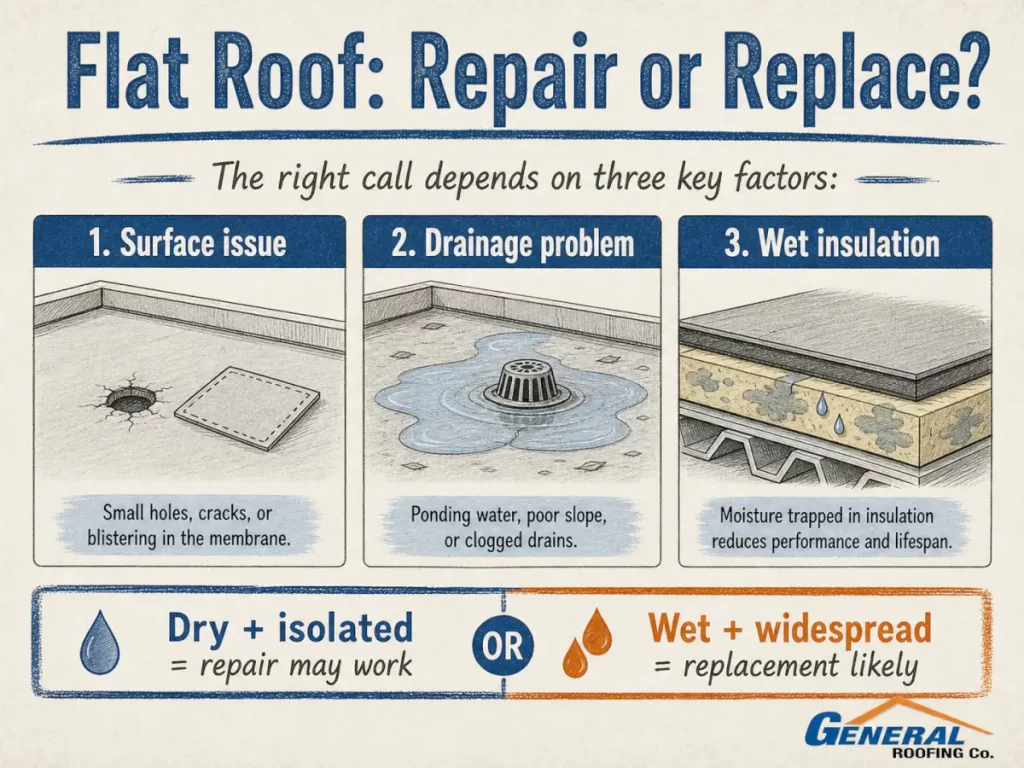
Flat roofs are their own thing. Water does not run off them the same way it does on a steep slope roof, so drainage issues matter a lot.
A flat roof repair may be enough if the leak source is clear, the membrane is still flexible, the insulation is dry, and the damage is limited.
A flat roof replacement may be the better choice if water sits for long periods, seams are failing in several places, the membrane is cracking or shrinking, or moisture has made its way into the insulation.
That last part matters. Wet insulation can turn a surface problem into a roof system problem. You can patch the top, but if moisture is trapped below, the roof may keep causing trouble.
Flat roof repair vs replacement often comes down to how much of the system is still dry and stable. If the problem is on the surface, repair may work. If the problem is inside the system, replacement is often the cleaner fix.
Roof damage: repair or replace after a storm?
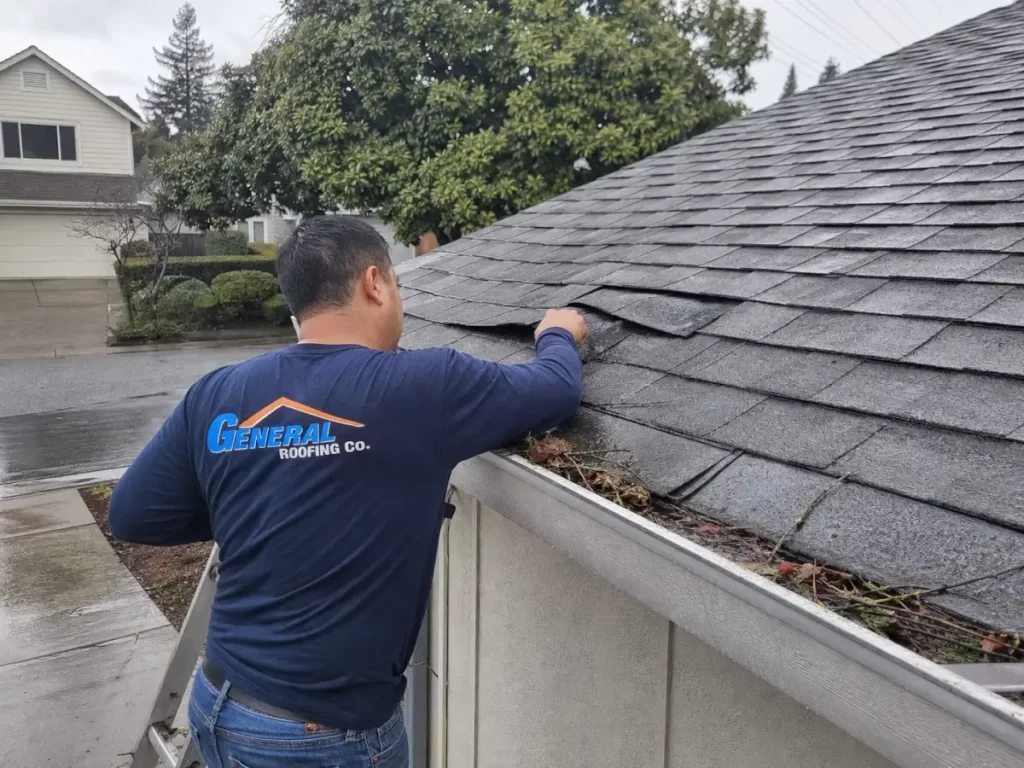
Storm damage is not always dramatic. Sometimes it is obvious, like missing shingles or a branch through the roof. Other times, it is quieter: lifted shingles, bruised material, cracked sealant, bent flashing, punctured membrane, or damage around roof edges.
A few damaged shingles may only need repair. Widespread wind or impact damage may call for replacement.
After a storm, do not judge the roof only by whether water is dripping inside right now. Some damage takes time to show up. A roof can be weakened before it starts leaking.
FEMA’s disaster repair guidance talks about repairs that make a home safe, sanitary, and functional after disaster damage, including issues that affect ceilings, electrical systems, or the ability to live in the home. You can read more on FEMA’s page about home repairs covered after disasters.
If you think a storm damaged your roof, get photos from the ground if you can do it safely. Avoid walking the roof yourself. Then have it checked before a small issue gets expensive.
Repeat leaks are a warning sign
One leak can happen for a lot of reasons.
Repeat leaks are different.
If the same area has been repaired more than once, something is being missed or the surrounding roof is too worn to hold the repair. This happens a lot around chimneys, skylights, HVAC curbs, drains, pipe penetrations, parapet walls, and roof edges.
Sometimes the fix is still a repair, just a better one. Other times, the leak is only the symptom. The actual issue may be old flashing, failed membrane, bad drainage, or moisture traveling from a different part of the roof.
We have a separate guide on how to find a roof leak if you want to understand why the stain on the ceiling is not always where the leak began.
How roofers decide between repair and replacement
A good inspection should look at more than the damaged spot.
The roofer should check the roof surface, flashing, penetrations, drainage, edges, previous repairs, interior stains, attic or deck conditions when visible, and signs of trapped moisture.
The main questions are:
- Where is water getting in?
- Is the damage isolated?
- Is the rest of the roof still in decent shape?
- Is there hidden moisture?
- How old is the roof?
- Have repairs worked before?
- Will another repair be worth the money?
- Are there code or installation issues?
Sometimes the answer is obvious. Sometimes it is a judgment call.
When it is close, the best option may be a short-term repair with a replacement plan. Fix what needs attention now, document the roof condition, and plan the larger work before the next rainy stretch or budget cycle.
FAQ
Is it better to repair or replace a roof?
Repair is usually better when the damage is small and the rest of the roof is still in good shape. Replacement is usually better when the roof is old, leaking in multiple areas, or needing repairs over and over again.
How do I know when to replace a roof?
You may need to replace your roof if you have recurring leaks, widespread shingle damage, soft decking, sagging, failing flat roof seams, wet insulation, or repairs that no longer hold.
Is roof repair worth it on an old roof?
Sometimes. If the roof is old but the damage is limited, a repair may still buy useful time. If the roof has several weak areas, repair may only delay replacement for a short period.
What is the biggest sign I should replace instead of repair?
Repeat leaks are one of the biggest signs. When a roof keeps failing in different areas, the problem is usually bigger than one repair.
Does ponding water mean I need flat roof replacement?
Not always. If the roof is otherwise healthy and drainage can be corrected, repair may work. If ponding has caused membrane failure or wet insulation, replacement may make more sense.
Should I repair or replace my roof before selling?
It depends on the roof condition and what buyers are likely to see during inspection. A small repair may be enough for an otherwise healthy roof. A roof near the end of its life may become a negotiation issue.
Who can help me decide between roof repair or replacement?
Start with an inspection from a roofer who can explain both options clearly. If you are in the Bay Area, you can request a roof estimate through our estimate form.
Final thoughts
Roof repair vs replacement comes down to whether the roof still has enough life left to make a repair worth it.
If the problem is small and the rest of the roof is solid, repair is probably the smarter move. If the roof is old, patched in several places, leaking again, or holding moisture under the surface, replacement may save you from paying for the same problem twice.
At General Roofing, we look at the roof first and the recommendation second. Sometimes that means a repair. Sometimes it means replacement. The goal is to help you make the call that holds up after the next rain, not just the one that feels easier today.
Recent Comments