
PVC roofing cost per square foot is one of those numbers that looks simple until someone actually gets on the roof.
You might hear a price for the membrane itself and think, “Okay, that’s the roof cost.” Not quite. The membrane is only part of it. The real price comes from the full roof assembly, the old roof underneath, the insulation, the flashing, the access, the drains, the rooftop equipment, and the amount of labor it takes to make the system watertight.
For most commercial flat and low-slope roofs, PVC is one of the more expensive single-ply options. It often costs more than TPO, but there are roofs where that extra cost makes sense. Restaurants, industrial buildings, and properties with chemical or grease exposure are common examples.
Average PVC roofing cost per square foot
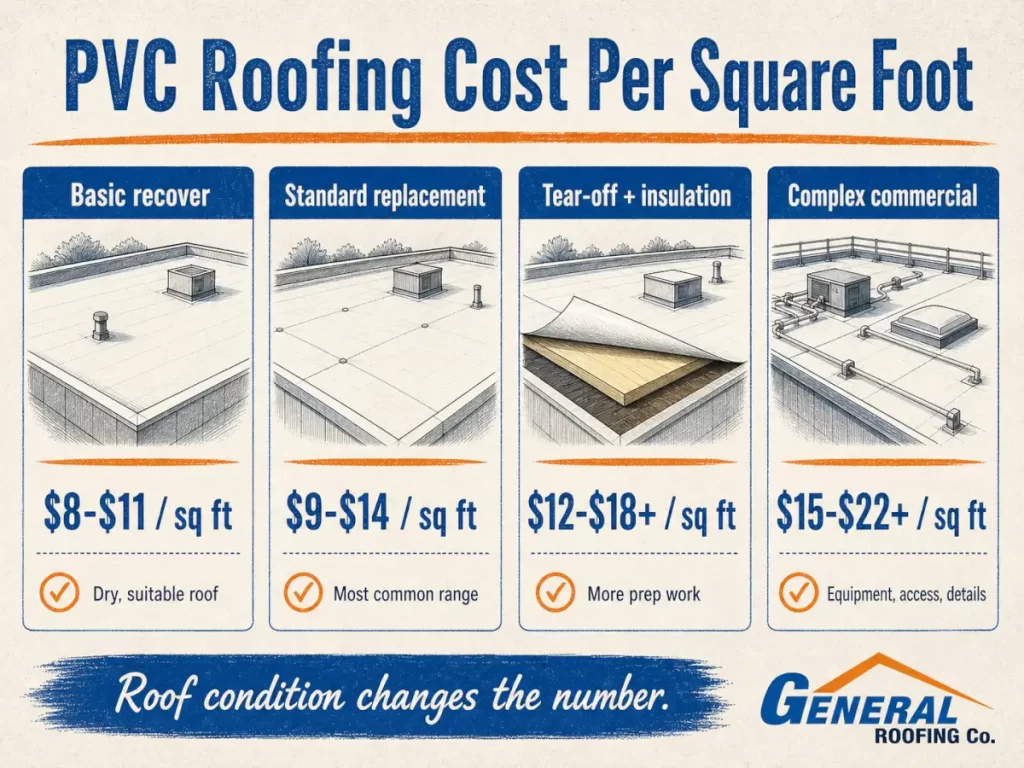
For many commercial projects, PVC roofing cost per square foot lands around $9 to $14 installed.
That is a useful planning range, not a quote. A clean, wide-open warehouse roof with easy access is not the same job as a tight Bay Area roof with old wet insulation, HVAC units everywhere, and drains that need work.
| PVC roofing project type | Typical installed range |
|---|---|
| Basic PVC recover over a suitable roof | $8 to $11 per sq ft |
| Standard PVC roof replacement | $9 to $14 per sq ft |
| PVC roof with tear-off and insulation upgrades | $12 to $18+ per sq ft |
| Complex commercial PVC roof | $15 to $22+ per sq ft |
The frustrating part is that two roofs can have the same square footage and land at very different prices. That is normal. Square footage starts the conversation, but it does not finish it.
If you are comparing PVC against other systems, our guide to commercial roof replacement cost per square foot gives a better big-picture view.
What goes into PVC roof cost per sq ft?
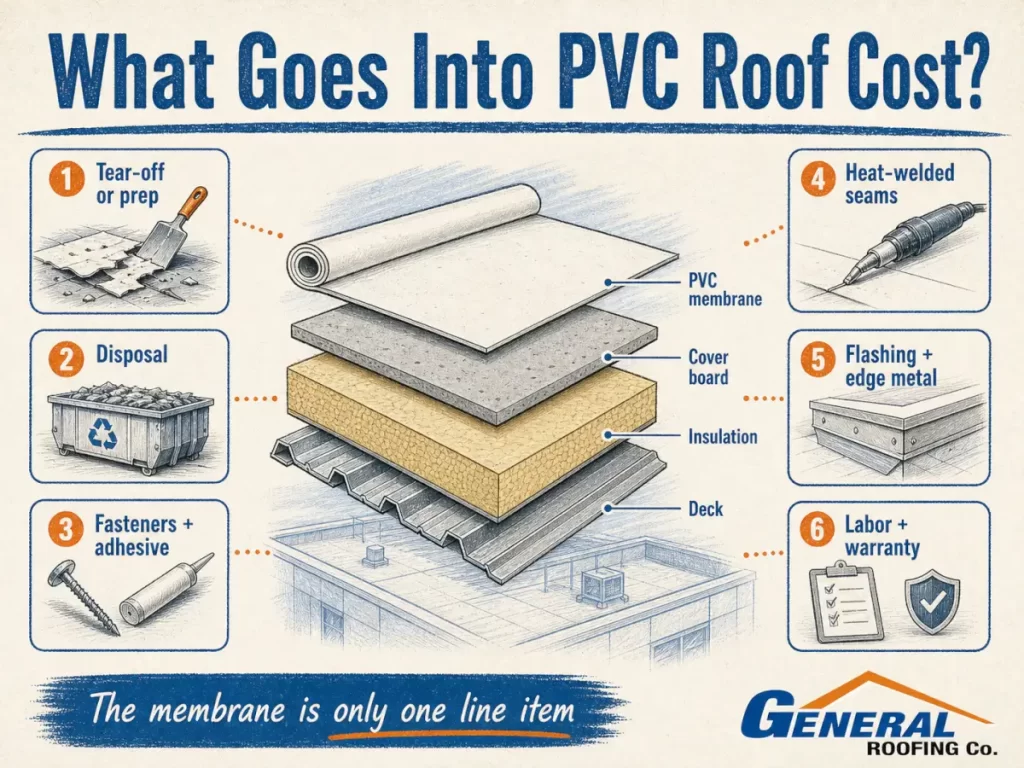
A proper PVC roof cost per sq ft includes more than the sheet of white membrane on top.
A typical commercial PVC roofing estimate may include:
- Roof inspection and project setup
- Tear-off or surface prep
- Disposal
- Insulation or cover board
- PVC membrane
- Adhesive, fasteners, plates, or welding materials
- Heat-welded seams
- Flashing around walls, drains, curbs, and penetrations
- Edge metal
- Labor
- Warranty requirements
- Cleanup
PVC membranes are thermoplastic roofing membranes. The seams are heat-welded, which is one reason building owners compare PVC and TPO so often. Manufacturer product data from Carlisle SynTec and Sika Sarnafil describes PVC roof membranes as reinforced thermoplastic systems used on low-slope commercial roofs.
That sounds technical, but the takeaway is simple: PVC is not just rolled out and glued down like a tarp. The details matter.
Why PVC membrane roofing cost changes so much
PVC membrane roofing cost moves around because commercial roofs are rarely clean, simple rectangles.
Roof size
Larger roofs often get better per square foot pricing because setup costs are spread across more area.
A 4,000 square foot roof can cost more per square foot than a 40,000 square foot roof, even if the smaller roof looks easier at first glance.
Tear-off
Tear-off changes the price fast.
If the existing roof is dry, stable, and suitable for a recover, the project may stay on the lower end. If the old roof needs to come off, you are paying for labor, disposal, hauling, and whatever the crew finds once the roof is opened up.
Wet insulation is the classic surprise. Nobody likes finding it, but ignoring it is worse.
Insulation
Insulation can be one of the biggest cost drivers on a PVC roof.
Some buildings only need a cover board. Others need new insulation, thicker insulation, or tapered insulation to help with drainage. If water has been sitting under the old roof for a while, the insulation may need to be removed and replaced.
Membrane thickness
PVC roofing membranes come in different thicknesses, commonly including 50 mil, 60 mil, and 80 mil options depending on the manufacturer and system.
A thicker membrane usually costs more. It can be worth it on roofs with more foot traffic, tougher exposure, or longer warranty goals. For example, Sika’s Sarnafil S 327-60 membrane is a 60 mil reinforced PVC membrane with heat-welded seams.
Roof access
Access is easy to overlook until it becomes the problem.
A roof with a wide loading area and simple access is easier to price. A roof in Oakland, Berkeley, Alameda, or San Francisco with tight alleys, limited parking, narrow staging, or difficult loading can cost more because everything takes longer.
Sometimes the roof is simple. Getting materials to the roof is not.
Rooftop equipment
HVAC units, ducts, vents, skylights, pipes, solar supports, and curbs all slow the job down.
A wide-open roof field installs faster. A roof full of equipment needs more cuts, more welding, more flashing, and more time.
Flashing and edge details
Most roof leaks do not happen in the clean middle of the membrane. They happen at details.
Parapet walls, drains, scuppers, skylights, curbs, corners, and roof edges all need careful work. This is where cheap bids can get expensive later.
Flat roof PVC cost per square foot by job type
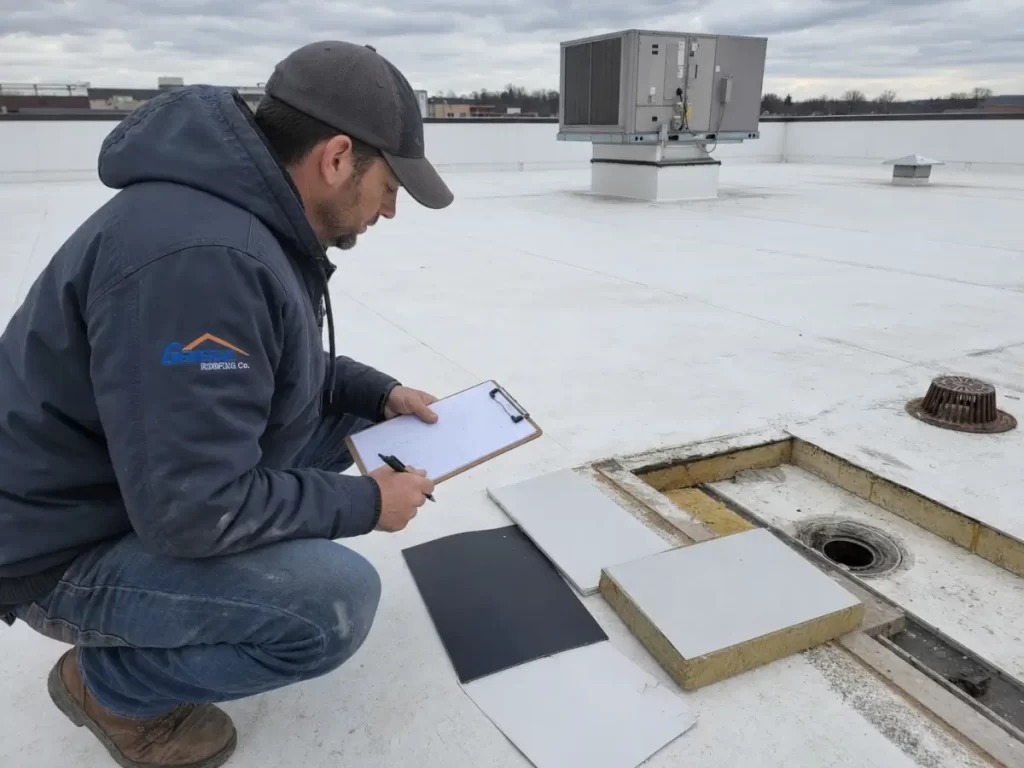
Flat roof PVC cost per square foot makes more sense when you break it into project types.
PVC recover
A recover means installing a new roof system over an existing roof. This only works if the existing roof is dry, stable, code-compliant, and suitable for the new assembly.
Typical range: $8 to $11 per square foot
This is usually the lower-cost PVC option. It can be a good fit when the roof is aging but not soaked, damaged, or overloaded with old roofing layers.
Standard PVC roof replacement
A standard replacement usually means removing the old roof or properly preparing the surface, correcting problem areas, installing insulation or cover board, then installing the PVC system.
Typical range: $9 to $14 per square foot
This is where many commercial PVC roof cost estimates land when the roof needs real replacement work but is not a nightmare underneath.
PVC replacement with insulation upgrades
If the roof needs new insulation, tapered insulation, or wet insulation removal, the price goes up.
Typical range: $12 to $18+ per square foot
This is common on older commercial roofs, especially when leaks have been patched for years instead of solved.
Complex commercial PVC roof
Some roofs are just more work.
Restaurant roofs, industrial roofs, medical buildings, mixed-use properties, and roofs with heavy equipment often land in this category.
Typical range: $15 to $22+ per square foot
That does not automatically mean the contractor is overcharging. It may mean the roof has more risk, more detail work, and more labor baked into the job.
PVC vs TPO roofing cost
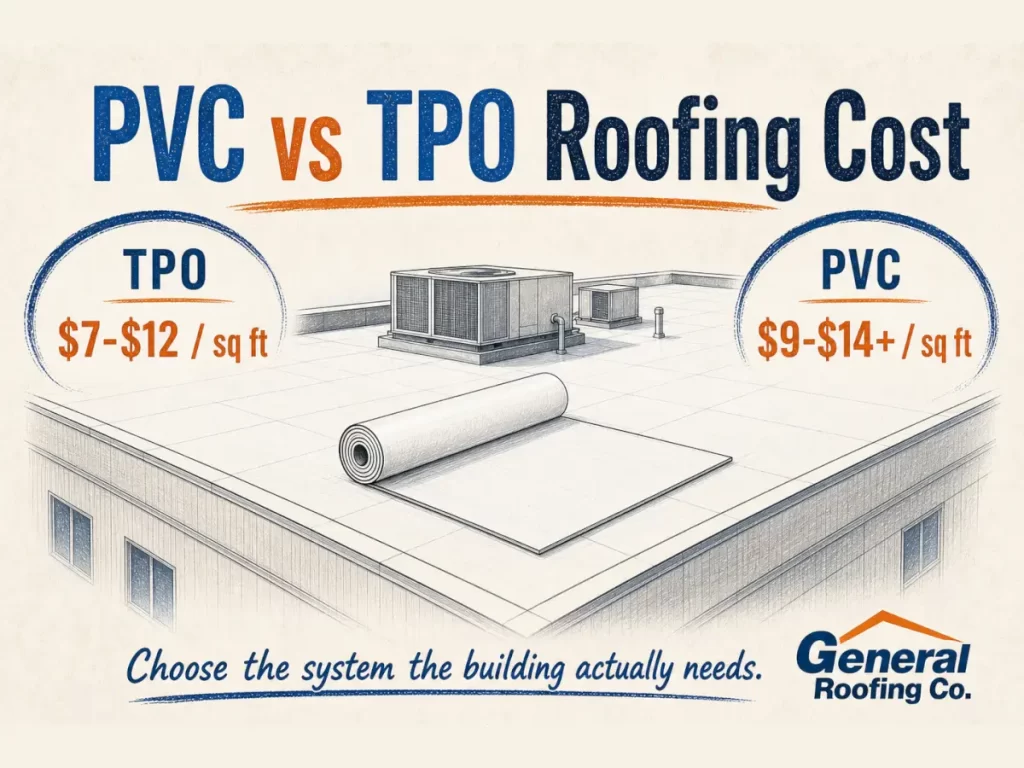
PVC vs TPO roofing cost is one of the first comparisons most building owners make.
TPO usually costs less. PVC usually costs more. Both are single-ply membranes. Both use heat-welded seams. The better choice depends on what the roof needs to handle.
| Roofing system | Typical installed cost | Often used for |
|---|---|---|
| TPO | $7 to $12 per sq ft | Commercial flat roofs where budget matters |
| PVC | $9 to $14+ per sq ft | Roofs with tougher exposure needs |
| Complex PVC system | $15 to $22+ per sq ft | Restaurants, industrial roofs, detailed commercial jobs |
TPO can be a smart roof system. Plenty of buildings do not need PVC.
PVC starts to make more sense when the roof deals with grease, certain chemicals, heavy rooftop activity, or other exposure issues. Carlisle describes some PVC and KEE HP PVC membranes as options for roofs exposed to grease, harsh chemicals, coolants, acid rain, and intense sunlight on its PVC and KEE HP roofing membrane page.
If you are pricing both systems, read our guide to TPO roofing cost per square foot before choosing. It will help you compare the numbers without lumping every flat roof membrane into the same bucket.
Is PVC worth the higher cost?
Sometimes, yes. Sometimes, no.
PVC can be a good fit for commercial buildings where welded seams, chemical resistance, grease resistance, and roof durability matter. It is common on low-slope commercial roofs, including warehouses, retail buildings, offices, restaurants, and industrial properties.
But if the roof is simple, exposure is low, and the main goal is keeping the project cost controlled, TPO may do the job just fine.
This is where a lot of owners get stuck. They ask, “Which roof is best?” The better question is, “What does this building actually need?”
A roof over a restaurant kitchen has different demands than a roof over a small office. A roof with ponding water has different problems than one with clean drainage. A roof with 20 rooftop units is not priced like an empty rectangle.
What raises the cost to install PVC roofing?
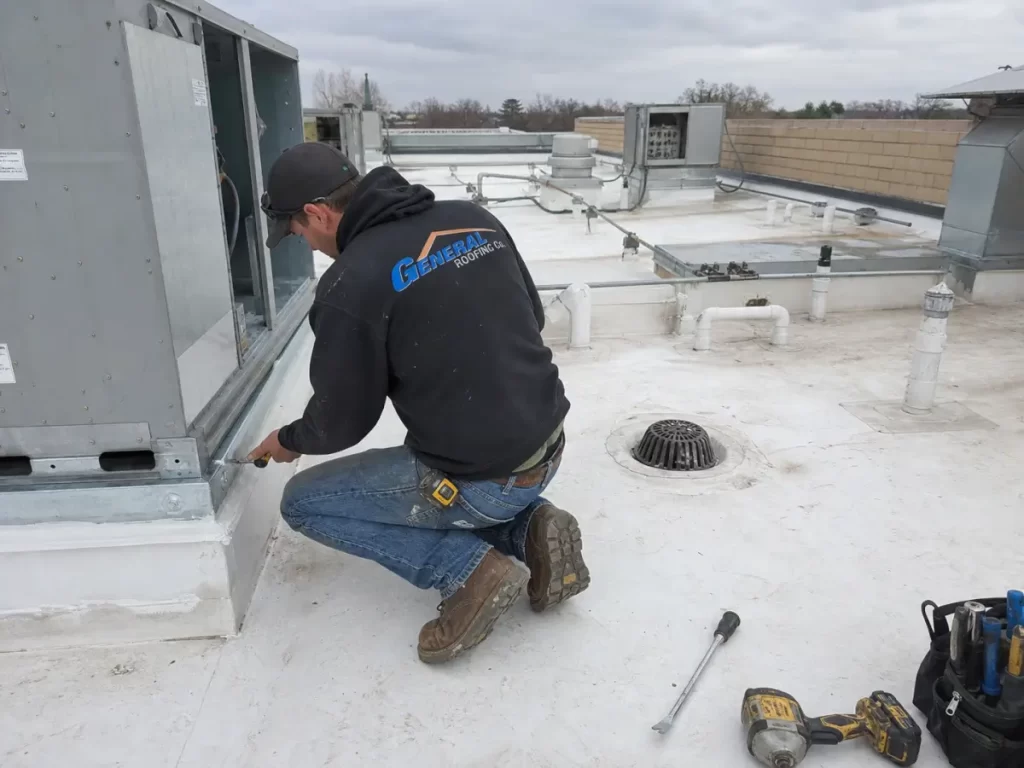
The cost to install PVC roofing goes up when the roof needs more prep, more detail work, or more repair before the new system goes down.
Common price adders include:
- Removing multiple roof layers
- Replacing wet insulation
- Repairing damaged decking
- Adding tapered insulation
- Reworking drains or scuppers
- Upgrading edge metal
- Flashing a lot of penetrations
- Working around HVAC units
- Installing a thicker membrane
- Meeting longer warranty requirements
- Handling tight access or difficult staging
The cheapest PVC quote is not always the cheapest roof. A low bid that skips wet insulation, drainage issues, bad flashing, or manufacturer requirements can turn into a very expensive “deal.”
How to get a more accurate PVC commercial roof cost
You can use square footage for rough budgeting. For a real PVC commercial roof cost, the roof needs to be inspected.
A contractor should look at:
- Roof size
- Existing roof type
- Number of roof layers
- Drainage
- Insulation condition
- Deck condition
- Rooftop equipment
- Access
- Edge details
- Leak history
- Warranty goals
If the roof is actively leaking, it is worth figuring out where the water is getting in before jumping straight to replacement numbers. Our guide on how to find a roof leak explains why water often shows up inside the building far from the actual roof opening.
For commercial buildings in the East Bay, San Francisco, and nearby areas, we can inspect the roof and talk through whether PVC is the right fit. If another system makes more sense, we will tell you. You can start with a roof estimate.
FAQs
What is the average PVC roofing cost per square foot?
PVC roofing cost per square foot is often around $9 to $14 installed for many commercial projects. Simple recover jobs can cost less. Complicated replacements with tear-off, insulation upgrades, deck repairs, or tough access can run $15 to $22+ per square foot.
Is PVC roofing more expensive than TPO?
Yes. PVC roofing usually costs more than TPO. TPO is often chosen when budget is the main concern. PVC is often chosen when the roof has tougher exposure, grease, chemicals, heavy rooftop activity, or specific performance needs.
What is the cost to install PVC roofing on a flat roof?
The cost to install PVC roofing on a flat roof often starts around $9 to $14 per square foot for many commercial buildings. The final price depends on tear-off, insulation, access, flashing, membrane thickness, drains, and rooftop equipment.
What affects PVC membrane roofing cost the most?
Tear-off, insulation, membrane thickness, roof access, flashing, wet insulation, deck repairs, and rooftop equipment usually have the biggest impact on PVC membrane roofing cost.
Is PVC roofing good for restaurants?
PVC can be a good fit for restaurant roofs because some PVC systems are designed for tougher exposure, including grease and certain chemicals. The right choice still depends on the exhaust layout, roof drainage, existing roof condition, and manufacturer requirements.
Can PVC roofing be installed over an old roof?
Sometimes. A recover may work if the old roof is dry, stable, code-compliant, and suitable for the new PVC system. If there is trapped moisture, too many roof layers, or damaged decking, tear-off is usually the safer option.
Final thoughts
PVC roofing cost per square foot is usually higher than TPO, but that does not make it a bad choice. It just means the roof needs to justify the upgrade.
For many commercial buildings, PVC roofing cost falls around $9 to $14 per square foot. More complicated jobs can cost more, especially when tear-off, insulation, roof access, or rooftop equipment add labor.
The best move is to price the roof you actually have, not the clean version of it on a spreadsheet. Once you know the roof condition, drainage, insulation, and exposure risks, the PVC vs TPO roofing cost conversation gets much easier.
Recent Comments