
Most commercial roofs last somewhere between 15 and 35 years. That’s a big range, which is annoying but honest.
A clean, well-drained TPO roof that gets inspected every year can age very differently from a flat roof with ponding water, cracked seams, clogged drains, and HVAC crews walking across it every month.
So the better question is not only “how long does a commercial roof last?” It’s also “what kind of roof do I have, and what condition is it actually in?”
Commercial roof lifespan by material
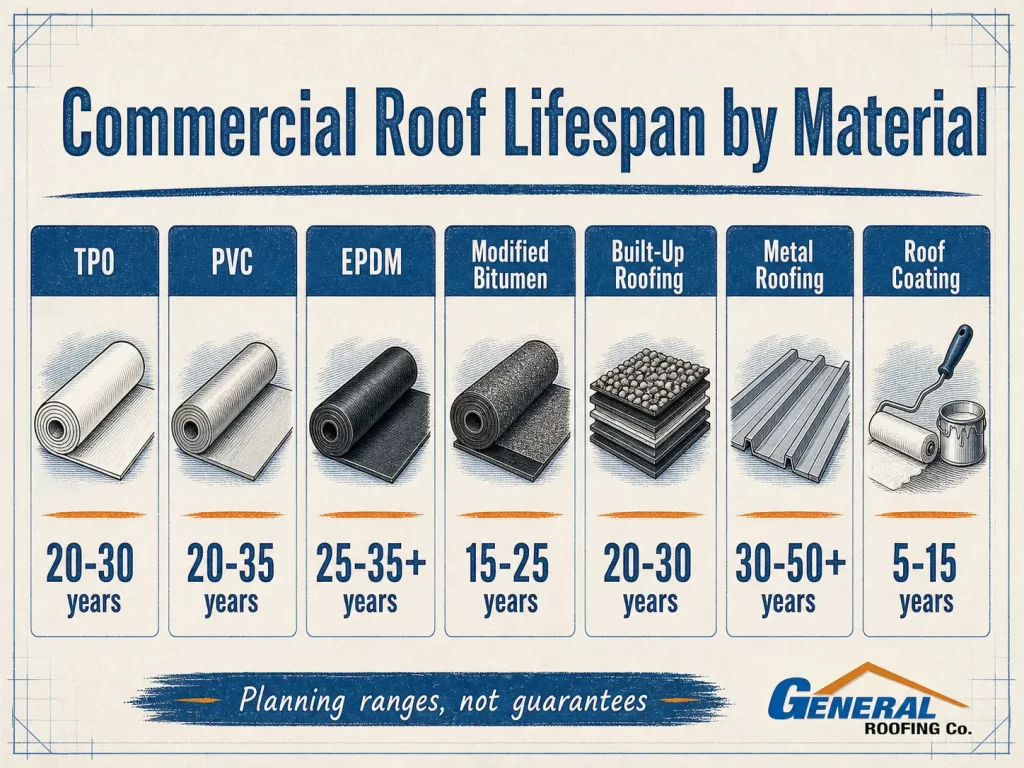
These are normal planning ranges, not guarantees. A roof can beat these numbers if the system was installed well and maintained. It can also fall short if drainage is poor or small issues sit too long.
| Commercial roof type | Typical lifespan |
|---|---|
| TPO roofing | 20 to 30 years |
| PVC roofing | 20 to 35 years |
| EPDM roofing | 25 to 35+ years |
| Modified bitumen | 15 to 25 years |
| Built-up roofing | 20 to 30 years |
| Metal roofing | 30 to 50+ years |
| Roof coating over a qualified existing roof | 5 to 15 years |
Most commercial roofs in the Bay Area are low-slope or flat, so single-ply systems like TPO, PVC, and EPDM show up a lot. GAF’s single-ply membrane guide explains the main differences between TPO, PVC, PVC KEE, and EPDM. EPDM also has a long record in commercial roofing, with Carlisle noting that EPDM has been used on low-slope roofs for more than 50 years.
If you want the residential side too, we covered that separately in our guide on how long a roof lasts in California.
Why commercial roof lifespan varies so much
Commercial roofs usually don’t fail all at once. They wear down quietly.
A seam opens a little. A drain clogs. Water sits longer than it should. Flashing around a curb gets brittle. Someone servicing rooftop equipment drops a tool or drags a panel across the membrane. None of that sounds dramatic until the ceiling stain shows up.
The biggest things that affect commercial roof lifespan are:
- installation quality
- drainage
- membrane thickness
- seam condition
- flashing details
- rooftop foot traffic
- HVAC units and roof penetrations
- sun exposure
- maintenance history
- whether leaks were fixed early or patched repeatedly
Flat roofs need more attention because water does not leave the roof as quickly. A sloped roof has gravity helping it. A flat commercial roof depends on drains, scuppers, crickets, gutters, and tapered insulation doing their job. When that system is off, the roof ages faster.
How long does a flat commercial roof last?
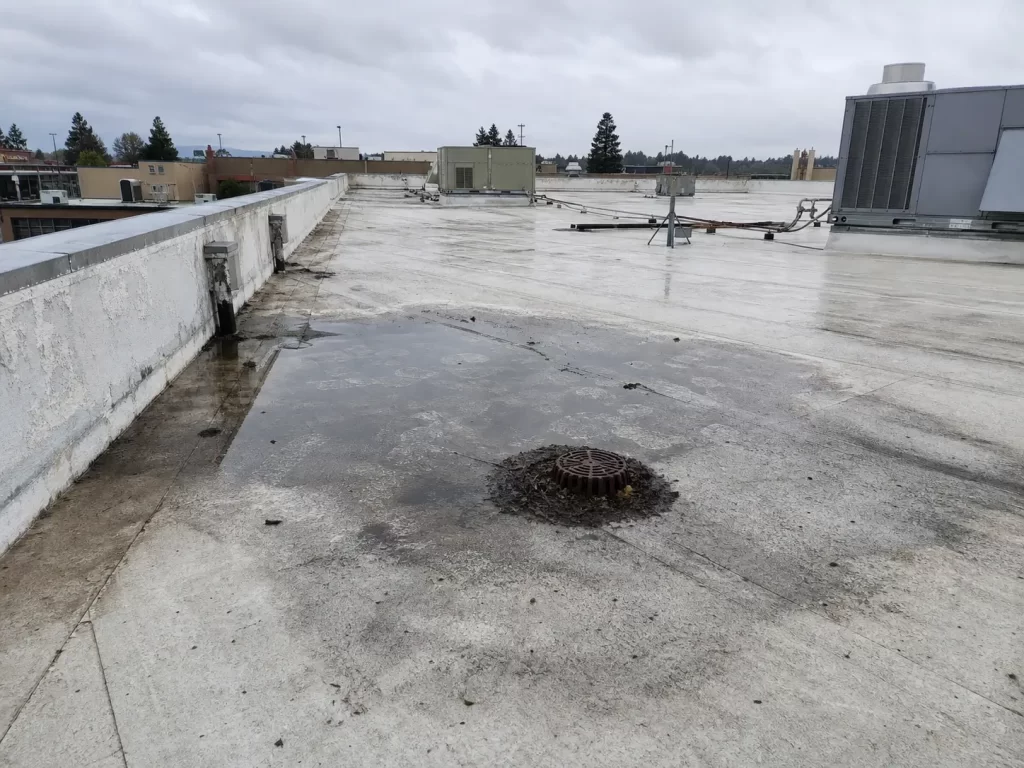
A flat commercial roof usually lasts 15 to 35 years.
That’s the clean answer. The messier answer is that some flat roofs are technically still “alive” long after they stop being financially sensible.
You might have a 24-year-old roof that still has dry insulation, solid seams, and no major drainage problems. That roof may have more time left. You might also have a 14-year-old roof that leaks every winter because water sits in the same low spots after every storm. That roof may be closer to replacement than the age suggests.
Flat roof lifespan comes down to condition, not just age.
TPO roof lifespan
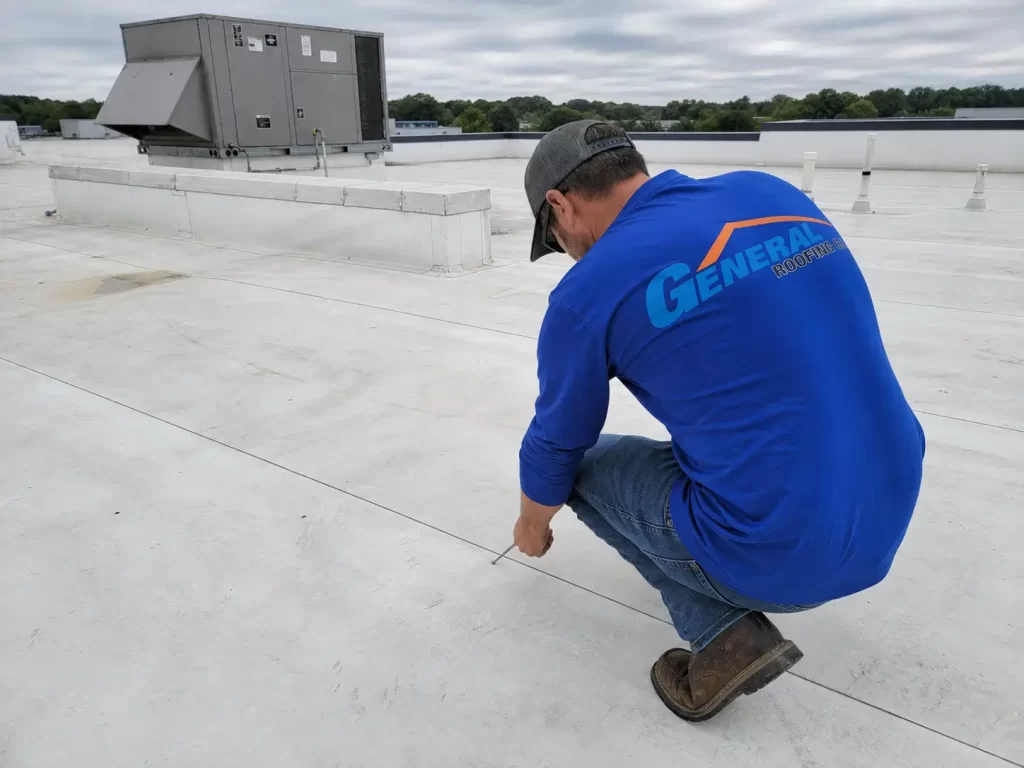
A TPO roof usually lasts around 20 to 30 years.
TPO is common on commercial buildings because it is reflective, heat-welded at the seams, and often more cost friendly than some other single-ply options. It can be a good fit for offices, warehouses, retail buildings, and many low-slope commercial roofs.
In California, reflectivity can matter for code and energy performance. The California Energy Commission says the 2025 Energy Code applies to permit applications filed on or after January 1, 2026. The Cool Roof Rating Council also explains California Title 24 roofing requirements, including reflectance and thermal emittance.
TPO is not a set it and forget it roof, though. The roof still needs clean seams, proper flashing, working drains, and regular inspections. A good TPO roof can lose years of life when ponding water, punctures, or open seams sit too long.
For budgeting, our guide to TPO roofing cost per square foot may help.
PVC roof lifespan
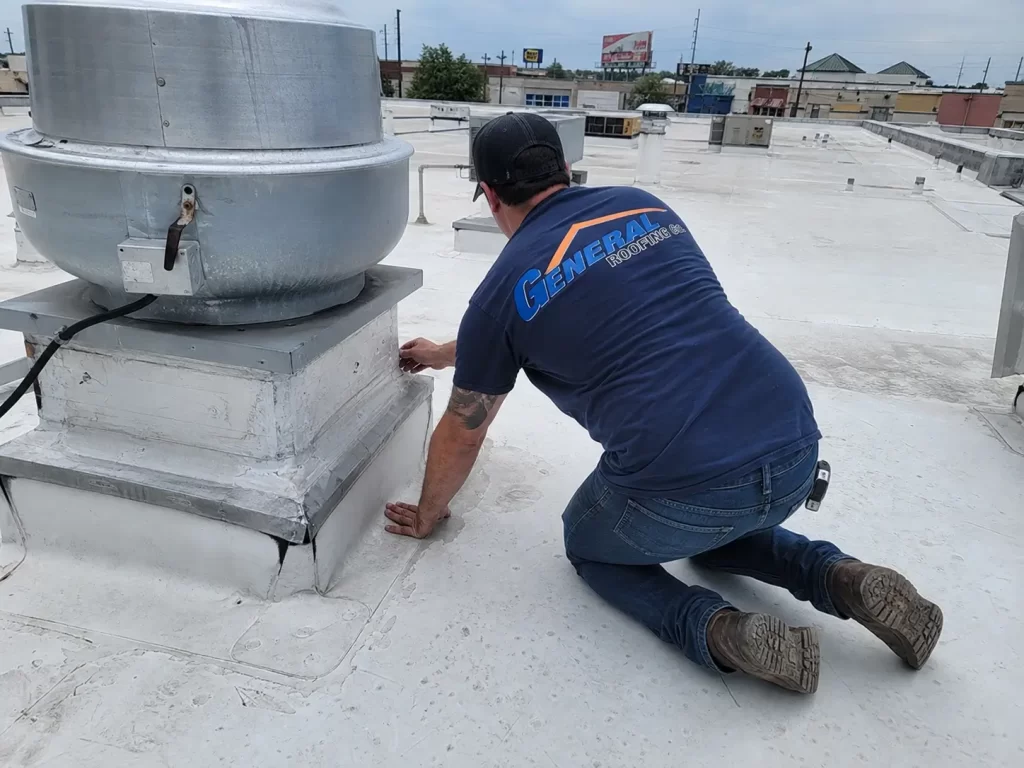
A PVC roof usually lasts around 20 to 35 years.
PVC is also a single-ply membrane, but it is often chosen for roofs that need better resistance to grease, oils, chemicals, or certain exhaust conditions. That can make it useful for restaurants, food facilities, and some industrial buildings.
Not every building needs PVC. For a standard office, retail space, or warehouse, TPO may be the better fit. It depends on how the building is used, what is on the roof, what comes out of the vents, and what the budget looks like.
With PVC, the details matter. The membrane may look fine across the open field of the roof while trouble starts at drains, walls, curbs, pipe penetrations, or edges. That’s where commercial roofs tend to get sneaky.
EPDM roof lifespan
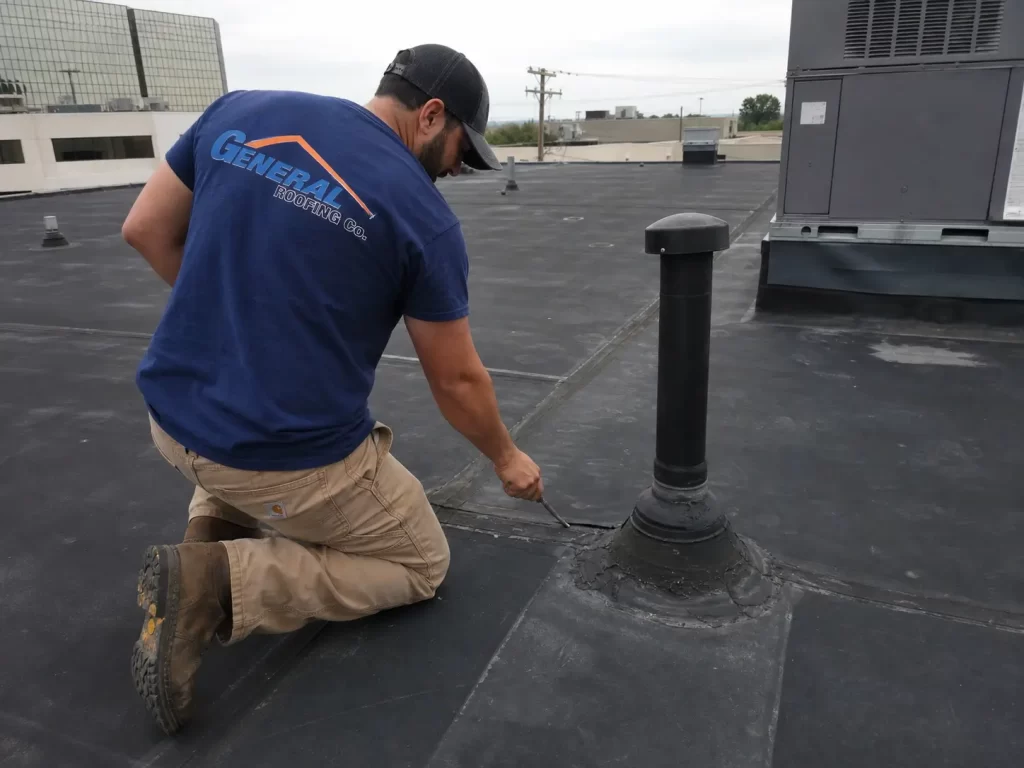
An EPDM roof often lasts around 25 to 35 years, sometimes longer with good maintenance.
EPDM is a rubber roofing membrane with a long history on low-slope buildings. It is durable, flexible, and proven. The main tradeoff is heat. Traditional black EPDM absorbs more heat than white reflective roofing systems, which may matter in California depending on the building, roof assembly, and energy requirements.
White EPDM exists, but the best material choice depends on the roof. A warehouse, restaurant, apartment building, and industrial facility may all need different things from the roof.
On older EPDM roofs, seams and flashing deserve close attention. EPDM seams are usually adhesive-based, unlike heat-welded TPO or PVC seams. Over time, seam wear, shrinkage, and flashing stress can become the weak spots.
Modified bitumen roof lifespan
Modified bitumen roofs usually last about 15 to 25 years.
They are common on flat and low-slope commercial buildings, especially older properties. Modified bitumen can perform well, but it does not love standing water, heavy foot traffic, poor installation, or neglected repairs.
A modified bitumen roof near the end of its life may show cracking, blistering, open laps, worn surfacing, or repeated leaks around the same problem areas. Sometimes targeted repair is enough. Sometimes the roof has simply aged out.
Built-up roofing lifespan
Built-up roofing, often called BUR, usually lasts around 20 to 30 years.
These roofs use multiple layers, which can make them tough. They are also heavier and more labor intensive than many newer systems. You’ll still see built-up roofs on older commercial buildings around Oakland, Berkeley, Alameda, San Leandro, and the surrounding East Bay.
BUR can last a long time when drainage is good and the roof is maintained. Once water gets into the system, though, repairs can get complicated.
Metal commercial roof lifespan
A metal commercial roof can last 30 to 50 years or more.
Metal is more common on sloped commercial buildings, warehouses, industrial properties, and some architectural projects. It has a longer potential lifespan than many flat roof systems, but it still needs maintenance.
Leaks can happen around fasteners, seams, transitions, skylights, vents, and roof penetrations. Coatings also wear down. Metal lasts a long time, but it is not maintenance-free.
When should you start planning for commercial roof replacement?
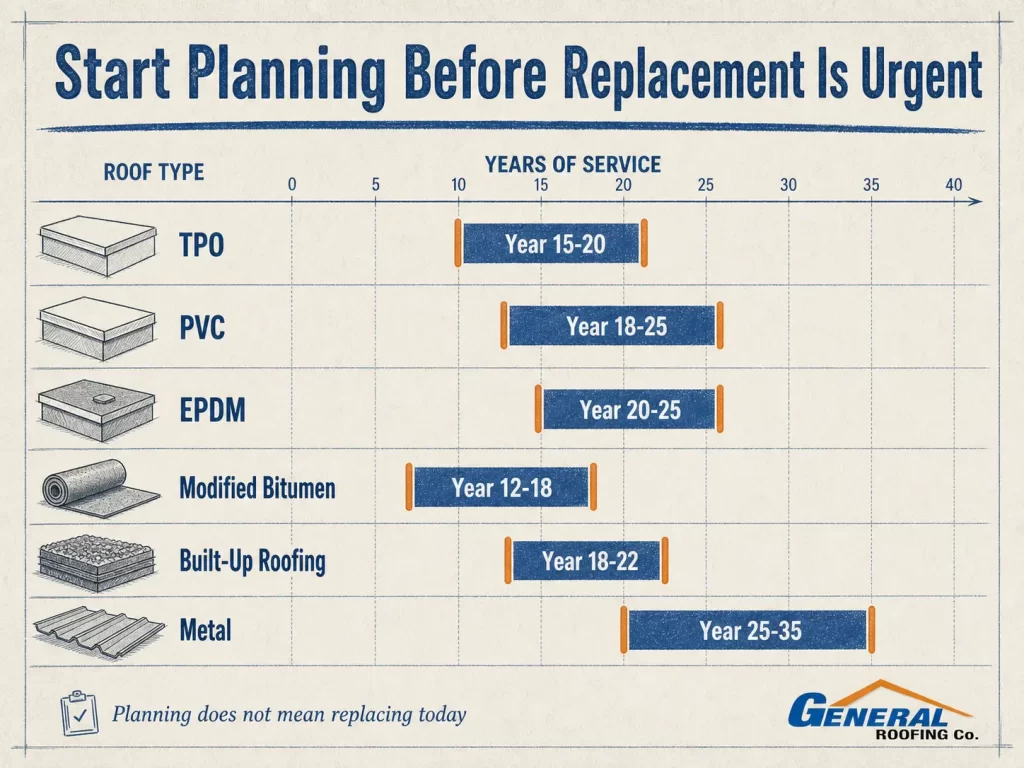
You do not need to wait for buckets in the hallway to start planning.
A roof replacement plan can start years before the actual replacement. That gives you time to inspect the roof, check the insulation, review drainage, compare options, and budget without panic.
| Roof type | Start planning around |
|---|---|
| TPO | year 15 to 20 |
| PVC | year 18 to 25 |
| EPDM | year 20 to 25 |
| Modified bitumen | year 12 to 18 |
| Built-up roofing | year 18 to 22 |
| Metal | year 25 to 35 |
Planning does not mean you have to replace the roof right away. It means you stop guessing.
Emergency replacement is usually the expensive version. By then, you may be dealing with leaks, wet insulation, tenant complaints, interior damage, rushed scheduling, and fewer options.
If your roof is getting close to replacement age, our roof system replacement services page explains how we approach commercial replacement projects.
How often should a commercial roof be replaced?
Most commercial roofs are replaced every 15 to 35 years.
That answer is useful for rough planning, but the roof itself gets the final vote. A 17-year-old roof with wet insulation may need replacement. A 27-year-old roof with good drainage and a clean maintenance history may still have life left.
Replacement starts making more sense when:
- leaks keep coming back
- large areas of seams are failing
- flashing is cracked, loose, or pulling away
- insulation is wet
- water ponds after storms
- repair costs keep climbing
- the roof is near the end of its expected lifespan
- the building is being upgraded or repositioned
- the roof no longer fits how the building is used
Wet insulation is a big one. Once water gets under the membrane, a surface patch may not solve the real problem. The roof can look patched from above while moisture keeps spreading below.
Can maintenance extend commercial roof lifespan?
Yes. Maintenance can absolutely help a commercial roof last longer.
It is not exciting. Nobody brags about clearing drains. But that’s often what keeps a flat roof from turning into a leak problem.
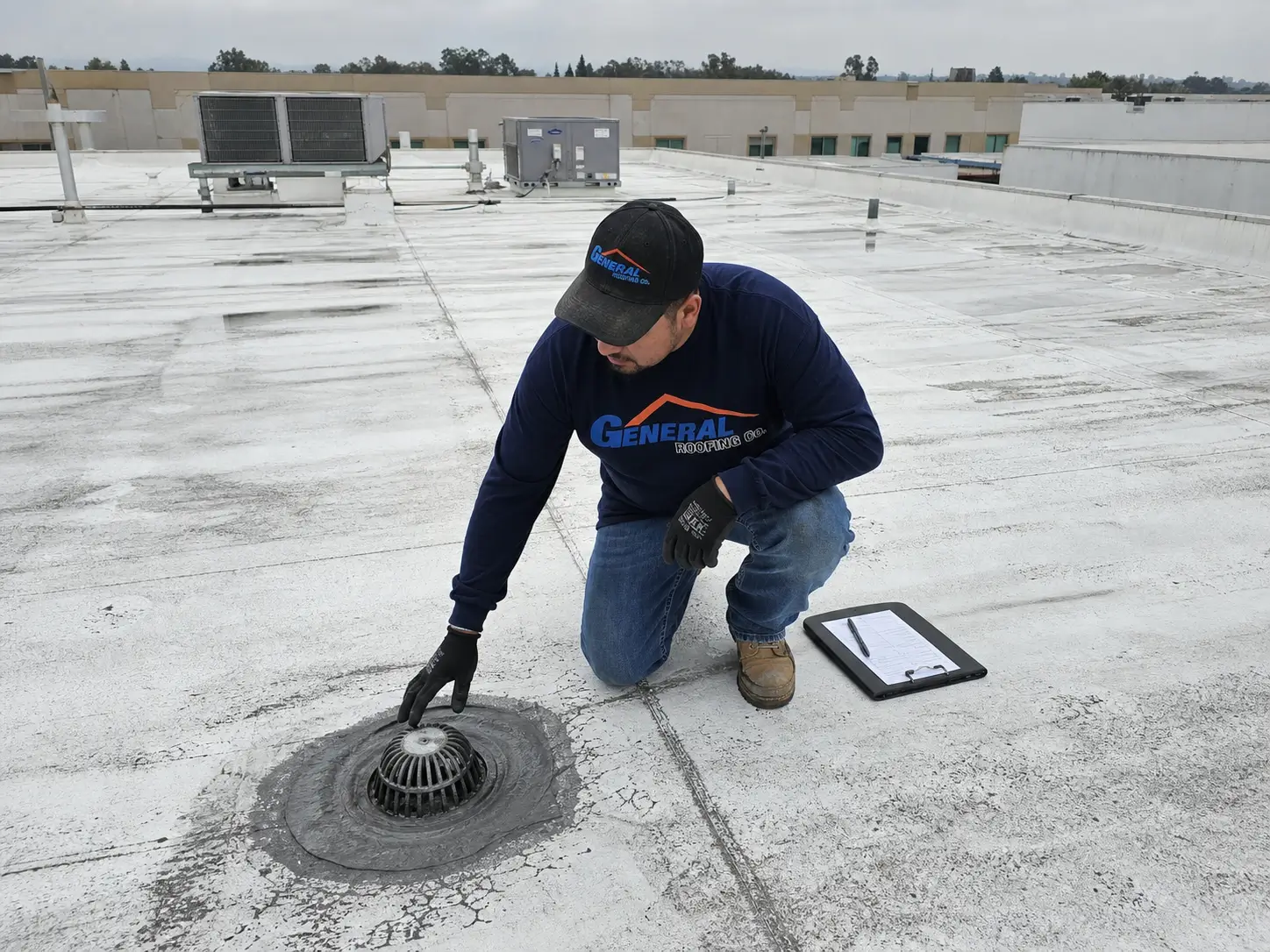
Good maintenance usually includes checking seams, flashings, drains, gutters, scuppers, penetrations, rooftop units, signs of ponding water, membrane damage, and interior leak stains. It also gives you a chance to fix small problems while they are still small.
At General Roofing, we like the boring version of roof ownership. Inspect it. Clean it. Repair what needs repair. Track what is aging. Avoid surprises where possible.
Our repair and maintenance services are built around that approach.
Should you repair, restore, or replace?
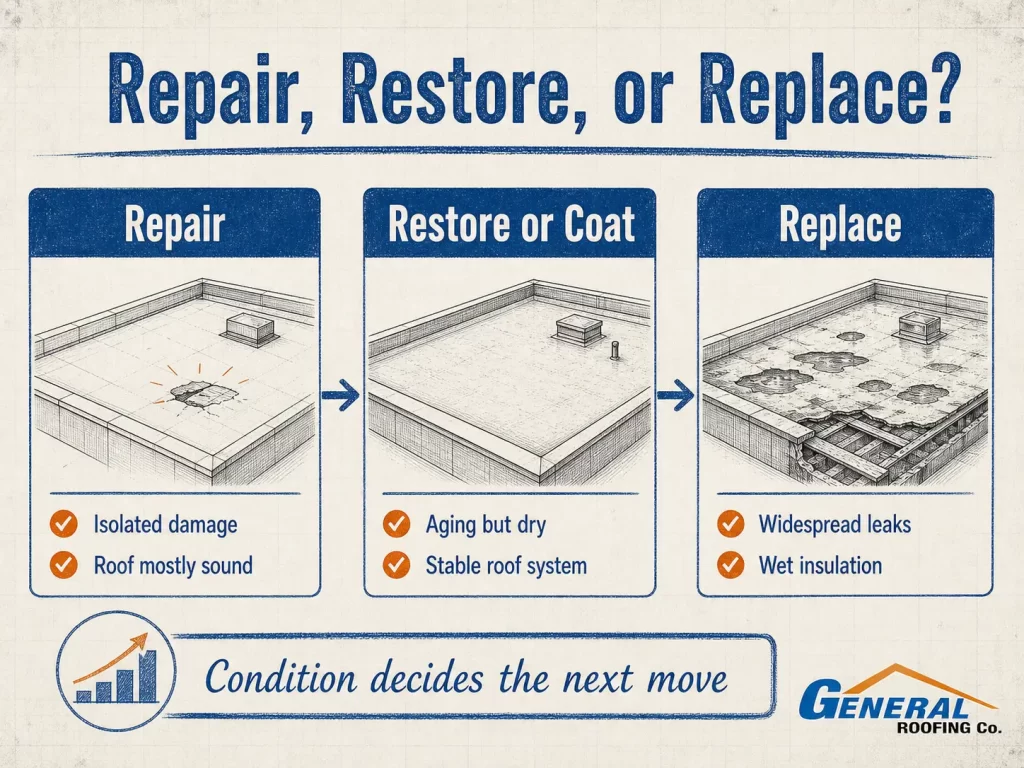
Not every aging roof needs to be torn off. Sometimes repair is enough. Sometimes restoration or coating makes sense. Sometimes replacement is the cleaner choice, even if it costs more up front.
| Option | When it makes sense |
|---|---|
| Repair | The damage is isolated and the rest of the roof is in decent shape |
| Restore or coat | The roof is aging but still dry, stable, and structurally sound |
| Replace | Leaks are widespread, insulation is wet, or the roof is near the end of its life |
Coatings can be useful on the right roof. They should not be used to hide a failing one. Coating over wet insulation or widespread membrane failure usually just buys a little time while the real problem gets worse.
For early budgeting, read our guide to commercial roof replacement cost per square foot in California.
FAQ
How long does a commercial roof last on average?
Most commercial roofs last about 15 to 35 years. TPO, PVC, EPDM, modified bitumen, built-up roofing, and metal all have different lifespan ranges, but maintenance and drainage can change the outcome.
What is the average flat commercial roof lifespan?
The average flat commercial roof lifespan is usually 15 to 35 years. TPO and PVC often fall in the 20 to 30 year range, while EPDM may last 25 to 35 years or more.
How long does a flat roof last?
A flat roof usually lasts 15 to 35 years, depending on the material, drainage, installation, climate, and maintenance. Poor drainage can shorten that lifespan quickly.
How long does a TPO roof last?
A TPO roof usually lasts about 20 to 30 years when installed well and maintained. Seam condition, drainage, punctures, and rooftop foot traffic all affect lifespan.
How long does a PVC roof last?
A PVC roof usually lasts about 20 to 35 years. PVC can be a good choice for buildings that need better resistance to grease, oils, or certain chemicals.
How long does an EPDM roof last?
An EPDM roof often lasts about 25 to 35 years or more. Older EPDM roofs should be checked for seam wear, shrinkage, flashing stress, and punctures.
What commercial roof lasts the longest?
Metal roofing often lasts the longest, with many systems reaching 30 to 50 years or more. For low-slope roofs, EPDM, PVC, and TPO can all perform well when the roof is installed correctly and maintained.
How do I know if my commercial roof needs replacement?
Recurring leaks, wet insulation, widespread seam failure, ponding water, and rising repair costs are common signs. Age matters, but condition matters more.
Final thoughts
So, how long does a commercial roof last? Usually 15 to 35 years, with some systems lasting longer when they are installed well and maintained.
But the roof’s age is only part of the story. A younger roof with drainage problems can be in worse shape than an older roof that has been inspected and repaired over time.
If your commercial roof is leaking more often, getting close to the end of its expected lifespan, or starting to make budgeting uncomfortable, it is worth getting a real inspection. At General Roofing, we can help you figure out whether repair, maintenance, restoration, or replacement makes the most sense for the building.
Recent Comments