
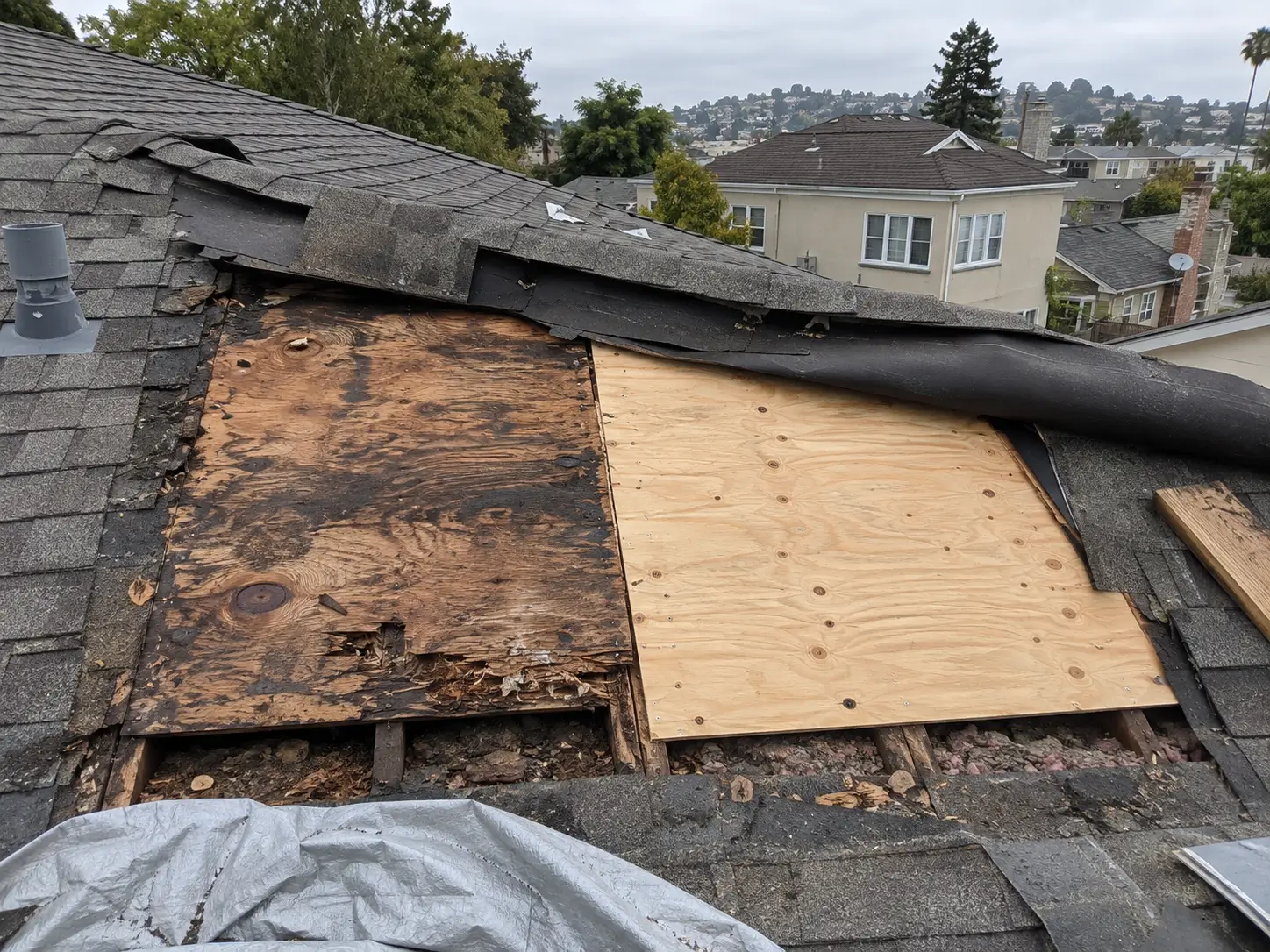
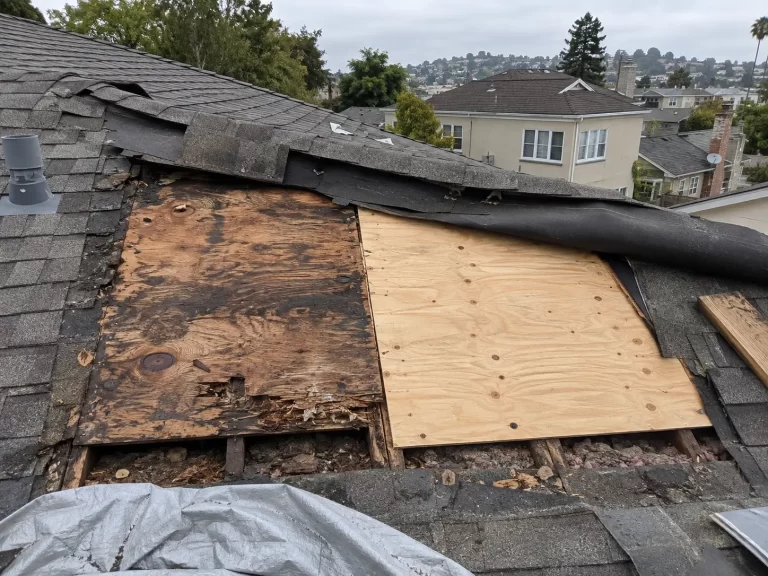
Roof deck damage has a frustrating habit of staying hidden. Shingles can look passable from the street while the wood beneath them is soft, stained, or beginning to rot.
Roof deck repair fixes that structural layer before the roof covering goes back on. Sometimes only a small section needs replacement. Other times, the damage is widespread. The right call depends on the cause, the extent, and whether the remaining deck can still hold fasteners securely.
What is a roof deck?
The roof deck is the solid surface attached to the rafters or trusses. It is also called roof decking or roof sheathing. Underlayment, shingles, and other roofing materials are installed over it.
On many Bay Area homes, the deck is plywood or oriented strand board, usually called OSB. Older buildings may have plank decking. The APA Engineered Wood Association’s roof-system guidance explains how wood structural panels support residential and commercial roof assemblies.
The deck is not the visible roof covering. Replacing a few shingles does not fix weakened sheathing below them. Long-running moisture problems can also reach the rafters or trusses.
Signs you may need roof deck repair
Most homeowners never see the top of the deck until the old roofing is removed. Still, a few clues can point to trouble.
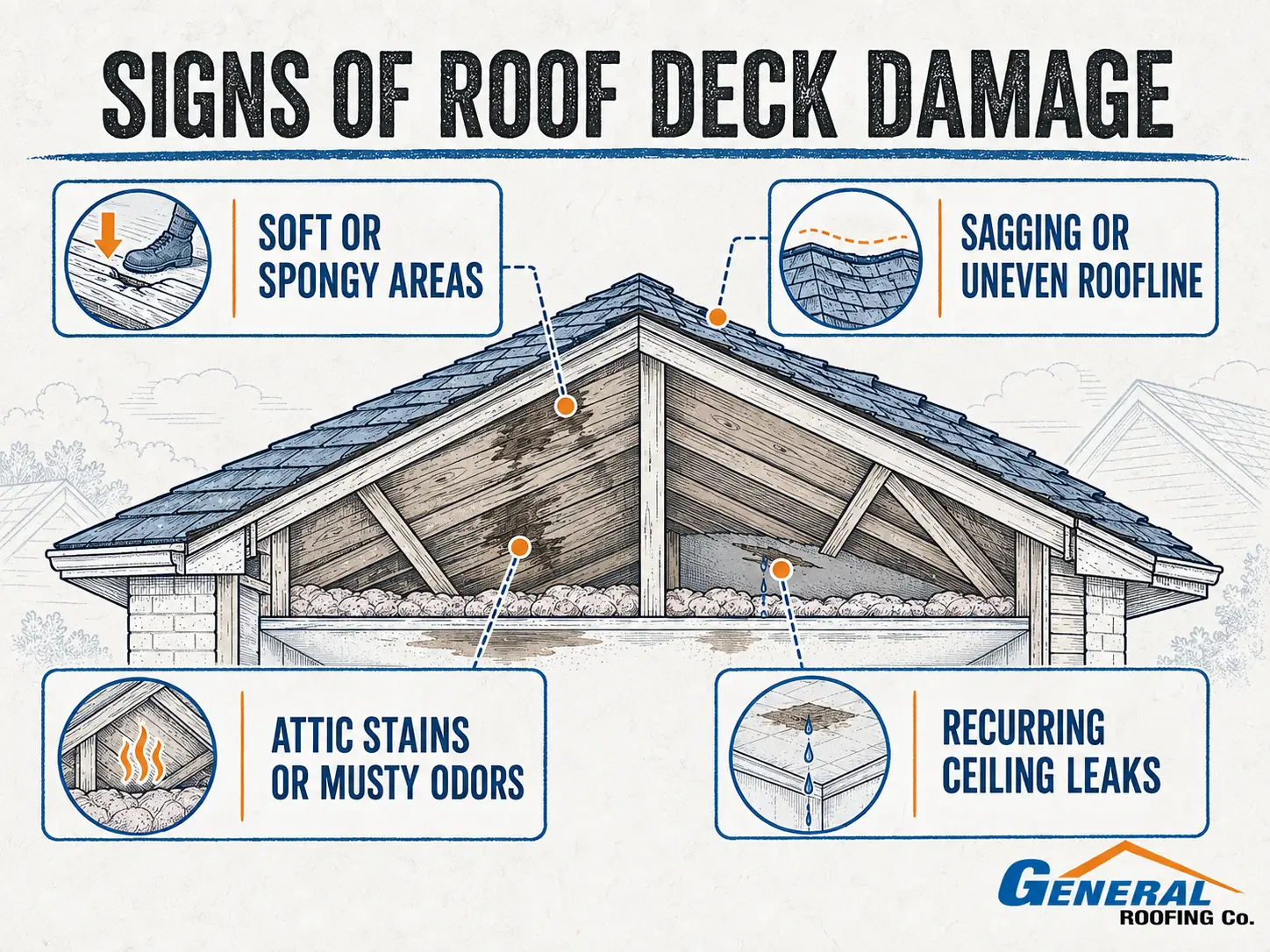
A soft or spongy feeling underfoot
A solid roof should not feel bouncy or give way under pressure. If a roofer finds a soft area during an inspection, the decking may have lost strength from moisture or decay.
Do not climb onto the roof to test it. A weakened section can be a fall hazard.
Sagging or uneven areas
A visible dip in the roofline deserves a closer look. Damaged decking is one possible cause, but the issue could also involve framing, overloaded materials, or movement elsewhere in the structure. This is one of those symptoms that cannot be diagnosed from the sidewalk.
Water stains in the attic
Dark marks, damp insulation, rusty fasteners, or musty odors in the attic can all point to water intrusion. The source may be a failed flashing detail, worn roof covering, damaged vent, or another opening. Finding the entry point matters because new sheathing will not stay new for long if the leak above it remains.
Ceiling stains or recurring leaks
A ceiling stain does not automatically mean the deck is rotten. It does mean water has made it through part of the roofing assembly. A leak that keeps returning after surface repairs is a good reason to inspect the deck and nearby flashing more closely.
Damage uncovered during a reroof
This is the most common surprise, and the timing is not ideal. Once the old shingles and underlayment come off, stained, swollen, delaminated, or rotted panels become visible. GAF’s overview of roof decking and sheathing notes that hidden water damage is often discovered only after the roof covering is removed.
What causes damaged roof decking?
Water is the usual culprit, but it can reach the deck in several ways:
- A worn or missing shingle allows rain into the assembly.
- Flashing fails around a chimney, wall, skylight, or roof penetration.
- A pipe boot or vent leaks.
- Debris or poor drainage keeps part of a low-slope roof wet.
- Indoor moisture collects in the attic because ventilation or air sealing is not working as it should.
- A past leak was covered up without replacing damaged wood.
- Improper panel spacing or fastening contributes to buckling and movement.
The repair needs to address both the bad decking and the reason it went bad. Otherwise, the same spot can fail again.
Can roof decking be repaired, or does it need replacement?
People often use “repair” to describe the whole job, but a coating or filler will not restore badly damaged wood. The crew cuts the affected panel or board back to sound material and replaces it. How much decking must come out depends on what they find around it.
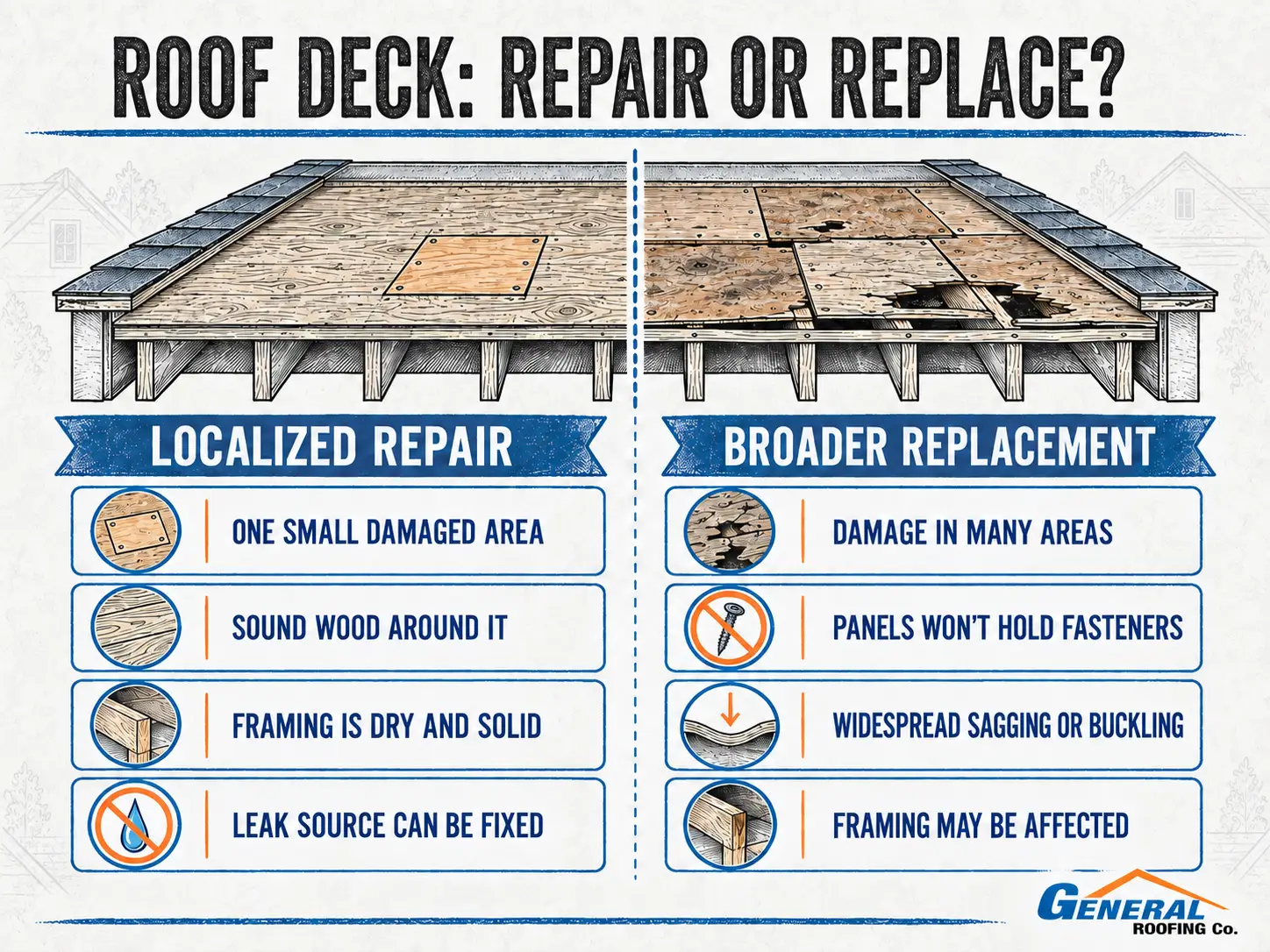
A localized repair may be enough when:
- Damage is confined to a small area around one leak.
- The surrounding deck is dry, flat, and structurally sound.
- Rafters or trusses below the area are in good condition.
- The new section can be properly supported and fastened.
- The leak source can be corrected at the same time.
Broader roof deck replacement may make sense when:
- Rot or delamination appears in many areas.
- Large sections no longer hold fasteners reliably.
- The existing material is unsuitable for the new roof system.
- The deck has widespread sagging, buckling, or poor attachment.
- Repeated leaks have affected both sheathing and framing.
- A full roof system replacement already requires the covering to be removed.
Photos alone cannot settle the choice. An attic inspection can reveal likely damage, but the full extent often becomes clear during tear-off.
What does roof deck repair cost?
Roof decking cost is usually tied to the scope of a larger leak repair or reroofing project. A contractor may price known sheathing replacement in the estimate, use a per-sheet allowance for hidden damage, or document additional work after the old covering is removed.
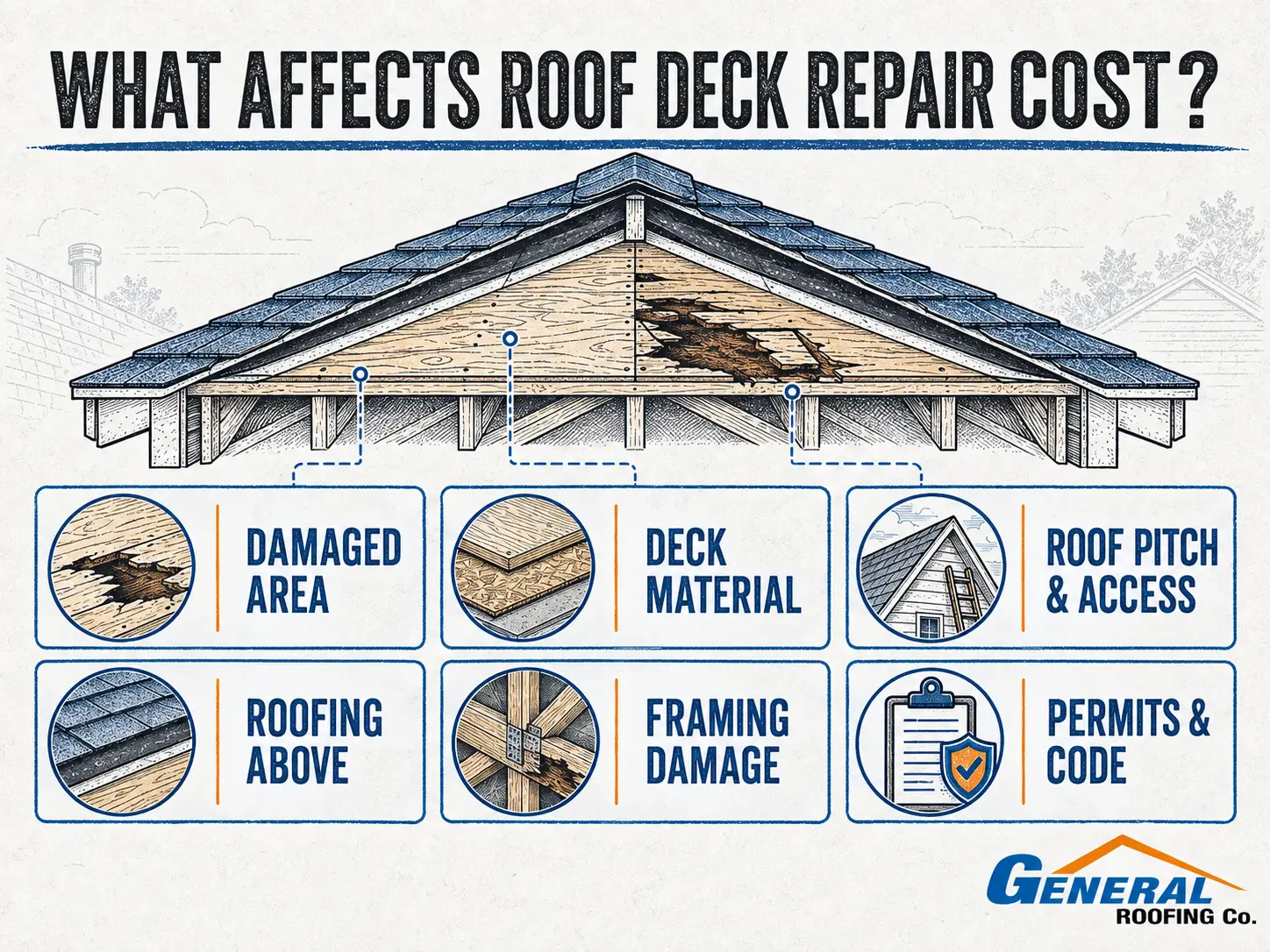
These factors have the biggest effect on price:
| Cost factor | Why it matters |
|---|---|
| Size of the damaged area | Replacing one accessible section takes less material and labor than rebuilding a broad roof plane. |
| Deck material and thickness | Plywood, OSB, plank, metal, and specialty decks require different materials and methods. |
| Roof access and pitch | Steep roofs, tight lots, and multistory buildings require more setup and safety work. |
| Roofing above the deck | Shingles, tile, membranes, and built-up systems have different removal and reinstallation needs. |
| Damage below the deck | Rotted rafters, trusses, nailers, insulation, or interior finishes expand the job. |
| Leak source | Flashing, drainage, ventilation, or penetration repairs may be needed to keep the new deck dry. |
| Permits and code requirements | The required assembly and inspection steps vary by project and jurisdiction. |
For a useful quote, ask what decking allowance is included, how hidden damage will be photographed, and how any additional work will be approved. A very low roof replacement bid can become much less attractive if it leaves those details vague.
How roof decking repair is done
The exact sequence changes with the roof type, but most repairs follow a familiar path:
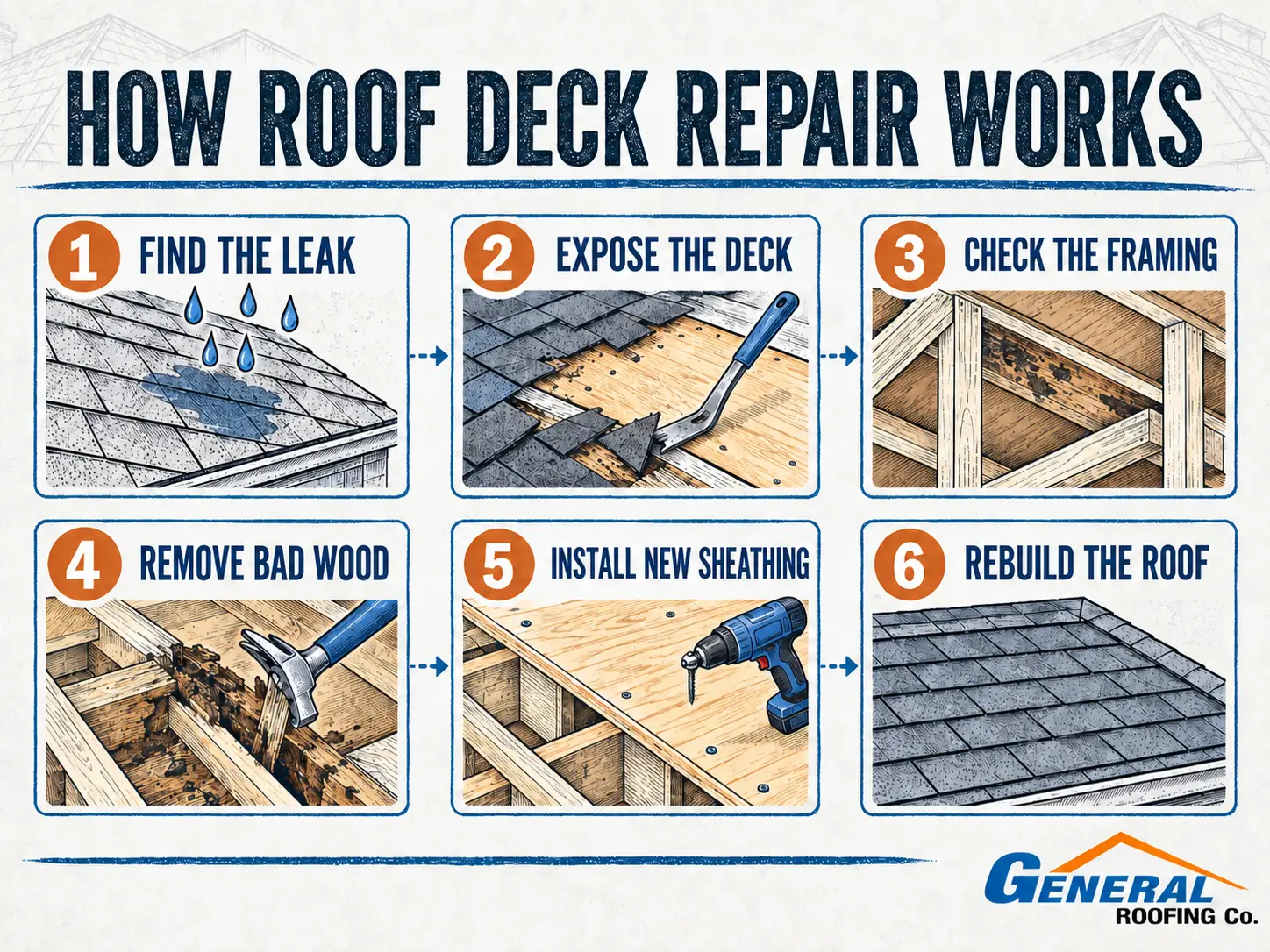
- The roofer checks the roof and attic to trace the moisture path.
- The crew removes enough roofing to find sound material around the damage.
- They check the exposed sheathing and framing below it.
- They cut out soft, delaminated, or rotted material without leaving unsupported edges.
- They install sheathing with the right type, thickness, support, spacing, and fastening. APA’s installation guidance for rated roof sheathing covers panel spacing, fastening, ventilation, and protection with underlayment.
- They repair the flashing, drainage detail, penetration, or other source of the leak.
- They install new underlayment and restore the finished roof covering.
If the project involves a large area or questionable framing, an engineer may need to evaluate the structure. The contractor also needs to follow current local building requirements and the roofing manufacturer’s instructions.
Why waiting can make the job bigger
A small ceiling stain does not always mean a small hidden problem. Moisture can travel along sheathing or framing before it becomes visible indoors.
FEMA’s wind retrofit guidance for residential buildings calls for deteriorated roof deck and framing areas to be identified and repaired or replaced when the roof covering is replaced. A sound deck gives the finished roofing a dependable base.
Early inspection gives you a better chance of dealing with the cause before another rainy season adds to it.
How to reduce the chance of future deck damage
You cannot see most roof decking during routine maintenance, so prevention focuses on the layers and details that keep it dry.
- Have active leaks checked promptly, even if the ceiling stain is small.
- Keep gutters, drains, and scuppers clear so water leaves the roof.
- Replace damaged roofing and failed sealants before water reaches the deck.
- Include flashing and penetrations in regular roof inspections.
- Watch for attic moisture, condensation, and ventilation problems.
- After major roof work, keep photos and documentation of any sheathing replaced.
Our roof repair and maintenance work starts with finding the source, not simply covering the symptom.
Frequently asked questions
Is roof decking the same as roof sheathing?
Yes, the terms are commonly used interchangeably. Both refer to the structural surface installed over rafters or trusses and beneath the underlayment and finished roof covering.
Can you replace roof decking without replacing the whole roof?
Often, yes. A localized section may be replaced as part of a roof repair. It depends on the roof material, damage location, and whether the surrounding assembly can be restored properly.
How do I know if plywood under my shingles is rotten?
Possible clues include soft areas, sagging, attic stains, recurring leaks, and roofing that will not stay fastened. Confirmation usually requires an inspection from the attic, removal of roofing materials, or both.
Does wet roof decking always need to be replaced?
Not automatically. Wood that got wet once may be able to dry without losing strength. Decking that is soft, swollen, delaminated, decayed, or unable to hold fasteners is a different situation and may need replacement. The source of moisture still needs to be fixed.
Should decking be checked during a roof replacement?
Yes. Tear-off is the best opportunity to inspect the full surface because the deck is exposed. Ask the contractor how hidden damage is handled before work begins, including documentation, unit pricing, and approval for added scope.
Final thoughts on roof deck repair
Roof deck repair is less about patching a visible symptom and more about rebuilding a sound base for the roof above it. The best result comes from finding the leak, removing all weakened material, checking the framing, and restoring the weather-resistant layers in the right order.
If you have a recurring leak, a soft area, or a roof replacement coming up in Oakland or elsewhere in the Bay Area, request a roof estimate. We can inspect the assembly, explain what is visible now, and show you any hidden decking damage found once the roof is opened.
Recent Comments