

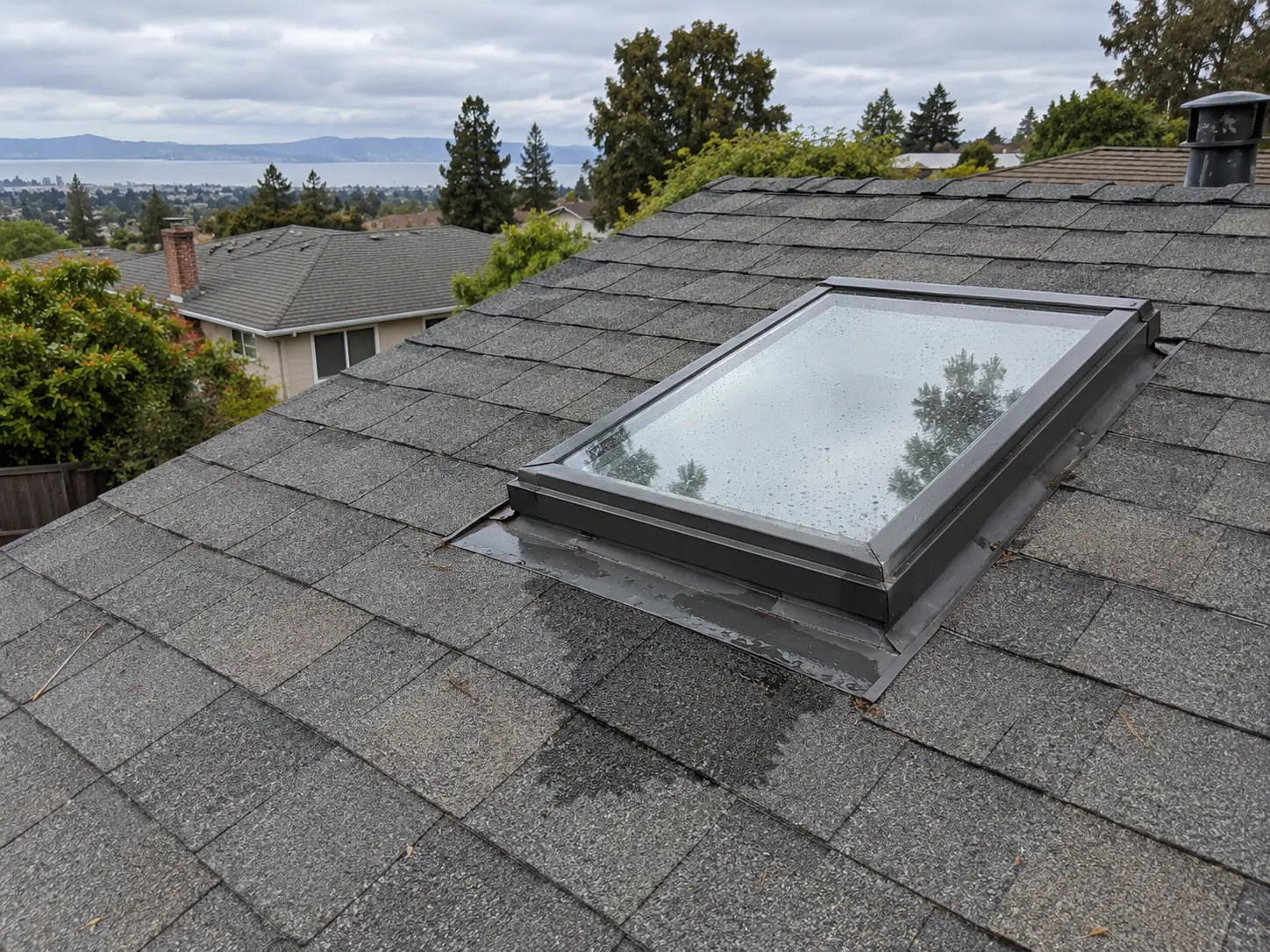
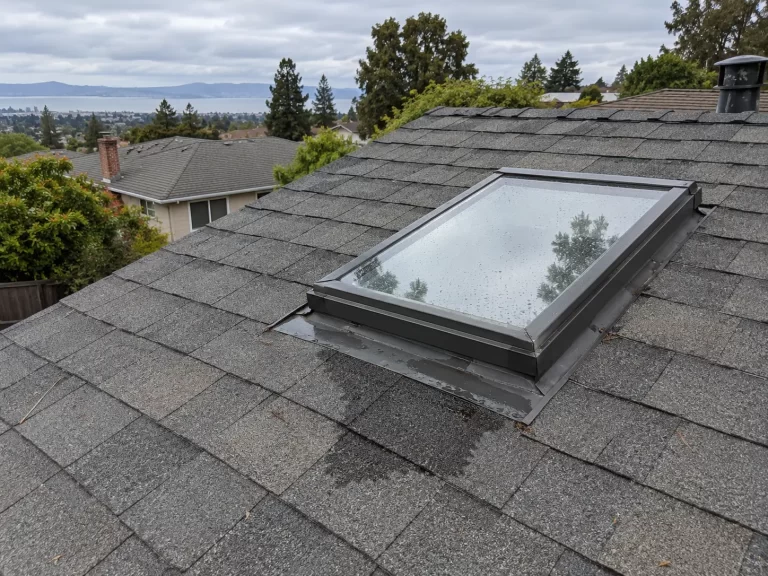
A skylight can look like the obvious source of a leak. Water drips from its frame, the drywall below turns brown, and the next rain is already in the forecast. But the water may have entered through the skylight itself, the flashing around it, or damaged roofing farther uphill. Skylight leak repair starts by finding that path. Caulk applied to the first wet spot rarely tells you much.
If you’d like help tracing a leak in Oakland or elsewhere in the Bay Area, reach out to General Roofing and we’ll talk through what needs to be checked.
Is it rainwater or condensation?
If the skylight drips during rain, especially when wind pushes water across the roof, start with the roof and the skylight assembly. If you see droplets on the glass inside the room on a cold morning, you may be looking at condensation instead. It can run down the pane and stain the same drywall a roof leak would.
Timing helps, but it isn’t proof. Moisture can sit above the ceiling before it drips into the room. Take a photo, note when the water appeared, and look for the earliest wet point you can see safely from indoors. Is it on the glass, at the opening panel of a venting skylight, at one corner of the frame, or on the ceiling several inches away?
The U.S. Department of Energy’s skylight inspection guidance calls for checking the unit, surrounding roof covering, flashing, and roof structure. That wider view matters. A stain at the bottom of the light shaft doesn’t identify where rain entered.
Signs that point toward condensation
Condensation is more likely when moisture beads on the inside of the glass during cold weather or after a shower or cooking. It may happen without rain. A bathroom skylight can show this more often because the room holds more moisture. Wiping the glass dry and watching where new droplets form can help you describe the problem to a contractor.
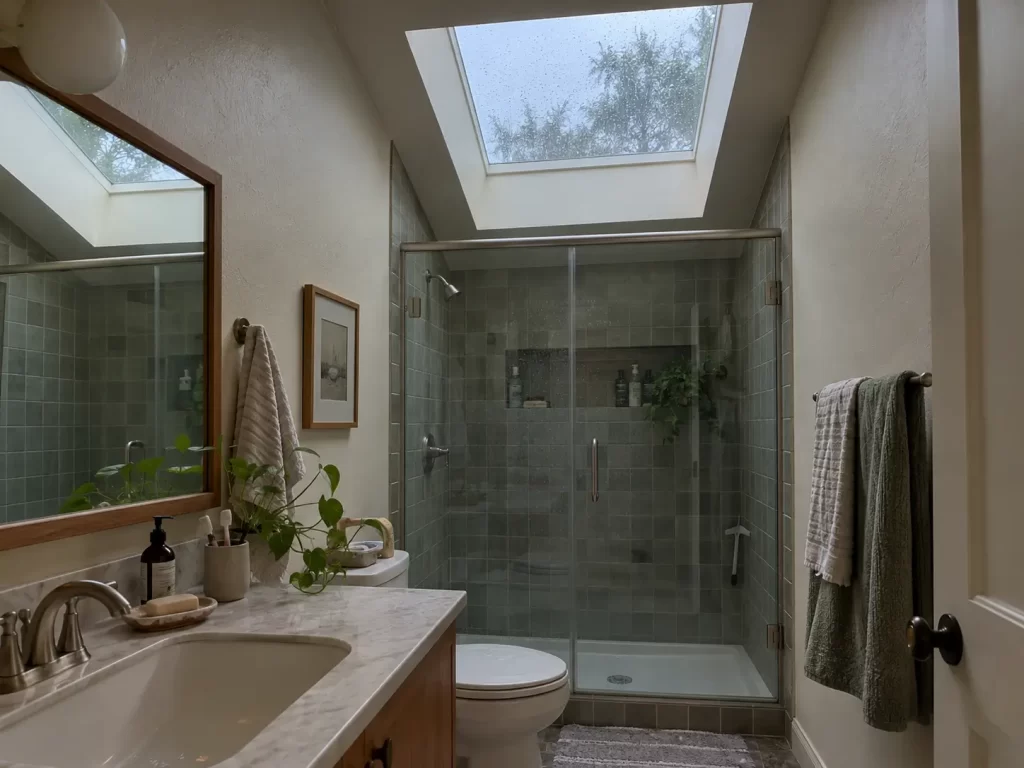
Don’t ignore repeated condensation. Water running into the light shaft can still damage paint and trim. Ventilation, indoor humidity, insulation around the shaft, and the skylight’s condition may all need attention. The Department of Energy explains that excess condensation can damage window and skylight components and nearby surfaces.
Where skylight leaks usually start
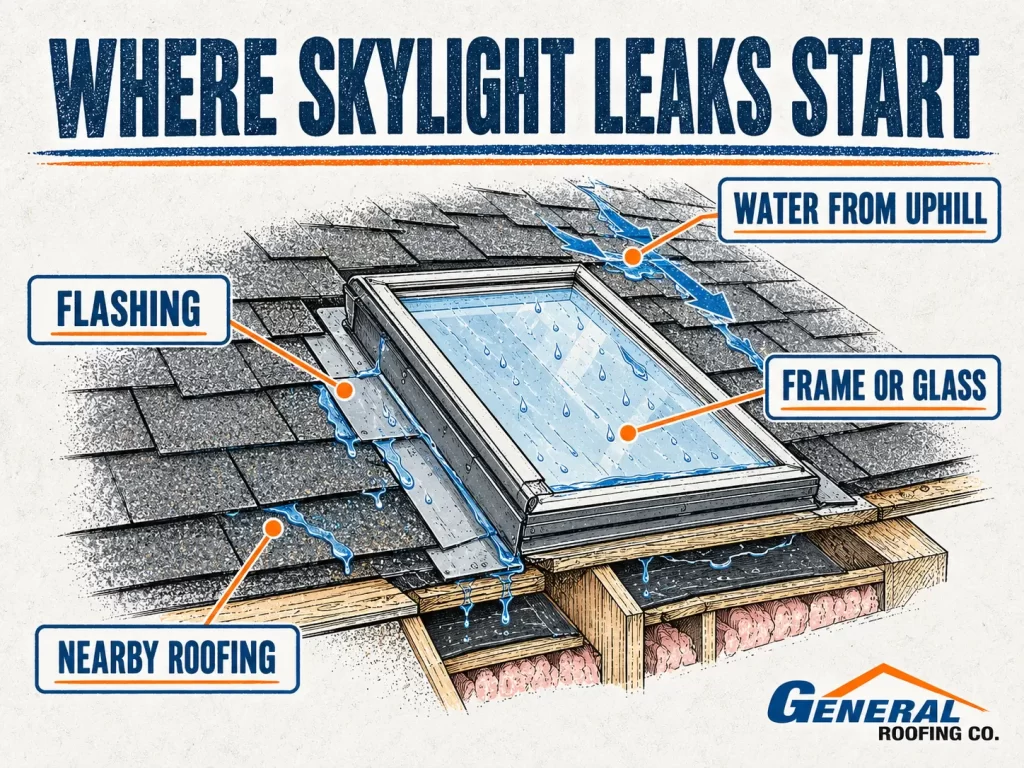
Rain should run around the opening and continue down the roof. A gap anywhere along that route can show up as a drip indoors.
Flashing and nearby roofing
Flashing is the metal system that directs water around the skylight. On a shingle roof, some pieces weave into the surrounding shingles. A missing piece, an incorrect installation, or roofing that has lifted nearby can let water move under the roof covering. VELUX describes its flashing systems as designed to shed water without depending on sealant alone.
The underlayment beneath the roofing also matters. A contractor may need to lift surrounding material to see whether the flashing and underlayment were installed as a connected water barrier. Simply adding more caulk to the outside edge can hide the opening for a while, then leave the same leak waiting for the next heavy rain.
The skylight frame, glass, or opening panel
Sometimes the roof detail is sound and the skylight itself is the problem. A cracked pane, damaged frame, or venting skylight that no longer closes properly can admit water. Note whether the drip starts at the glass, the joint around the opening panel, or the interior trim. Those details help separate a unit repair from roof work.
Water arriving from uphill
The first visible drip can be misleading. Water may enter at an uphill shingle, vent, or another roof detail, then follow the sheathing until it reaches the skylight opening. If a roofer only patches the skylight perimeter, the original entry point stays open. This is one reason the surrounding roof needs to be inspected along with the unit.
What you can do while waiting for a repair
Move furniture and electronics out of the drip path. Catch water in a bucket, protect the floor, and photograph the stain and any active dripping. If the ceiling is bulging or feels soft, keep people clear of the area and arrange prompt help. Water near a light fixture or wiring also needs immediate attention from an appropriate professional.
Check that an operable skylight is fully closed if you can reach its control from indoors. Avoid climbing onto a wet or steep roof to look for the leak. Roof surfaces can be slippery, and a soft area near an opening may not support your weight. Keep the inspection to places you can reach safely, and tell the roofer what you saw and when you saw it.
A temporary cover may reduce water entry until the permanent repair can be done, but it needs to be placed without damaging the roof or blocking drainage. Our roof repair and maintenance team can inspect the leak and discuss a temporary measure if the weather prevents a full repair that day.
How a roofer diagnoses and repairs a leaking skylight
The roofer starts indoors and follows the wet area outward. They check the glass and frame, the light shaft, any accessible attic area, and the roof around and above the skylight. They’re looking for a loose flashing piece, damaged roofing, wet underlayment, or damage to the unit. If the path still isn’t clear, a careful water test can help. The Department of Energy includes one in its inspection guidance.
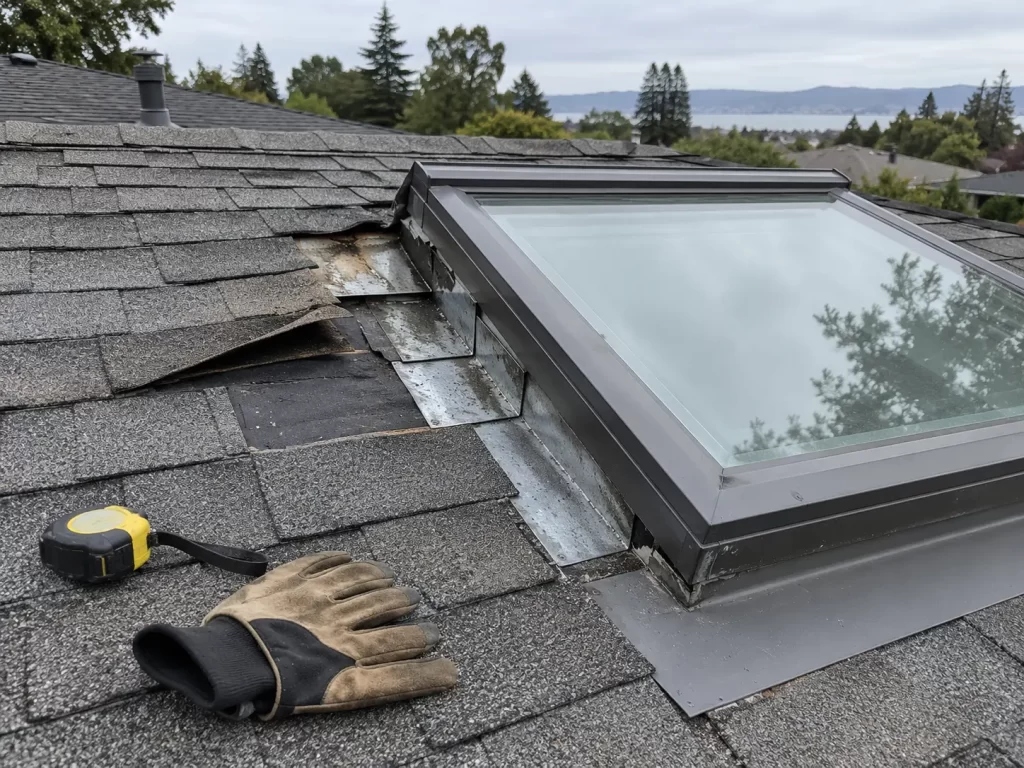
The repair depends on the failed part:
| Finding | Likely work |
|---|---|
| Damaged nearby shingles or roofing | Replace the affected material and check the layers underneath |
| Failed or incorrectly fitted flashing | Remove enough roofing to install compatible flashing and restore the surrounding roof |
| Water around an opening panel | Inspect the closure, gaskets, and frame; repair or replace the faulty part when available |
| Cracked glass or a deteriorated frame | Evaluate replacement of the unit |
| Wet or soft roof decking | Open the area, repair the damaged deck, and correct the leak source |
A ceiling stain alone can’t tell you which row applies. Ask the contractor to show you what failed before agreeing to a repair. If they find wet sheathing or framing, ask how far the damage extends and whether the estimate covers it.
Repair the skylight or replace it?
A sound skylight with a local flashing problem may not need a new unit. Replacing the flashing and disturbed roofing could solve the leak. On the other hand, a cracked unit, a damaged frame, repeated leaks after proper flashing repairs, or parts that are no longer available can make replacement the better use of the work already required to open the roof.
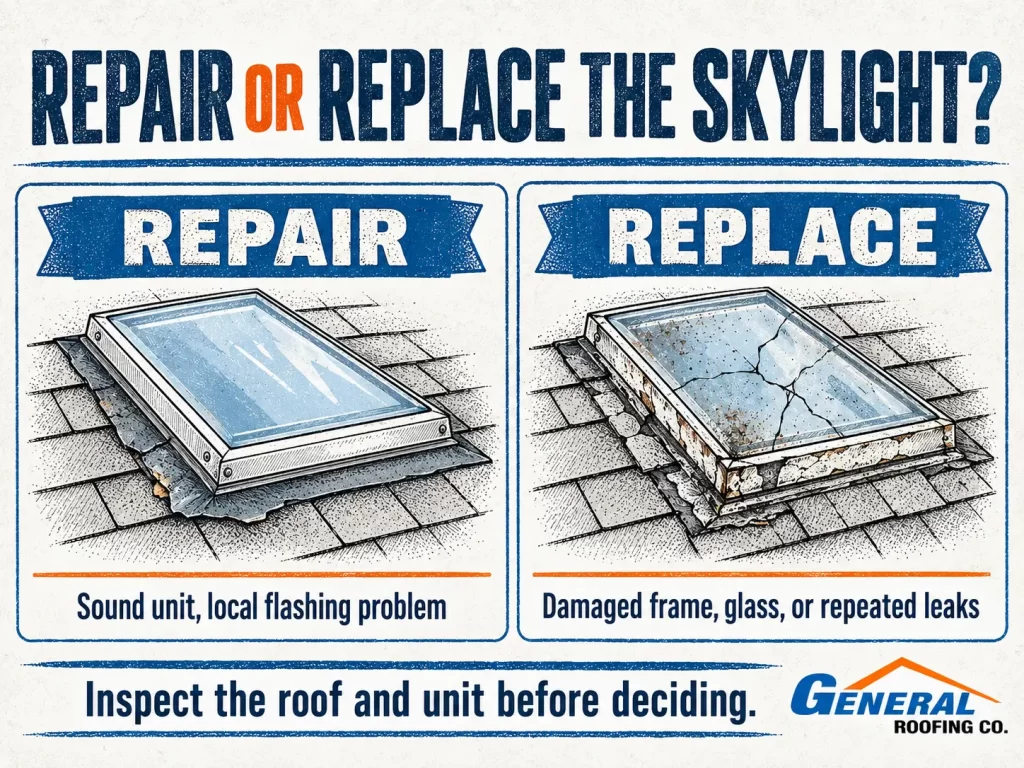
Age matters, but it doesn’t settle the question by itself. Look at the unit’s condition, how it operates, the state of the surrounding roof, and the scope of the repair. If you’re replacing the whole roof soon, discuss the skylight at the same time. VELUX’s replacement process shows why: the old flashing, underlayment, and nearby roofing are removed during the job, then the new assembly is fitted together. It also notes that the skylight and flashing kit must suit the roof pitch.
For Bay Area homeowners, our skylight and roof accessory page explains the types of skylights we install with roof replacements. If you’re unsure whether the unit or the roof is causing the leak, start with the inspection rather than ordering a replacement on a guess.
What affects skylight leak repair cost?
The visible drip doesn’t tell you the scope. A contractor may be able to correct a small area of damaged roofing or flashing. A leak that has reached the deck or light shaft takes more work. Roof material, pitch, access, skylight size, replacement parts, and the amount of interior damage all affect a quote.
Ask for an estimate that separates the suspected leak source from any work that can only be confirmed after the roof is opened. If the contractor proposes replacing the skylight, ask whether new flashing and underlayment are included and how the surrounding roof will be restored. That makes two quotes much easier to compare.
Frequently asked questions
Can you fix a leaking skylight with caulk?
Caulk may be useful for a specific joint when the product and repair method call for it. It isn’t a substitute for missing or incorrectly installed flashing. If water is entering behind the roofing, sealing the visible edge may briefly change where the water appears without fixing the path.
Why does my skylight leak only in heavy rain?
Wind-driven rain can reach a gap that ordinary rain misses. Heavy rain can also overwhelm a blocked drainage path or expose weak flashing higher on the roof. The pattern is useful evidence, but someone still needs to inspect the unit and roof to identify the opening.
Could the skylight be leaking if the glass looks dry?
Yes. Water can travel behind the frame or through the roof assembly and show up on the light shaft or ceiling. A dry pane doesn’t rule out a leak at the flashing or nearby roofing.
Should I replace the skylight when I replace my roof?
Have it inspected during the reroof. A sound, compatible unit may be reusable, but an older or damaged skylight can be easier to replace while the surrounding roof is already open. Ask how the contractor will handle flashing, underlayment, and any warranty requirements for the chosen unit.
Final thoughts on skylight leak repair
The right skylight leak repair depends on where water gets in. Record when the drip happens, keep the area safe, and have both the skylight and surrounding roof checked. If your skylight is leaking in Oakland or elsewhere in the Bay Area, request a roof estimate so we can inspect it and explain the repair options.
Recent Comments