

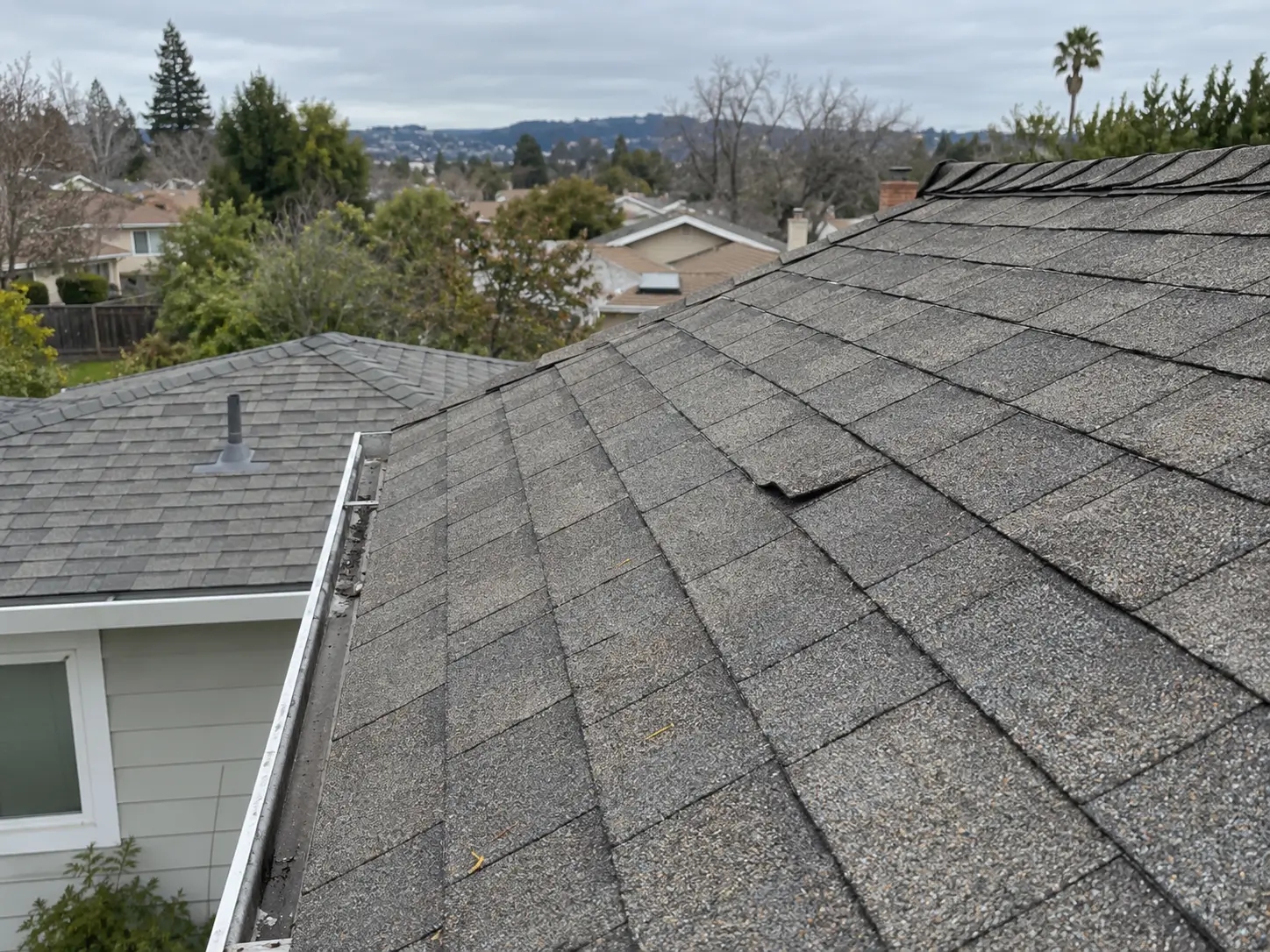
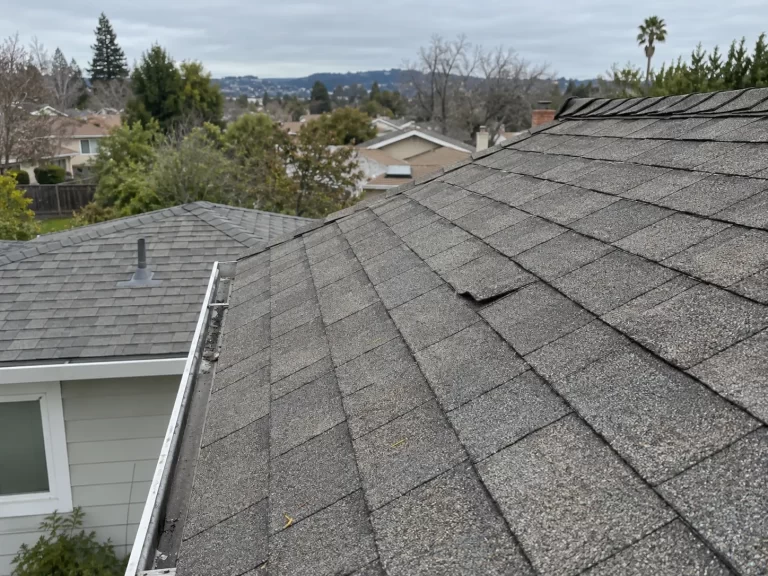
A little bump in a shingle is easy to miss from the driveway. Up close, it may be a roofing nail pushing against the shingle above it. Sometimes the nail head has already broken through. Roof nail pops don’t always mean water is getting in today, but they can loosen shingles and give rain a way through. Before anyone repairs it, they need to know why the nail moved and whether the wood beneath it still holds fasteners.
If you’ve spotted one on your Oakland or Bay Area home, our roof repair team can take a look and tell you whether it’s a small fix or a sign of a wider problem.
What does a roof nail pop look like?
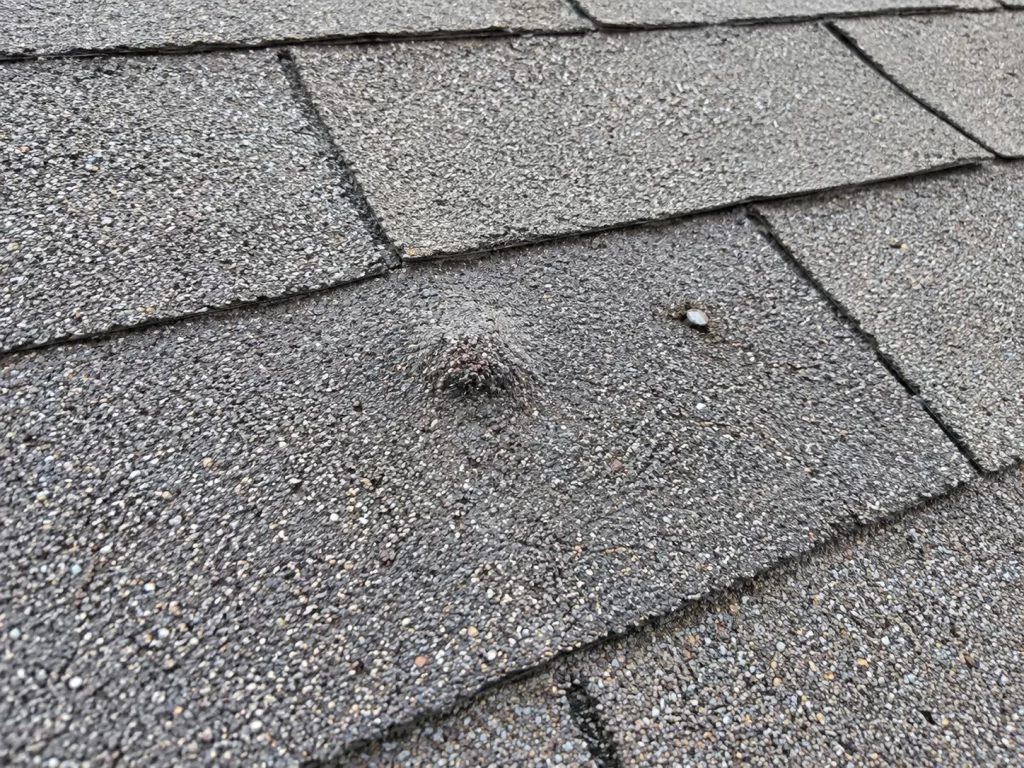
Most shingle nails are covered by the next row of shingles. When one backs out, it may raise a small round bump in the overlying shingle. You might see a shingle tab sticking up, a nail head peeking through, or a small rust stain. Sometimes the first clue is a lifted patch that shows up in a photo taken after a storm.
One bump doesn’t tell you how much of the roof is affected. A few isolated nail pops may need only a local repair. A row of raised shingles is more suspicious. It may point to a fastening problem across that section of the roof. Don’t press the bumps flat from above. You could crack a shingle without securing the nail underneath.
If you can see the spot from the ground, take a photo and note where it is. A pair of binoculars helps. Skip the ladder, especially if the roof is wet or steep. Even roof repair crews need the right access and fall protection for this work; OSHA’s roof repair safety guidance explains why roof access is a job in itself.
Why do roofing nails pop up?
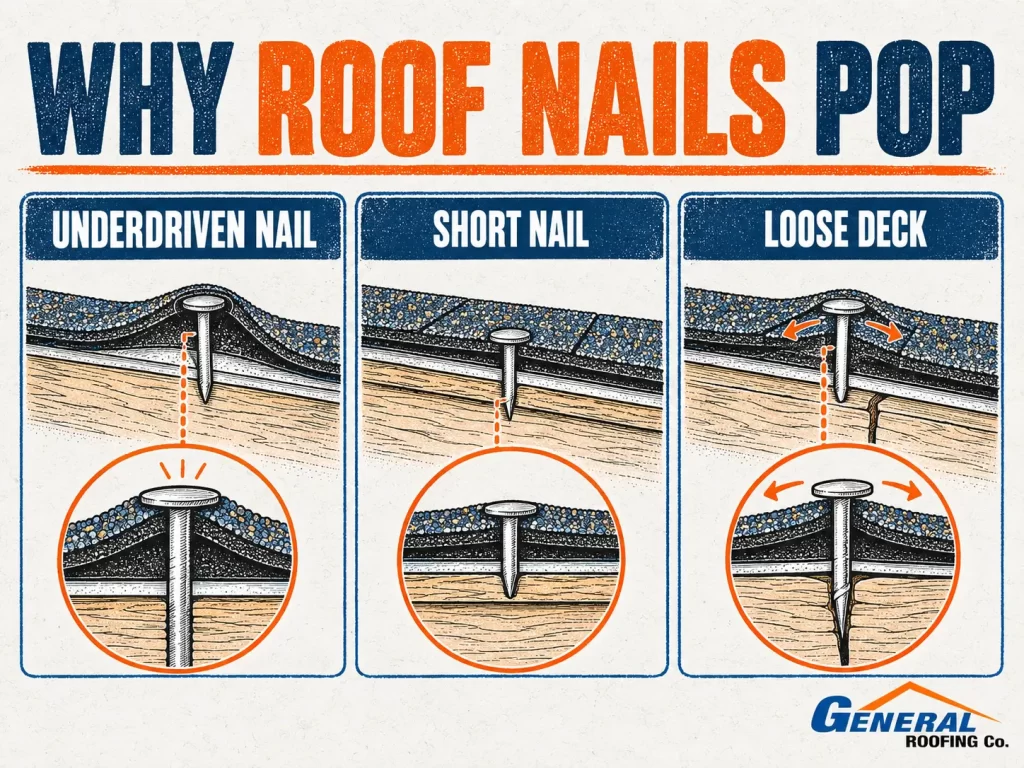
The nail has lost its grip, wasn’t seated properly, or the material around it moved. A roofer needs to look at both the fastener and the wood beneath it before deciding how to fix it.
The nail was underdriven or angled
A roofing nail should sit flush against the shingle in the manufacturer’s specified nailing area. An underdriven nail leaves its head high. An angled nail can catch the shingle above and work loose as the deck moves. GAF’s technical bulletin on improperly driven nails shows how either problem can lift or damage a shingle.
The nail may have been set poorly during installation yet stayed out of sight for years. If bumps follow a line across the roof, ask the crew to check how that whole section was fastened.
The nail is too short or the deck has changed
A short nail may not grip the deck well enough. The wood can also shrink slightly as it dries or move with changing moisture and temperature. IKO’s raised-nail bulletin lists insufficient nail length, poor seating, and changes in the wood deck among possible causes.
If the same area keeps developing nail pops, the roofer should check the sheathing rather than keep replacing individual fasteners. Soft or damaged decking may not hold a new nail reliably. Our roof deck repair guide explains the signs that point to trouble below the shingles.
Wind or movement loosened an already weak fastening
Wind can lift a shingle tab whose seal has broken, especially if its fastening is already weak. The raised edge then catches the next gust. If you also see a torn or missing shingle, the surrounding area needs a look. Fixing the nail alone won’t restore a damaged tab.
Can a popped roof nail cause a leak?
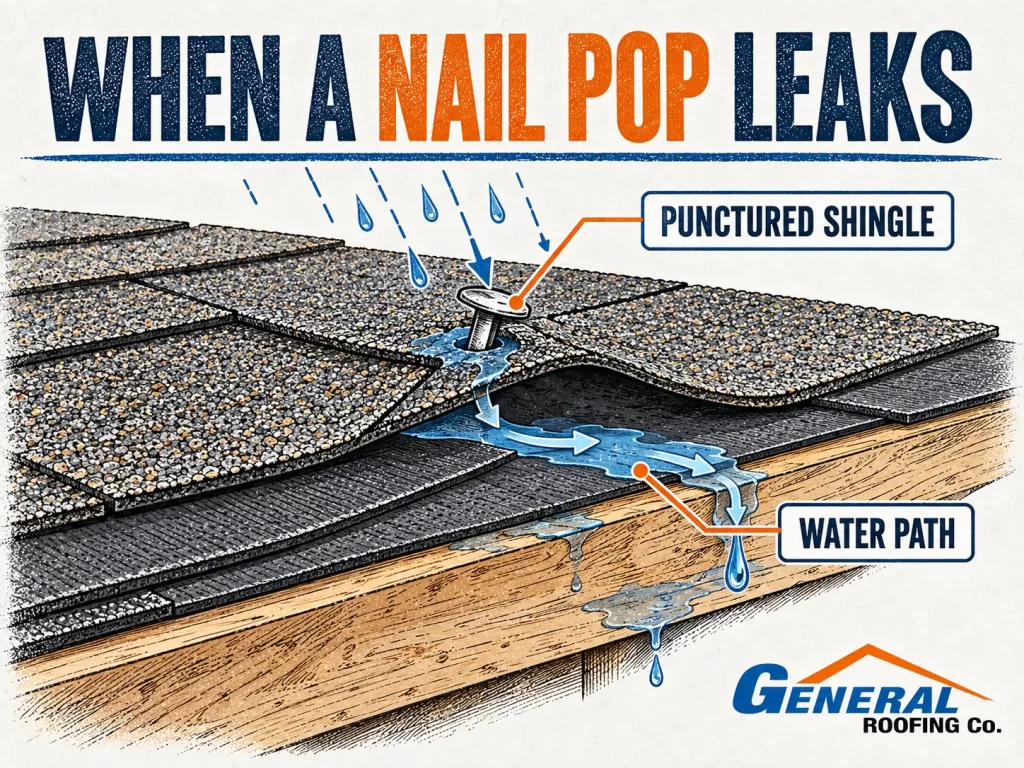
Yes. A nail head that punctures the shingle above it leaves an opening. A lifted shingle can also let wind-driven rain reach the layers underneath. IKO notes that raised nails can poke through shingles in more severe cases, and GAF describes how underdriven nails can lift shingles away from their seal.
But a bump is not proof of an active leak. Water may enter at a different point and show up indoors several feet away. If you have a ceiling stain, attic dampness, or a drip during rain, ask for a leak inspection rather than assuming the visible nail is the only cause. Our guide to finding a roof leak covers the other common places water gets in.
Don’t wait for a stain if a nail has broken through a shingle. The opening is already exposed. The same goes for a shingle tab that stays lifted after wind or rain.
What should you do when you spot nail pops?
Take a few photos from a safe place. Include one wide shot so the roofer can find the area and one closer view if your phone or camera can capture it without climbing. Note whether the bumps appeared after a storm, whether several sit in a row, and whether you have seen a leak inside.
Then arrange a roof inspection. Ask the roofer to check for punctured or creased shingles, loose tabs nearby, and the condition of the deck where the nails are backing out. If the roof is fairly new, keep the installation paperwork and warranty information handy. It can help identify the shingle product and the fastening instructions that apply.
Avoid trying to solve the problem with a blob of caulk over the bump. It may hide the nail head for a while, but it won’t tell you why the nail moved or restore a shingle that’s torn or no longer sealed. Hitting the nail back down can be just as short-lived if the same hole has lost its grip.
How does a roofer repair roof nail pops?
There isn’t one repair for every roof. First, the roofer lifts or removes enough material to see the nail, the shingle, and the deck. Then they decide whether the shingle can be repaired or needs replacing.
For an isolated raised nail with sound decking, the roofer may remove the loose fastener, place a new one where it can grip solid wood, seal the old hole as the manufacturer directs, and secure the shingle. A torn, punctured, brittle, or badly creased shingle may need replacement. If the deck is soft or damaged, that material needs attention before the new fastening can hold.
The Asphalt Roofing Manufacturers Association’s nail application guidance says nails should sit flush and should not land in deck gaps, knots, or cracks. It also distinguishes an underdriven nail from a crooked or overdriven one when describing repairs. The roofer needs to follow the instructions for your actual shingle, including where to place replacement fasteners and how to reseal a disturbed tab.
If many nails are lifting, a spot repair may keep turning into another spot repair. The crew may need to open a larger area to check fastening patterns, shingle condition, and deck thickness or damage. You should get photos and an explanation of what they found before agreeing to a wider repair.
Does a nail pop mean you need a new roof?
Usually not by itself. One or two raised nails on an otherwise sound roof may be repairable. Widespread nail pops are different, especially when shingles are brittle, tabs are lifting, or the deck is no longer holding fasteners.
Age and repair history matter too. If a roof has repeated leaks or many damaged shingles, replacing each problem shingle may cost more over time than addressing the roof as a system. Our repair versus replacement guide walks through that decision. A roofer should show you the extent of the damage, not use one visible nail pop as a reason to sell a whole new roof.
What affects the cost of nail pop repair?
The number of affected shingles matters, but so do roof pitch, access, shingle type, and what’s under the surface. A small repair on a low, accessible roof is a different job from a steep roof with several damaged areas. Deck repair and leak damage can change the scope once shingles are lifted.
Ask for an estimate that separates the visible repair from any hidden damage that might be found. It should say whether the roofer expects to replace shingles, correct fastening, repair the deck, or investigate a leak. That gives you something useful to compare if you get more than one bid.
Frequently asked questions
Can I hammer a roof nail pop back down?
You might flatten the bump, but the nail can rise again if the deck isn’t gripping it. Hammering can also damage the shingle above. A lasting repair checks the nail, shingle, and deck, then uses the correct fastening and sealing method for that roof.
Are exposed nails on a roof always a problem?
Nail heads on the main shingle field should be covered. If you see an exposed head or one poking through a shingle, have it inspected. The location and roof system matter because some roof details use different fastening methods.
How quickly should I deal with a popped nail?
Arrange an inspection soon if a nail has punctured a shingle or a tab is visibly lifted. If water is already entering the home, treat it as an active leak and call promptly. A small bump with no opening may be less urgent, but it still deserves a look before the next stretch of rain.
Why do nail pops keep coming back in the same spot?
The old hole may not hold a fastener, or the deck may be moving or damaged. Repeated pops in one area call for an inspection of the sheathing and nearby shingles. Replacing the same nail in the same hole is unlikely to settle the cause.
Final thoughts on roof nail pops
Roof nail pops are small, but the repair shouldn’t be guesswork. A roofer can tell whether you’re looking at one loose fastener, a damaged shingle, or a deck that won’t hold nails properly. Catching that difference early can spare you from discovering it during the next rain.
Recent Comments