
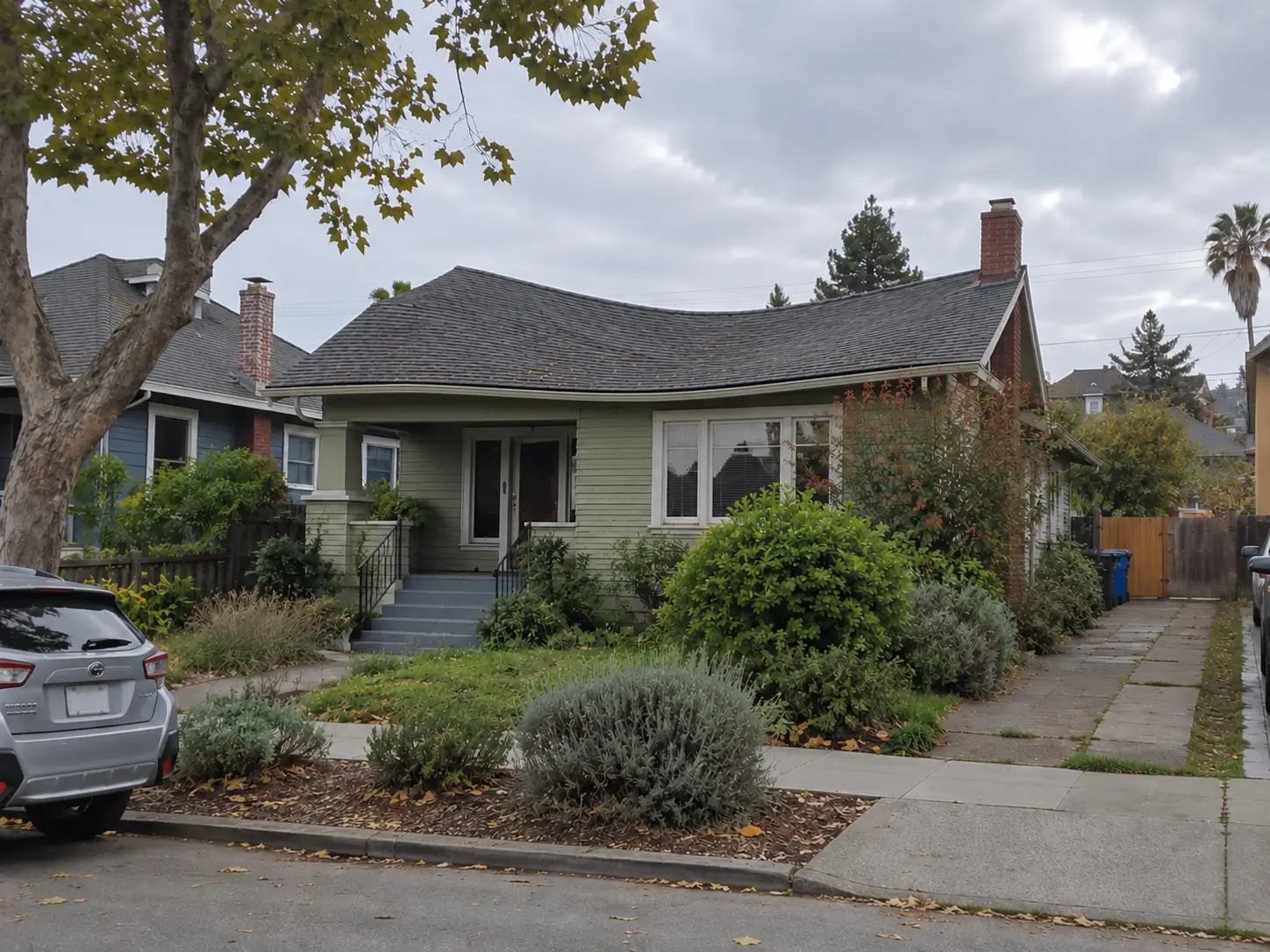
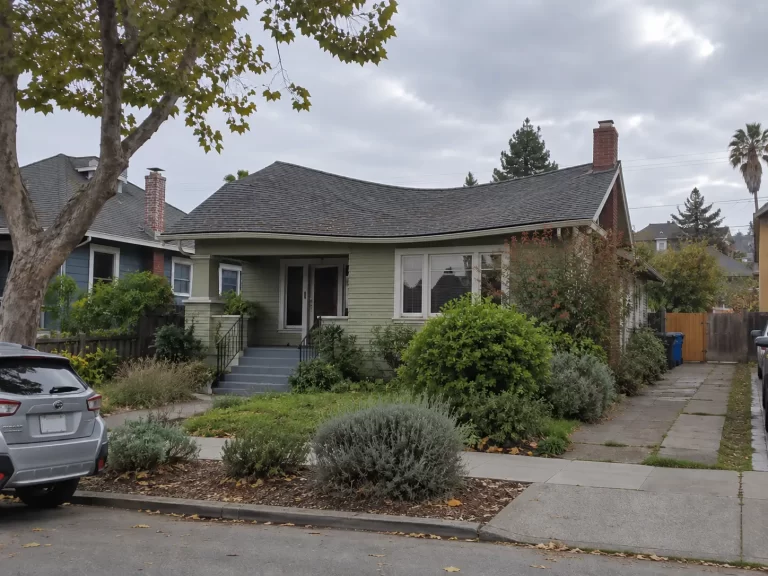
A sagging roof can be hard to spot at first. Maybe the ridge looks slightly bowed from across the street, or one section dips after a long spell of rain. It’s tempting to blame the shingles. But the trouble may be in the sheathing underneath, the rafters or trusses, or the supports farther down. You can’t tell which from the sidewalk. Has the shape changed? Is it getting worse? Are there stains or cracks inside? Those details help decide how quickly someone should inspect it.
If you’re in Oakland or elsewhere in the Bay Area, General Roofing can inspect a changing roofline and explain what we find before you decide on repairs.
Is a sagging roof dangerous?
Treat a new or growing sag as a reason for prompt inspection. A roof can show a shallow dip for years without an obvious change, but it can also lose support after water damage or a structural problem. The shape alone can’t tell you how urgent the repair is.
Keep people away from the area below a pronounced dip if you hear new cracking or popping, see a ceiling pulling away from the walls, or notice doors suddenly sticking. Don’t go onto the roof or into an attic with visibly damaged framing. If there is an active leak, catch the water from a safe spot and keep clear of a bulging ceiling. Arrange an inspection as soon as possible; if the structure appears to be actively failing, leave the area and call local emergency services.
The Federal Emergency Management Agency’s roof safety guidance lists sagging roof members, bowing trusses, cracking sounds, and doors that stop working as signs of an overstressed structure. Snow is the focus of that guide, but those warning signs are useful whenever a roof’s support is in question. You don’t need to diagnose the cause before taking them seriously.
What does roof sagging look like?
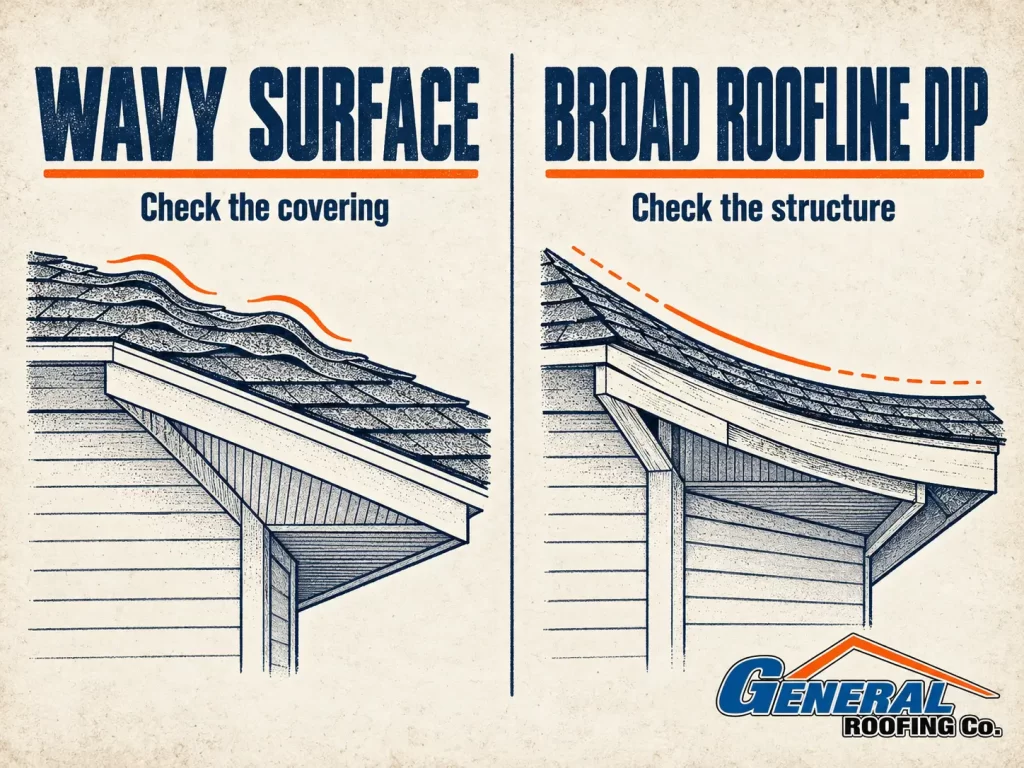
Stand well back and look along the ridge and eaves rather than straight at the shingles. A sagging roofline may have a broad dip between supports, a low spot on one slope, or an edge that no longer looks straight. Compare it with an older photo if you have one. A fresh change after a storm deserves more attention than a roofline that has looked the same for years.
Shingles sometimes buckle or lift while the framing beneath them remains straight. Roof sheathing can also develop smaller ripples when moisture makes wood panels expand. The APA Engineered Wood Association explains that this sort of panel buckling may affect appearance without reducing the panel’s structural properties. A broad dip in the roof plane needs a closer look. Don’t assume the surface tells you what’s happening underneath.
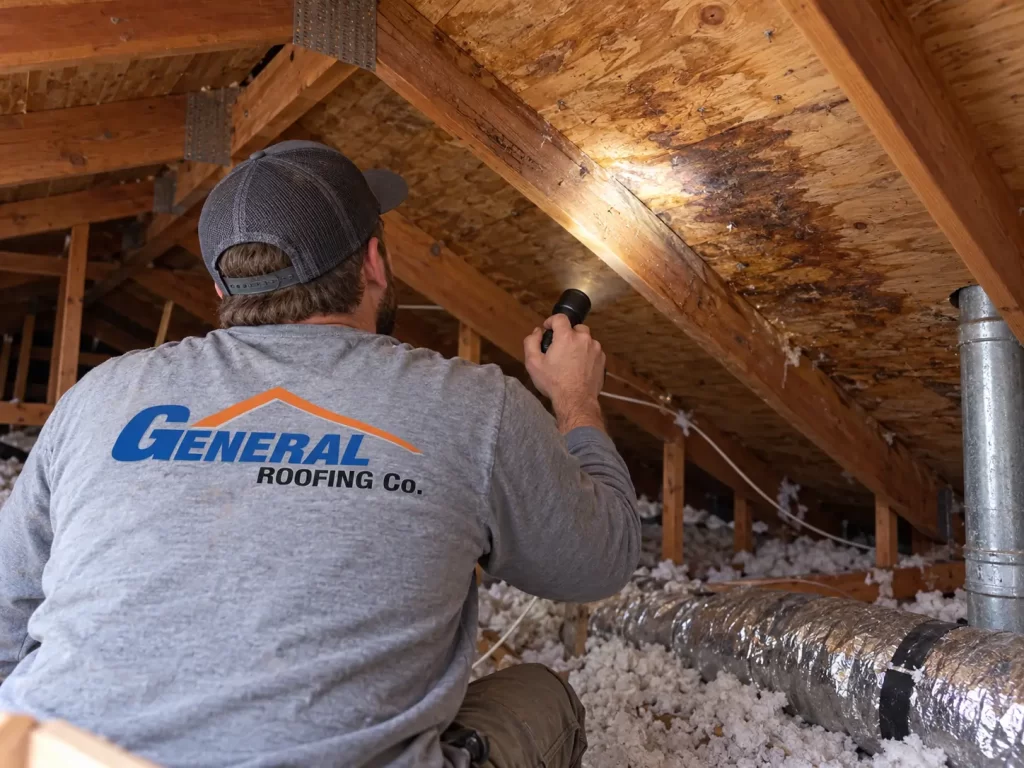
From indoors, note water stains, damp insulation, bowed ceiling areas, or visible changes in attic framing, but only from a safe access point. Photos with dates help a roofer see whether the problem is moving. Avoid stepping on an attic ceiling or testing a soft roof area with your feet.
Why is my roof sagging?
There isn’t one universal cause. The location of the dip, the roof’s age, its materials, and what has changed recently all matter.
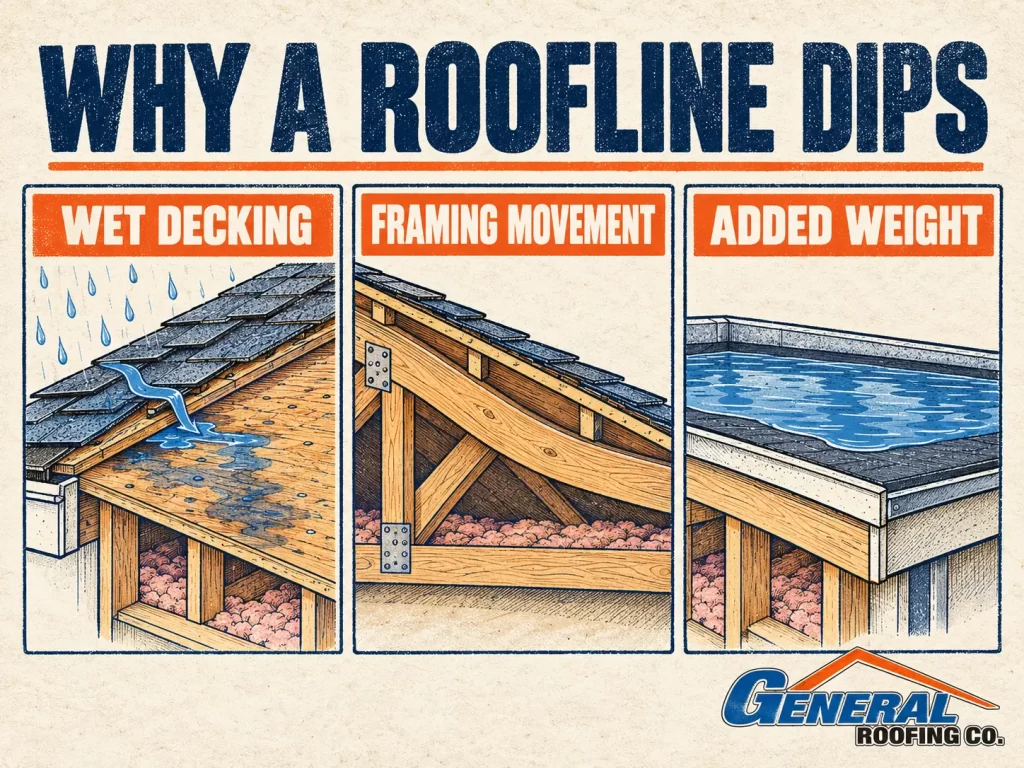
Water-damaged decking or framing
A leak can wet the roof deck long before a stain appears indoors. Over time, weakened sheathing may lose its ability to hold fasteners or span properly between rafters. If moisture reaches the framing, the repair can become more involved. The U.S. Department of Energy’s attic guide describes roof leaks and trapped attic moisture as paths to warped or rotting wood.
Look for a drip that keeps returning, darkened wood, musty insulation, or stains below the dip. These clues point toward moisture, but they don’t prove which layer is damaged. Our roof deck repair guide covers how a roofer checks and replaces damaged sheathing once the roof assembly is opened.
Framing or support movement
Sometimes the deck is only following a rafter, truss, beam, or support that has shifted or weakened. A dip along the ridge may call for a different investigation than one small soft area on a slope. Past alterations, damaged connections, or movement elsewhere in the building can also change the roof’s shape. A roofer can assess the roof covering and visible framing; a structural engineer may be needed when the load-bearing system is in doubt.
Added weight or poor drainage
New rooftop equipment, stored materials, or a roof system installed over an older one can add weight. On low-slope roofs, standing water may collect in a depressed area and add to the load. GAF notes that ponding can be associated with structural deflection of a roof deck. If a flat roof holds water after rain, the drainage and the structure both deserve attention. Our ponding water guide explains the drainage side in more detail.
An uneven roof that was built that way
Older houses don’t always have perfectly straight lines. A small, stable irregularity may reflect how the roof was built rather than a new failure. Still, a photo alone can’t confirm that. If you don’t know whether the dip is old, have it checked and keep a dated record of what the roofer finds.
What should you do when you notice a dip?
Start with what you can observe safely:
- Photograph the roofline from the ground, including a wide view and a closer view of the dip.
- Note when you first saw it and whether it followed rain, wind, a leak, or recent roof work.
- Check for interior stains or ceiling movement from a safe place. Stay out of an attic with questionable framing.
- Keep people clear of any ceiling that is bowing, cracking, or wet.
- Ask for a roof inspection and describe any change in the roof’s shape, not just the visible surface damage.
Don’t try to straighten the roof from inside the attic, brace it with a makeshift post, or cover a leak without finding its source. Those steps can hide what needs to be evaluated and may put you under an unstable area. If the dip is growing or other structural warning signs appear, treat the situation as urgent.
How a roofer finds the cause
A roofer will first locate the dip, then check the roof covering and any safe attic access. They’re looking for wet or softened sheathing, displaced framing, damaged connections, and signs of a recurring leak. Flashing and roof penetrations may point to where water got in. On a low-slope roof, they also check where water collects and whether the drains are clear.
The roof covering may need to be removed in a limited area to see the deck beneath it. A firm repair price from a glance at the street can be misleading. Ask for photos of hidden damage and a written explanation of which parts need work. If rafters, trusses, beams, or walls may be involved, ask whether a structural engineer should assess them before repairs begin.
Can a sagging roof be repaired?
Often, yes, but the repair has to address the part that actually moved or weakened. Replacing shingles won’t straighten a bowed rafter. Replacing a damaged deck panel without stopping the leak can set up the same problem again.
| What the inspection finds | What repair may involve |
|---|---|
| A small area of damaged sheathing with sound framing | Remove the affected roofing, replace the deck section, fix the water entry point, and restore the roof covering |
| A failed flashing detail or drainage issue with limited damage below | Correct the leak or drainage problem and repair any affected layers |
| A bowed or damaged rafter, truss, beam, or connection | Have the structure evaluated and complete the specified framing repair before restoring the roof |
| Widespread damage across an aging roof | Compare a larger repair with a full roof system replacement |
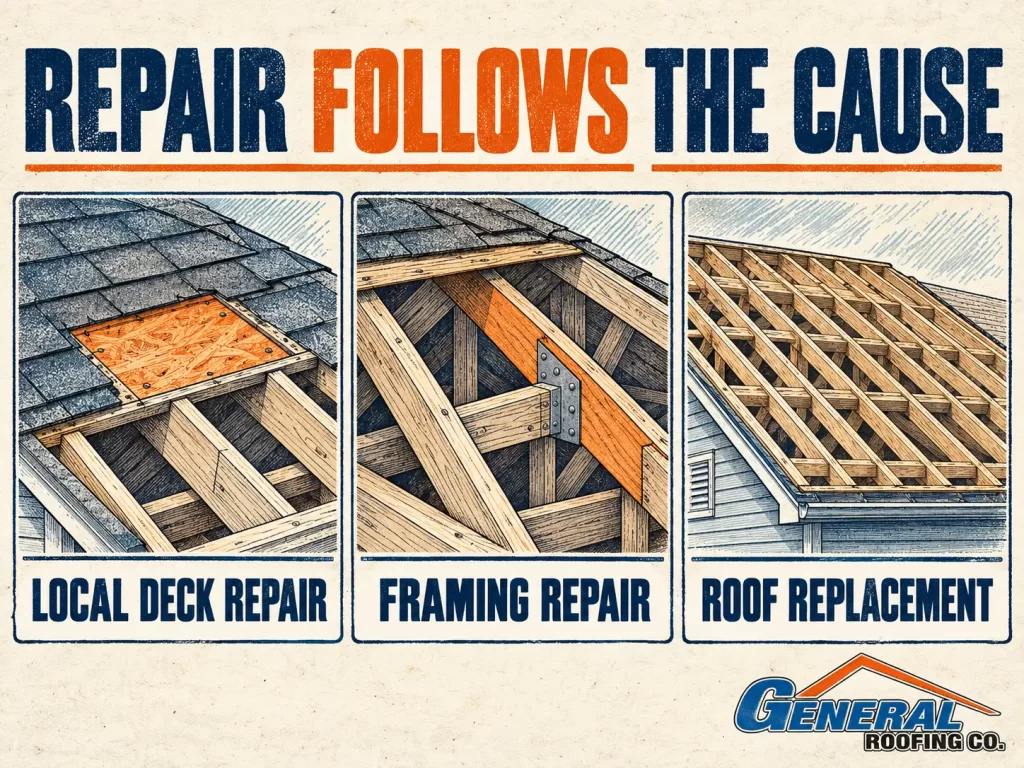
The scope can change once the roof is opened. A good estimate explains what is known now, what is hidden, and how any additional work will be documented and approved. If much of the roof is worn out, our repair versus replacement guide can help frame that decision. The structure still needs a proper diagnosis either way.
What affects sagging roof repair cost?
The visible dip tells you very little about cost. A localized deck repair and a framing repair are different jobs. Roof pitch, access, material, the size of the affected area, water damage inside the building, and whether engineering or permits are required all affect the scope. On a flat roof, drainage corrections may be part of the work too.
Ask each contractor to describe the suspected cause and separate confirmed work from allowances for damage that cannot yet be seen. If a full replacement is proposed, ask what happens if the crew finds damaged decking or framing during tear-off. That makes bids easier to compare and cuts down on surprises.
Frequently asked questions
Can shingles make a roof look like it is sagging?
Yes. Buckled or lifted shingles can make a roof look uneven. Moisture-related ripples in sheathing can also affect the surface without meaning the framing has sagged. A broad dip or a line that has changed shape needs a closer inspection.
Is a slight dip in an old roof normal?
Some older roofs have long-standing irregularities. The key questions are whether the dip is new, whether it is changing, and whether leaks or interior damage appear nearby. If you don’t know its history, document it and have it assessed.
Can you fix a sagging roof without replacing the whole roof?
Sometimes. A localized problem may allow a targeted repair after the failed part and its cause are identified. Widespread damage or an old roof near the end of its service life may make replacement more sensible. Framing problems need their own evaluation regardless of the roof covering chosen.
Should I walk on a roof to check the sag?
No. A weak area may not support your weight, and the surface can be slippery. Take photos from the ground and let a qualified professional decide how to inspect it safely.
Final thoughts on a sagging roof
A sagging roof might point to damaged decking, a framing issue, added weight, or an older irregularity. Watch for changes and stay clear of areas with active cracking, bowing, or leaks. If you see a dip on a home or commercial building in Oakland or elsewhere in the Bay Area, request a roof assessment so we can find the cause and explain the options.
Recent Comments