

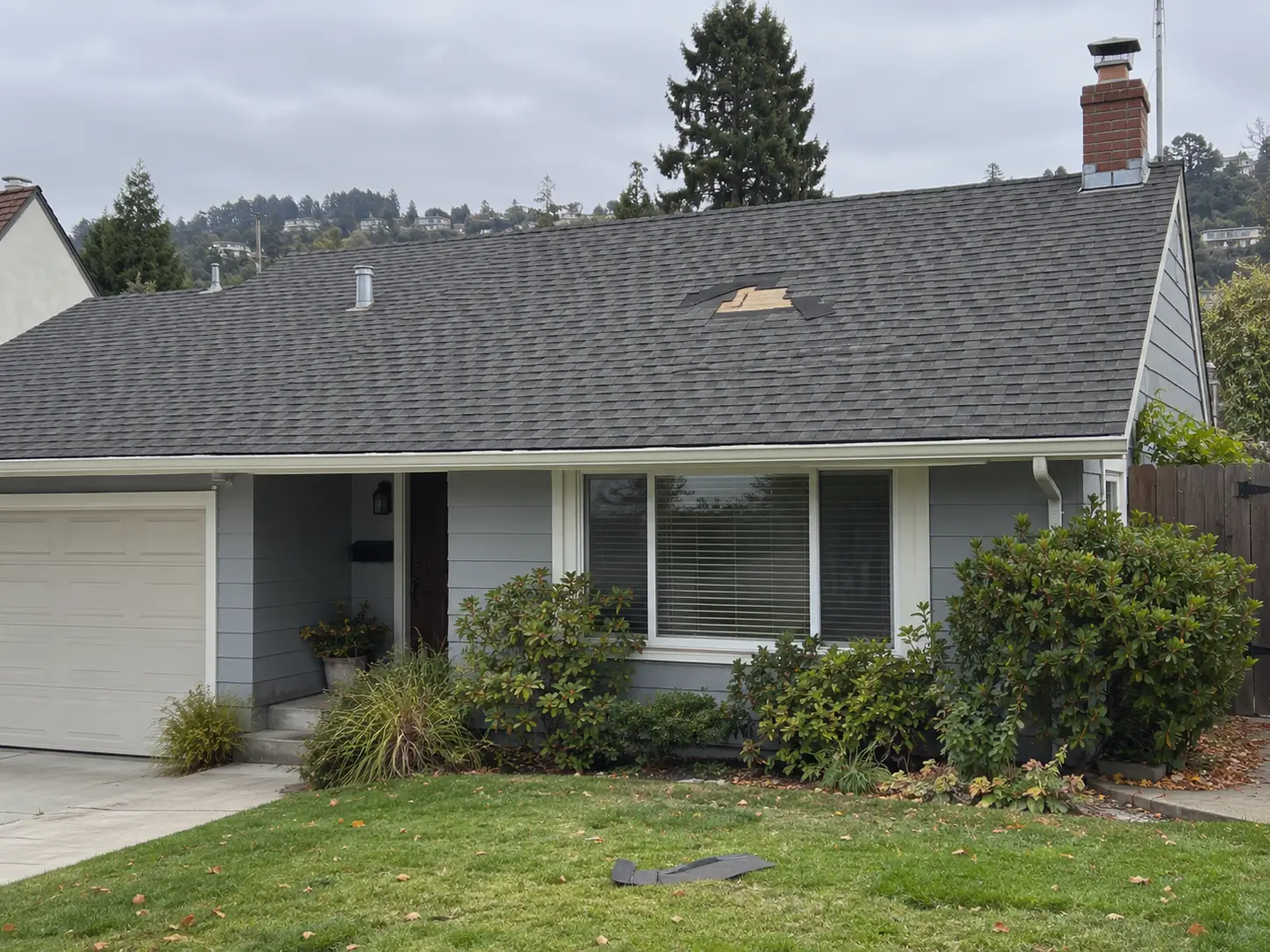
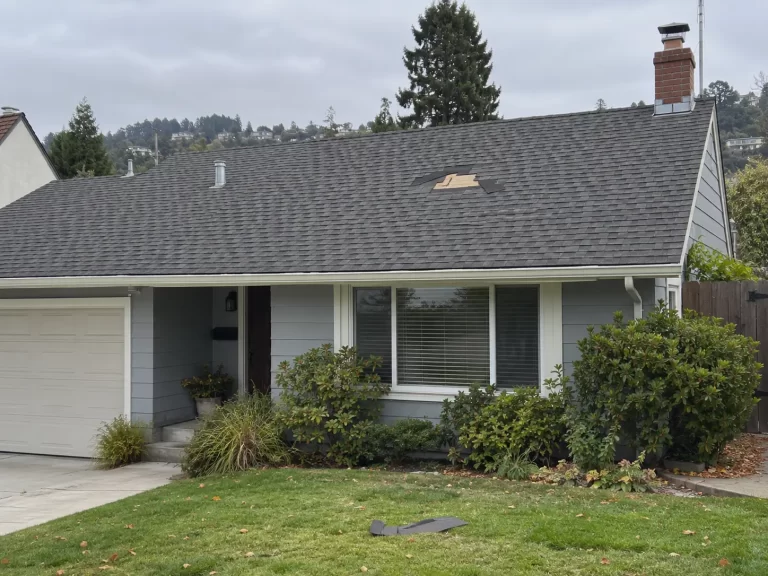
You spot a dark patch on the roof after a windy night. Then you find a shingle in the yard. Missing shingles on a roof are worth dealing with soon, even if the ceiling is still dry. The exposed area may shed the next rain just fine, or it may let water reach a nail hole or a vulnerable seam. You can’t tell which from the driveway.
Document what you can see, stay off the roof, and arrange an inspection. The gap might be a small repair, but the shingles around it need a look too. If you’re in Oakland or elsewhere in the Bay Area, we can inspect the damage and tell you whether a local repair is enough.
Can one missing shingle cause a leak?
Yes, but a missing shingle does not guarantee an immediate leak. Asphalt shingles work as overlapping layers. A gap can expose the shingle below, fasteners, or the underlayment over the roof deck. The exact risk depends on what came loose and where the gap sits.
Underlayment gives the deck a second layer of moisture protection, but it isn’t a finished roof. GAF describes roof underlayment as a secondary water-shedding layer beneath the shingles. If that layer is torn, weathered, or exposed to repeated rain, the roof has less protection than it should.
Water can also travel before it appears indoors. A stain several feet from the visible gap doesn’t rule it out as the entry point. And no stain today doesn’t mean the spot can wait through a season of storms. If you see exposed wood, torn underlayment, or water coming in, call for help promptly.
What to do if you have missing shingles on your roof
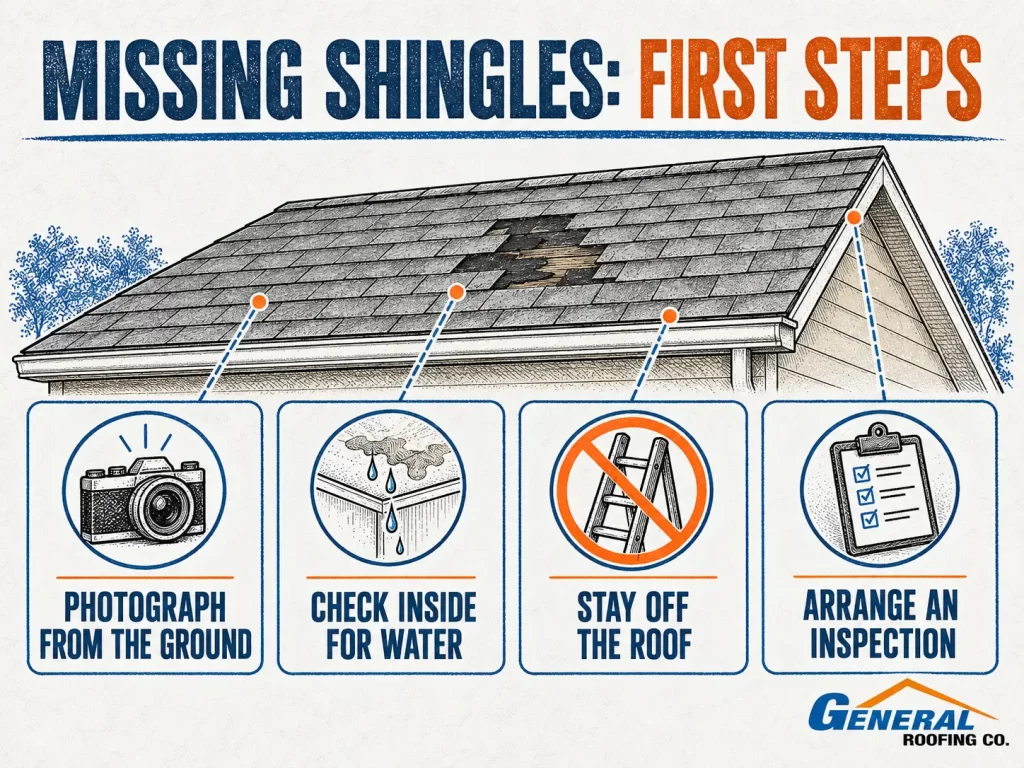
Take photos from a safe place
Walk around the house and photograph the missing area from the ground. Get one wide shot that shows where it is and a closer shot if your phone can manage it. Photograph shingles that landed in the yard too. Look for other lifted or crooked tabs nearby, especially along edges and ridges.
Don’t climb up to get a better angle. A loose shingle can shift underfoot, and a wet roof makes a bad situation worse. Even professional repair work calls for a plan to manage fall risks; OSHA’s roof repair guidance covers the precautions crews use.
Check inside without assuming the leak will be obvious
Look at the ceilings and walls below the damaged roof area. If you can safely access the attic from inside, check for damp insulation, wet wood, or new staining. Note when any drip appears. Rain driven by wind may reveal a problem that ordinary rainfall hasn’t.
If water is entering, move belongings out of the way and catch the drip. A roofer can tell you whether temporary weather protection is needed while the permanent repair is arranged. GAF notes that a properly installed roof tarp can protect damaged areas temporarily, but tarping is roof work too. Ask a professional to handle it.
Book a roof inspection
Tell the roofer when you noticed the gap, whether it followed a storm, and whether you’ve seen water inside. Mention if this has happened before. Photos help the crew locate the area, but they still need to check the shingles around it and the material beneath.
Ask what failed, what the crew found underneath, and what they plan to fix. A useful inspection should answer those questions before anyone starts replacing shingles.
Why do roof shingles come loose?
Wind is a common reason. It can lift a tab, break its seal, and eventually tear it away. GAF’s guide to wind-damaged shingles also points out that damage often shows up around roof edges. A shingle left in the yard may be the most visible clue, while nearby tabs are still loose.
Sometimes the shingle was already vulnerable. Poor fastening, a seal that didn’t bond well, or older brittle material can make it easier for wind to do the final damage. One missing piece does not reveal the cause by itself. A roofer needs to look at the fasteners, the condition of the surrounding shingles, and whether more tabs can be lifted.
Point out any raised shingle edges elsewhere on the roof during the same visit. Our guide to curling shingles covers how a shingle can change shape before it breaks or blows away. Exposed or backed-out nails need their own repair, not a new tab placed over them.
How does a roofer repair missing shingles?
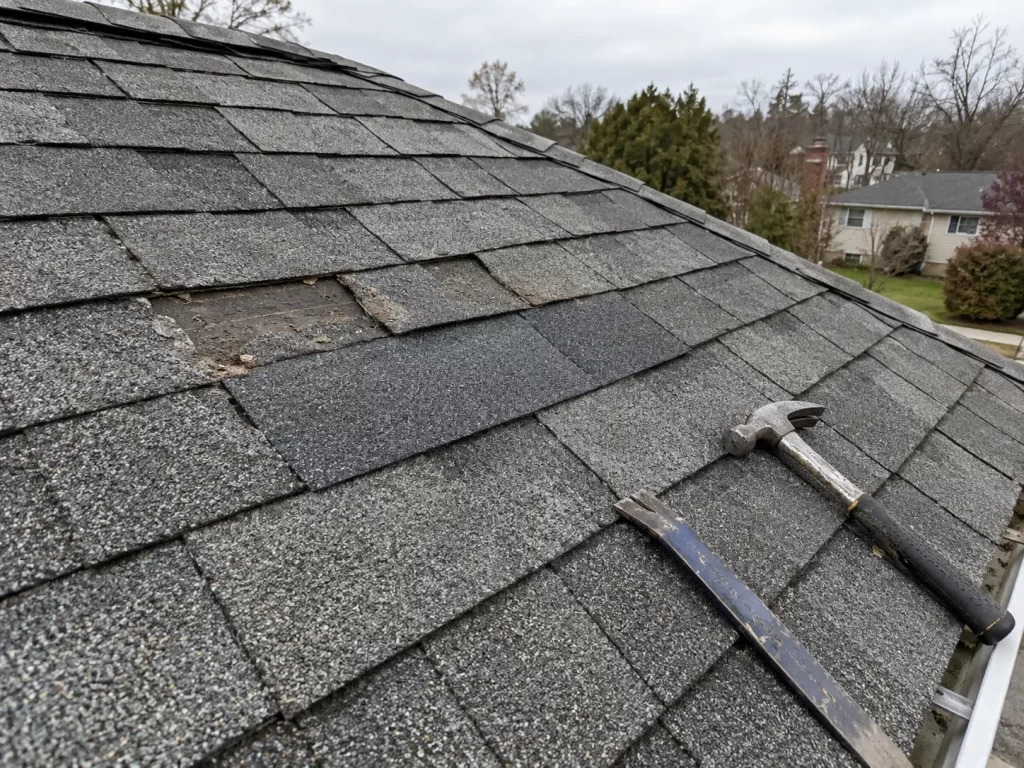
First, the roofer checks how many shingles are missing and whether the neighbors are torn, creased, or loose. They inspect the underlayment and roof deck where the covering came off. If water has reached the wood, replacing a shingle alone may hide a larger repair.
On an otherwise sound roof, the crew can often replace the missing shingle and any damaged adjacent pieces. They choose a compatible shingle, fasten it in the correct location for that product, and secure the surrounding tabs as the manufacturer requires. Even a matching new shingle can look different beside weathered ones, as the Asphalt Roofing Manufacturers Association explains. Ask how the patch is likely to look from the street.
A dab of caulk in the empty spot isn’t the same repair. It does not replace the overlap that directs water down the roof, and it will not fix a loose shingle beside the gap. Likewise, sliding a replacement under old tabs without checking their condition can leave the reason for the blow-off untouched.
Ask the roofer for photos of the opened area before it is covered. That matters most when the estimate might change after they see the underlayment or deck. It gives you a clear record of what they found and why the repair grew, if it does.
When is a patch enough, and when is it time to replace more?
An isolated missing shingle on a roof with sound neighboring material is often a patch job. Several missing sections, recurring blow-offs, brittle shingles, or repeated leaks are different. The remaining roof has to be able to hold a durable repair.
Age matters, but it isn’t a verdict on its own. A younger roof with a fastening problem across one slope may need more than a single replacement shingle. An older roof with one clean, isolated spot may still be repairable. Ask the roofer to show you which shingles are failing and why a proposed scope makes sense.
If the damage is widespread, compare the likely life of a patch with the cost and disruption of replacing the affected area or roof. Our roof repair versus replacement guide can help frame that decision. You shouldn’t have to approve a full roof replacement based on one patch of missing shingles without a clear inspection finding.
What affects the cost of a missing-shingle repair?
The number of shingles is only part of it. Roof height and pitch affect access. The material and condition of nearby shingles affect how easily the crew can lift and secure them without causing more damage. A torn underlayment, damaged flashing, or wet deck changes the work altogether.
Ask for an estimate that says what the roofer can see now and what would trigger a change in price once the area is opened. It should distinguish a simple shingle replacement from work on the underlayment or deck. If you think a storm caused the loss, keep your photos and review your insurance policy rather than assuming the repair is covered.
Frequently asked questions
How long can a roof go with a missing shingle?
There isn’t a reliable number of days. A dry stretch may pass without a leak, but the next wind-driven rain could reach the exposed area. Arrange an inspection soon and move faster if underlayment or wood is visible, more shingles are loose, or water is already entering.
Should I replace one missing shingle myself?
The visible piece may look easy to swap, but the repair involves roof access, correct fastening, and checking the layers underneath. A fall or a poorly sealed patch can cost far more than the shingle. Get a roofer to inspect it, especially on a steep or two-story roof.
Will missing shingles cause my whole roof to be replaced?
Not necessarily. A localized patch may be enough when the surrounding shingles and deck are sound. Widespread loss, brittle material, or repeated leaks may make a larger repair or replacement more sensible. The inspection should explain which situation you’re in.
Can a missing shingle be the cause of a ceiling stain?
It can, though the stain may appear away from the opening because water travels along framing or sheathing. A roofer should trace the leak rather than assume the most obvious gap is the only entry point.
Final thoughts on missing shingles on a roof
Missing shingles on a roof deserve a closer look before the next rain. Take photos from the ground, check for signs of water inside, and have the damaged area inspected. A small patch may be all you need. Ask the roofer to check whether the neighboring shingles are still attached firmly; the next windy day will test them too.
Recent Comments