
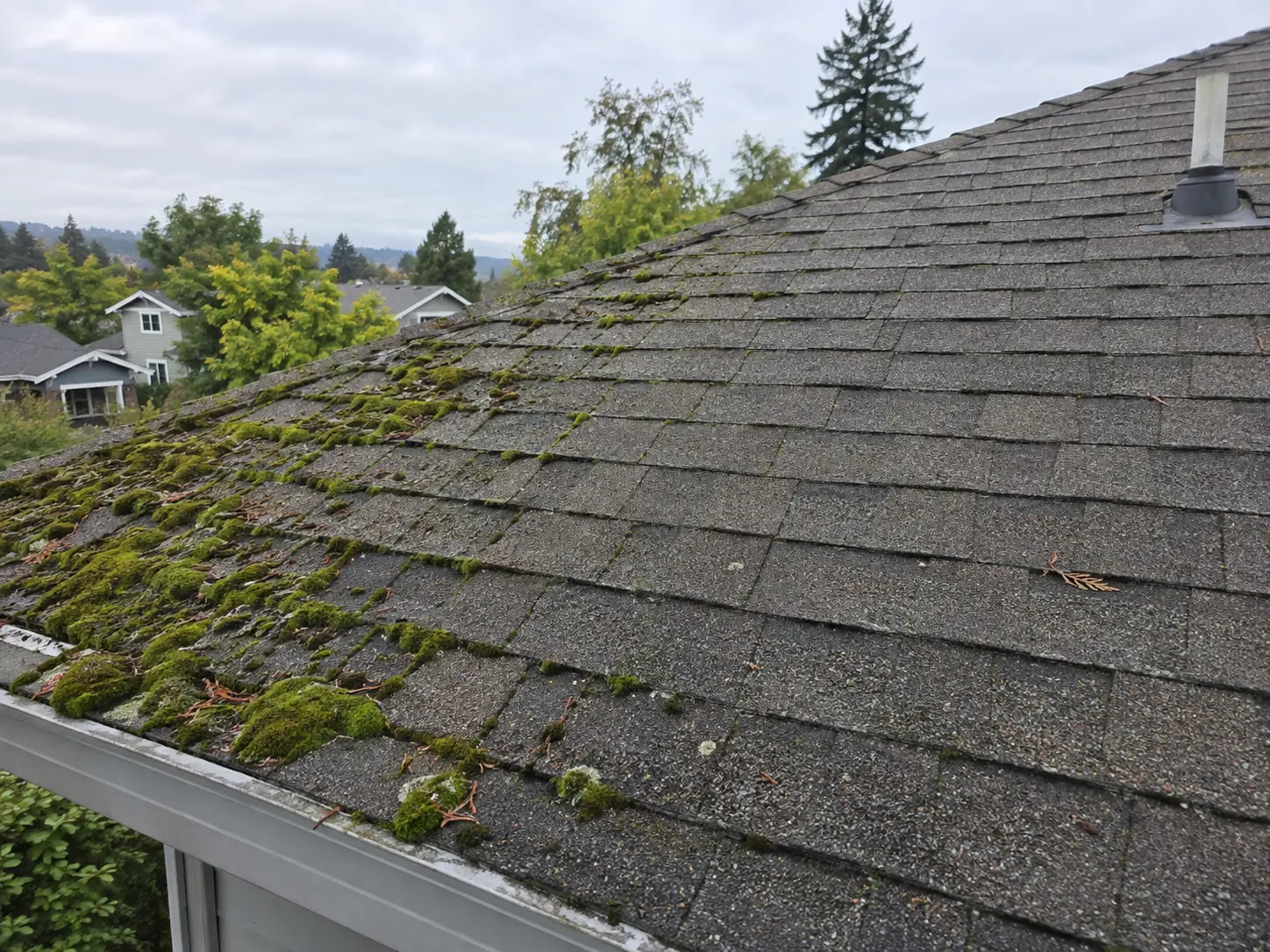
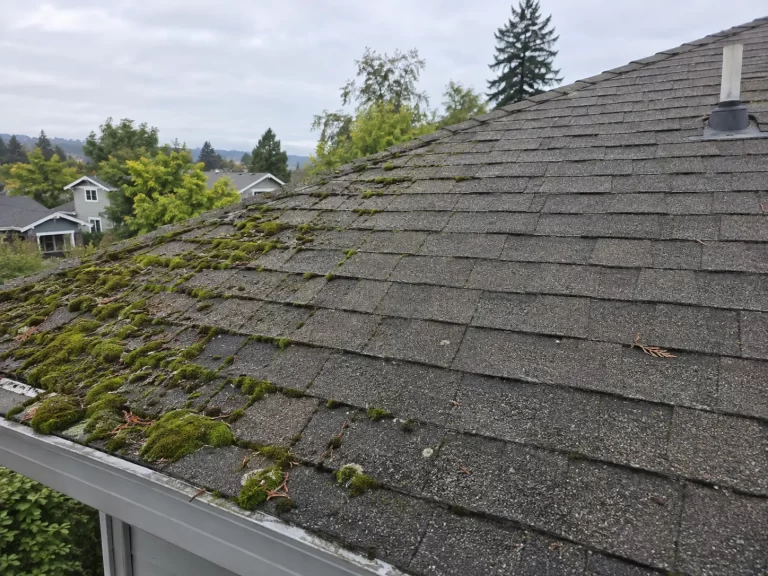
A green patch on the roof is easy to ignore when it is tucked into one shady corner. Then the patch gets thicker. Moss on a roof holds water, works into small gaps, and can hide shingle damage until the next hard rain makes the problem obvious.
A little moss does not automatically mean you need a new roof. It does mean you should stop treating the growth like a cosmetic quirk and take a closer look.
Is moss on a roof a problem?
Yes, especially on asphalt shingles. Moss is more than a stain. Its soft surface absorbs water and stays damp after the rest of the roof has dried. As it gets thicker, it can crowd the edges of shingles and interfere with the way water travels down the roof.
The Asphalt Roofing Manufacturers Association explains that moss can lift or curl shingle edges, increase the chance of wind damage, and allow water to move sideways beneath the roof covering. Heavy growth can also trap leaves, needles, and other debris.
Watch for these signs around a mossy area:
- Shingle edges that look raised or wavy
- Loose material collecting in the gutters
- Dark, damp lines between shingles
- Water stains in the attic or on a ceiling
- Moss returning soon after cleaning
- Growth spreading across more than one roof plane
One small patch may only need treatment and monitoring. Widespread moss, lifted shingles, or an interior stain calls for a proper roof inspection.
Why moss grows on roofs
Moss needs moisture and shade. Give it enough time in a damp spot, and airborne spores can settle in.
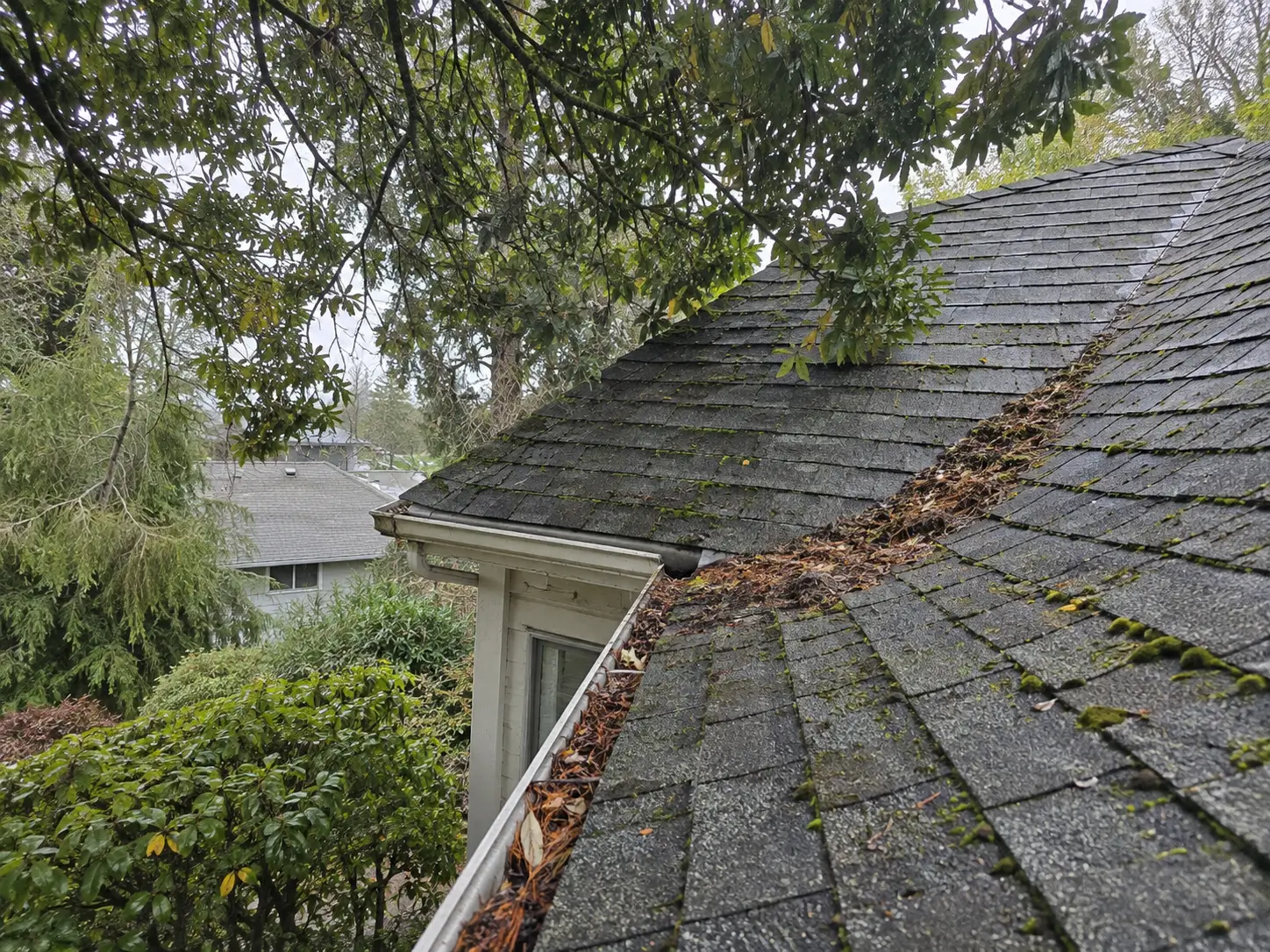
Common trouble spots include:
- North-facing roof sections that receive less direct sun
- Areas below overhanging branches
- Valleys where leaves and needles collect
- Roof edges above clogged gutters
- Sections that drain slowly
- Older, rough shingle surfaces that catch organic debris
Around the Bay Area, a shaded section may stay damp after fog, dew, or winter rain even when the sunny side looks dry.
Branches block sunlight and drop debris that helps moisture linger. Gutters packed with leaves create a similar problem near the roof edge.
Moss, algae, lichen, or mold?
Green stuff is not always moss. The difference matters because each growth behaves differently and may need a different response.
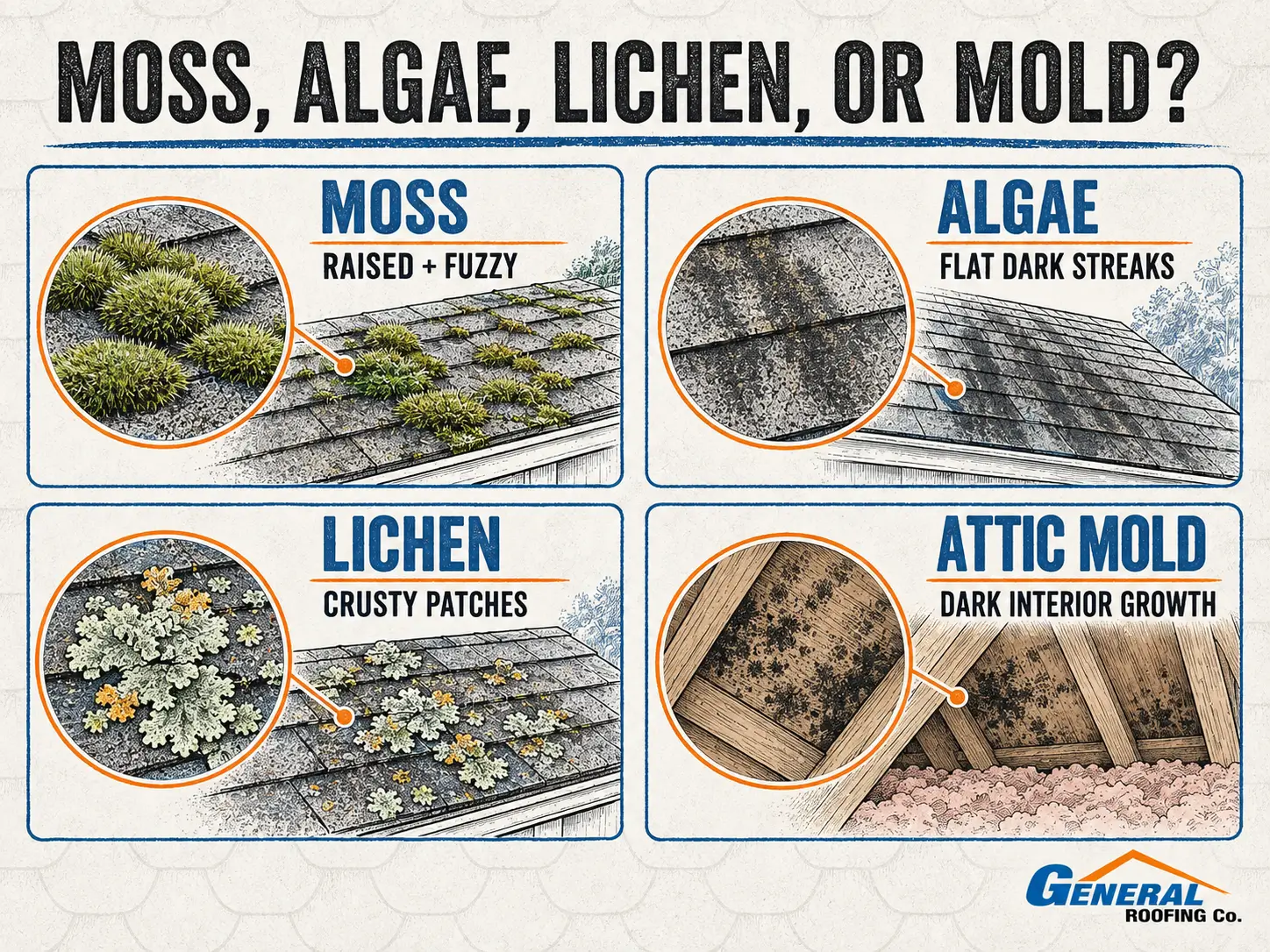
| What you see | What it may be | Typical appearance |
|---|---|---|
| Soft green clumps | Moss | Raised, fuzzy, and thick enough to cast a small shadow |
| Black or brown streaks | Algae | Flat discoloration that runs down the roof plane |
| Crusty gray-green spots | Lichen | Flat, stubborn patches attached tightly to the surface |
| Dark growth inside the attic | Mold | Usually connected to an interior moisture or ventilation issue |
Algae is often mistaken for mold or dirt. ARMA notes that the familiar black streaks seen on many roofs are commonly algae, particularly where moisture stays on the surface. Moss is the growth more likely to build up under shingle edges and affect how the roof sheds water.
Do not diagnose the roof from color alone. A close photo from the ground can help a roofer identify the growth without anyone walking across a slippery surface.
How to check a mossy roof safely
Start from the ground. Use binoculars or your phone’s zoom and look from several angles. An upstairs window may offer a better view without adding ladder risk.
Check for:
- Where the growth starts and stops
- Whether it is flat or raised
- Lifted, cracked, or missing shingles nearby
- Debris sitting in valleys or behind a chimney
- Overflow marks on gutters and downspouts
- Damp sheathing or stains in the attic
Take a few dated photos so you can see whether the patch spreads. Avoid walking on it. Moss can be slick even when it looks dry, and older shingles can be damaged by foot traffic.
Can you remove moss from a roof yourself?
DIY roof-cleaning advice tends to skip the awkward parts: what the roof is made of, how steep it is, how you will reach it, and what the warranty allows. A method that works on one product can stain or loosen another.
One rule is not negotiable for asphalt shingles: do not use a pressure washer. ARMA’s roof cleaning guidance warns that high-pressure washing and aggressive brushing can damage asphalt roofing and loosen protective granules. Spraying water upward can also push it beneath the shingles.
Skip these shortcuts too:
- Scraping moss with a stiff brush or metal tool
- Pulling up thick moss by hand
- Using an unlabeled weed killer
- Mixing cleaners without manufacturer instructions
- Walking backward on a wet roof while handling a hose
Some shingle manufacturers allow specific diluted cleaning solutions applied at low pressure. That is not a universal recipe. Check the instructions for the exact roofing product first, protect landscaping from runoff, and remember that treatment makes the surface even more slippery.
If the roof is steep, high, fragile, heavily covered, or already damaged, this is not a sensible weekend chore.
What happens during professional roof moss removal
The roofer should identify the roofing material and check its condition before reaching for a chemical. Moss can be the visible problem while a lifted shingle nearby is the one that eventually leaks.
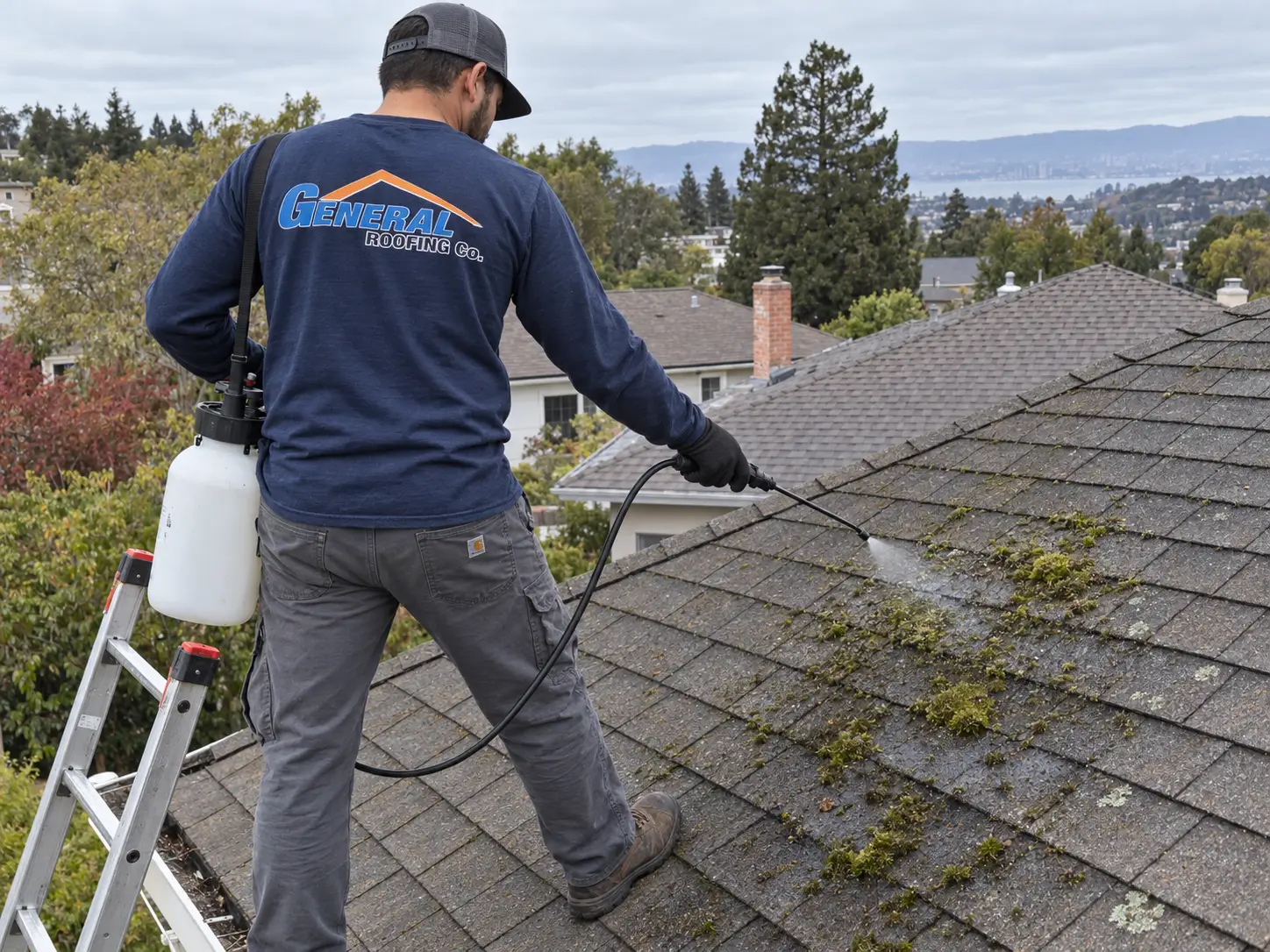
The process may include:
- Inspecting shingles, flashing, valleys, gutters, and drainage
- Protecting plants, siding, and areas that may receive runoff
- Applying a manufacturer-compatible treatment at low pressure
- Allowing dead moss to loosen rather than tearing at live growth
- Clearing debris without driving it under the shingles
- Checking for lifted edges, granule loss, and moisture damage afterward
GAF’s moss-removal guidance also recommends low-pressure rinsing directed down the roof slope and warns that a pressure washer can lift shingles and strip granules.
Do not expect every green clump to disappear on contact. Dead moss often loosens gradually, and thick growth can take more than one visit. A slower result is fine if the shingles are still intact when the job is done.
When moss points to roof damage
Moss does not prove that the roof deck is rotten. Still, it can cover clues that water is getting where it should not.
An inspection is worth scheduling when you see:
- Shingles that stay lifted after the moss loosens
- Bare-looking shingle patches or lots of granules in the gutter
- Cracked flashing near a mossy valley or wall
- A soft or uneven roof surface
- Damp insulation, musty attic air, or dark sheathing
- Ceiling stains after rain
- The same section growing moss again and again
Lifted edges may resemble the early signs covered in our guide to curling shingles. If the surface looks bald or the gutters are full of grit, the roof granule loss guide can help you tell routine shedding from a warning sign.
Cleaning fixes the growth. It does not reseal a loose shingle, repair damaged flashing, or replace wet decking. Those issues need to be addressed separately.
How to keep moss from coming back
You cannot control every airborne spore, but you can make the roof less comfortable for moss.
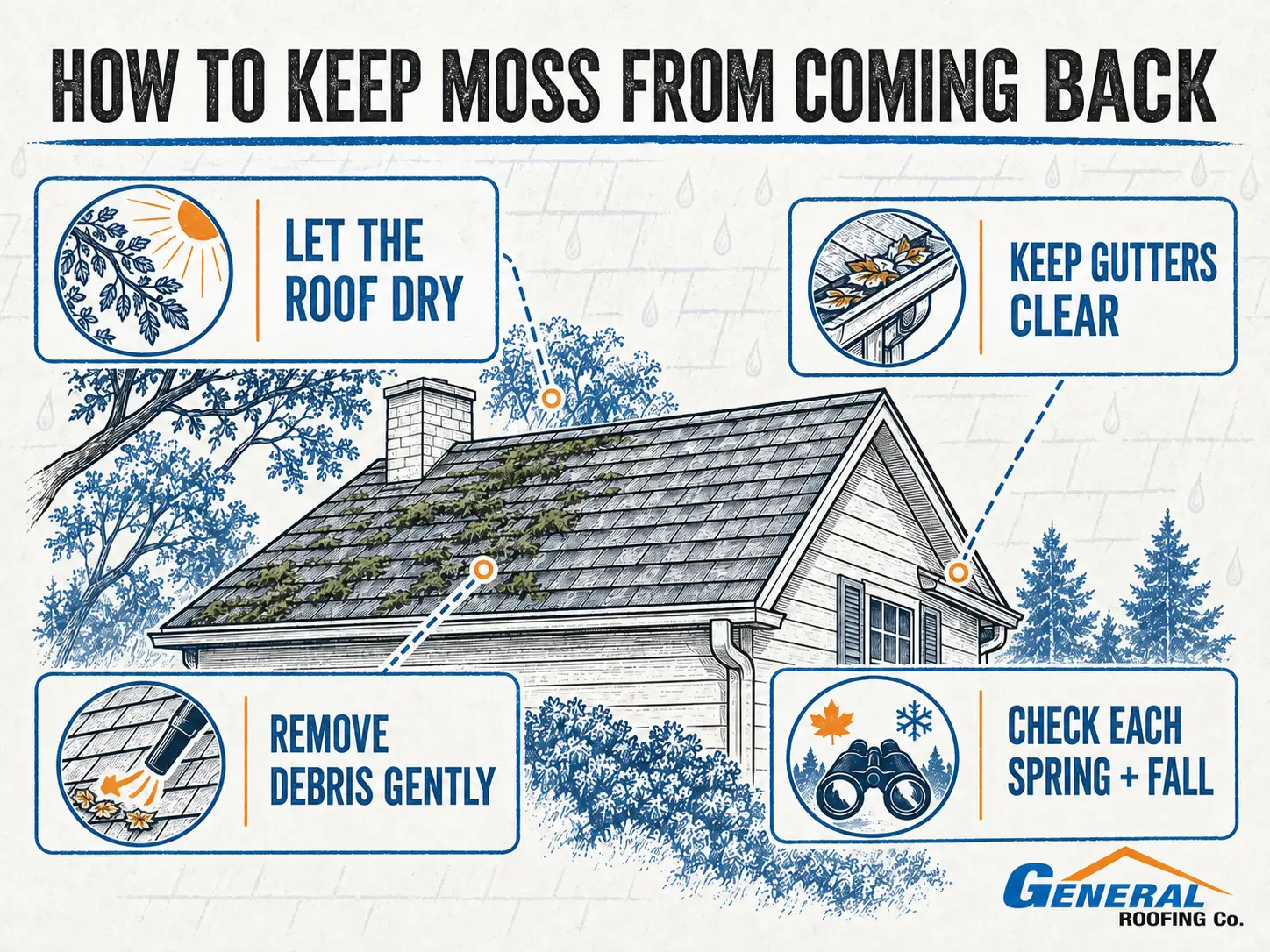
Let the roof dry
Trim branches that keep the roof in constant shade or touch the surface. Improve light and airflow while reducing leaf buildup.
Keep drainage paths clear
Clean gutters and downspouts, and remove debris from valleys before it turns into a damp mat. If an upper downspout empties onto a lower roof section, ask whether it can be routed directly into a lower gutter.
Use gentle maintenance
Debris should be removed with a non-abrasive method that follows the roof slope. Avoid scrubbing and blasting. A roof is a water-shedding system, not a patio.
Check the roof on a schedule
Look from the ground after the rainy season and again before fall weather returns. Our roof maintenance checklist covers the roof surface, gutters, flashing, attic, and other places where small problems tend to show up first.
Ask before adding moss-control products
Copper or zinc components and algae-resistant shingles may help in some roof systems, but installation details matter. Ask the roofing manufacturer or a qualified contractor what is compatible with your roof.
FAQ
How bad is moss on a roof?
A small patch is usually a maintenance issue, not an emergency. It becomes more concerning when thick, widespread, lifting shingles, blocking drainage, or near an active leak.
Will moss ruin roof shingles?
It can damage asphalt shingles over time by holding moisture, catching debris, and lifting shingle edges. The outcome depends on the roof’s condition and how long the moss has been there.
Can I pressure wash moss off my roof?
Do not pressure wash asphalt shingles. It can remove granules, lift edges, and force water beneath the roof covering. Follow the manufacturer’s instructions for any roof material.
Are black streaks on a roof the same as moss?
Usually not. Black or brown streaks are often algae. Moss is generally green, raised, and fuzzy, while lichen forms crusty spots. Identify the growth before choosing a cleaning method.
How often should a moss-prone roof be checked?
Check it at least in spring and fall, and after a stretch of heavy rain or wind. A roof shaded by trees or surrounded by recurring moss growth may need more frequent observation.
Final Thoughts
Moss on a roof is easier to handle while it is still a small patch. Keep the roof free of debris, help damp areas dry, and stay away from pressure washers and hard scrubbing. If shingles are lifting, granules are coming loose, or the growth is widespread, cleaning alone may not be enough.
For homes in Oakland, the East Bay, and the greater Bay Area, we can inspect the affected area and recommend the next practical step. Our roof repair and maintenance team can check for hidden damage, explain whether treatment or repair makes sense, and help keep a moss problem from turning into a leak.
Recent Comments