
Elastomeric roof coating cost usually falls between $2 and $6.50 per square foot for professional installation. In the San Francisco Bay Area, a more realistic starting range is about $2.75 to $7.50 per square foot.
That is a wide spread, but roof coating prices are not based on the coating alone. Cleaning, repairs, primer, reinforcement, roof access, application thickness, and the condition of the existing roof can matter more than the price printed on the pail.
Elastomeric roof coating cost per square foot
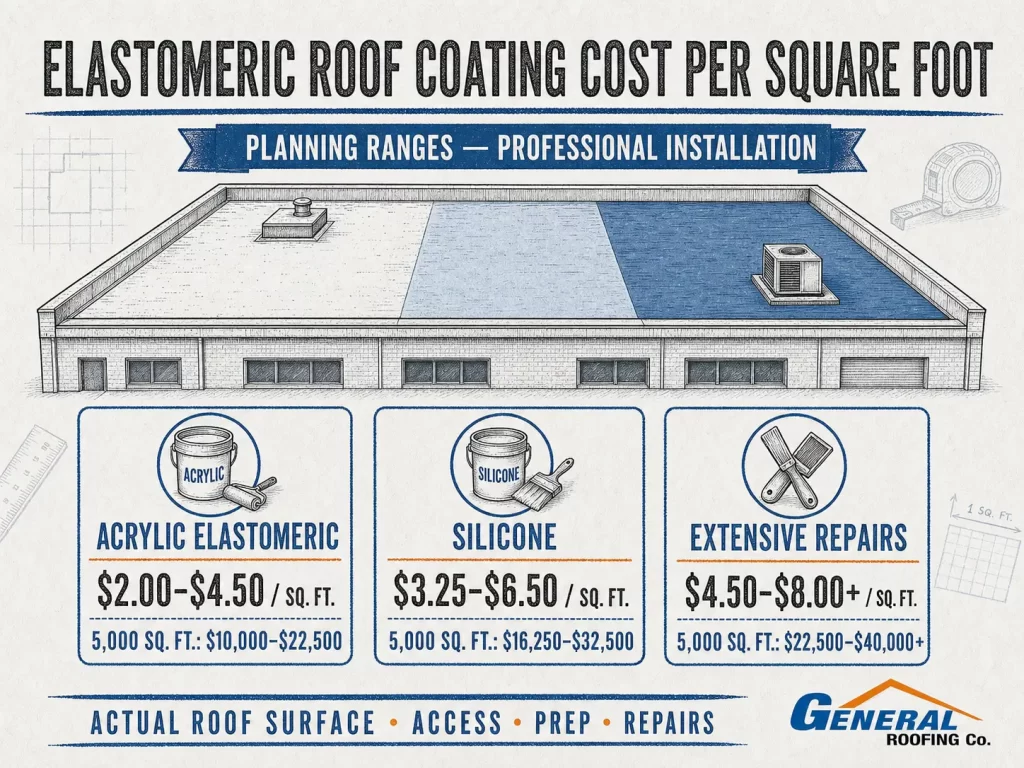
The table below gives practical budgeting ranges for a roof that is still in serviceable condition. These are planning numbers, not fixed rates. A roof with trapped moisture, widespread seam failure, deteriorated insulation, or heavy ponding will need more work.
| Roof coating system | Typical installed cost per square foot | Estimated cost for 5,000 square feet |
|---|---|---|
| Acrylic elastomeric coating | $2.00 to $4.50 | $10,000 to $22,500 |
| Silicone roof coating | $3.25 to $6.50 | $16,250 to $32,500 |
| Coating system with extensive repairs | $4.50 to $8.00+ | $22,500 to $40,000+ |
Square footage should be based on the actual roof surface, not the building’s interior floor area. Parapet walls, equipment curbs, unusual roof sections, and vertical flashing areas can add material and labor.
A small roof may also have a higher roof coating cost per square foot. Mobilizing a crew, setting up fall protection, cleaning equipment, and getting materials onto the roof cost money whether the roof is 1,000 square feet or 20,000.
Bay Area elastomeric roof coating prices
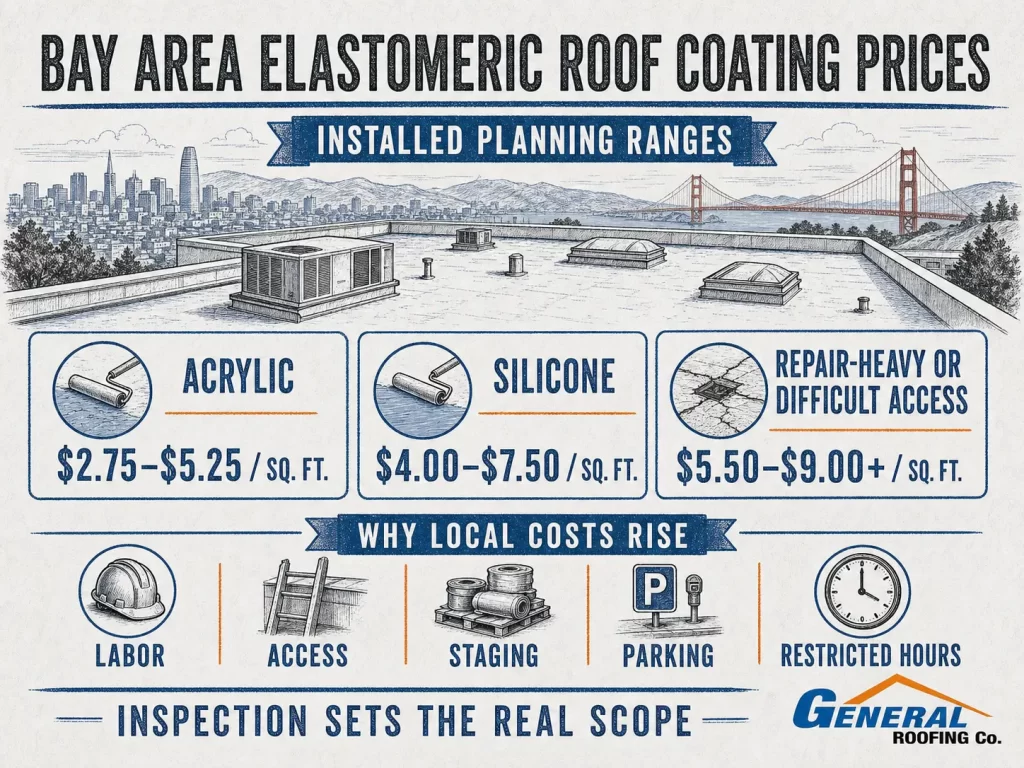
Commercial roof coating cost is usually higher in the Bay Area than it is in lower-cost parts of California. Labor, insurance, staging, parking, restricted work hours, difficult access, and occupied-building logistics all affect the final estimate.
A practical Bay Area budget looks more like this:
| Bay Area roof coating system | Typical installed cost per square foot | Estimated cost for 5,000 square feet |
|---|---|---|
| Acrylic elastomeric coating | $2.75 to $5.25 | $13,750 to $26,250 |
| Silicone roof coating | $4.00 to $7.50 | $20,000 to $37,500 |
| Repair-heavy or difficult-access project | $5.50 to $9.00+ | $27,500 to $45,000+ |
A clear, open commercial roof with good drainage may land near the lower end. A roof in San Francisco with limited loading access, rooftop equipment everywhere, deteriorated flashing, and a long list of repairs will not.
For a usable number, the roof needs to be inspected. Our team looks at the membrane, seams, penetrations, drainage, previous coatings, and signs of trapped moisture before recommending a system. Property owners can use our roof estimate form to start that process.
Why the price of a pail does not tell you the project cost
Retail prices are useful because they show the difference between acrylic roof coating cost and silicone roof coating cost. They do not include most of the work required to produce a reliable roof.
As a current acrylic example, a 4.75-gallon pail of Henry 587 was listed at $109 when this guide was prepared. The manufacturer’s acrylic coating technical data sheet calls for approximately one gallon per 100 square feet per coat on a smooth surface, with two coats required.
At those rates, one pail completes roughly 237 square feet of smooth roof. That puts the acrylic topcoat itself at about $0.46 per square foot. On a rough surface, the material rate rises to approximately $0.69 per square foot. Those figures do not include tax, waste, primer, fabric, sealants, cleaning, repairs, labor, equipment, or contractor overhead.
Silicone starts higher. A 4.75-gallon pail of Henry 887 was listed at $369. Its silicone coating technical data sheet specifies a minimum application rate of 1.5 gallons per 100 square feet. That works out to about $1.17 per square foot for the silicone topcoat before the rest of the roof system is included.
This is why two contractors can use coatings with similar pail prices and still submit very different estimates. One may be pricing a basic wash-and-coat job. The other may be including wet-area investigation, seam reinforcement, flashing repairs, drain work, primer, and the application thickness required for a manufacturer-backed system.
The scope matters.
What changes the flat roof coating cost?
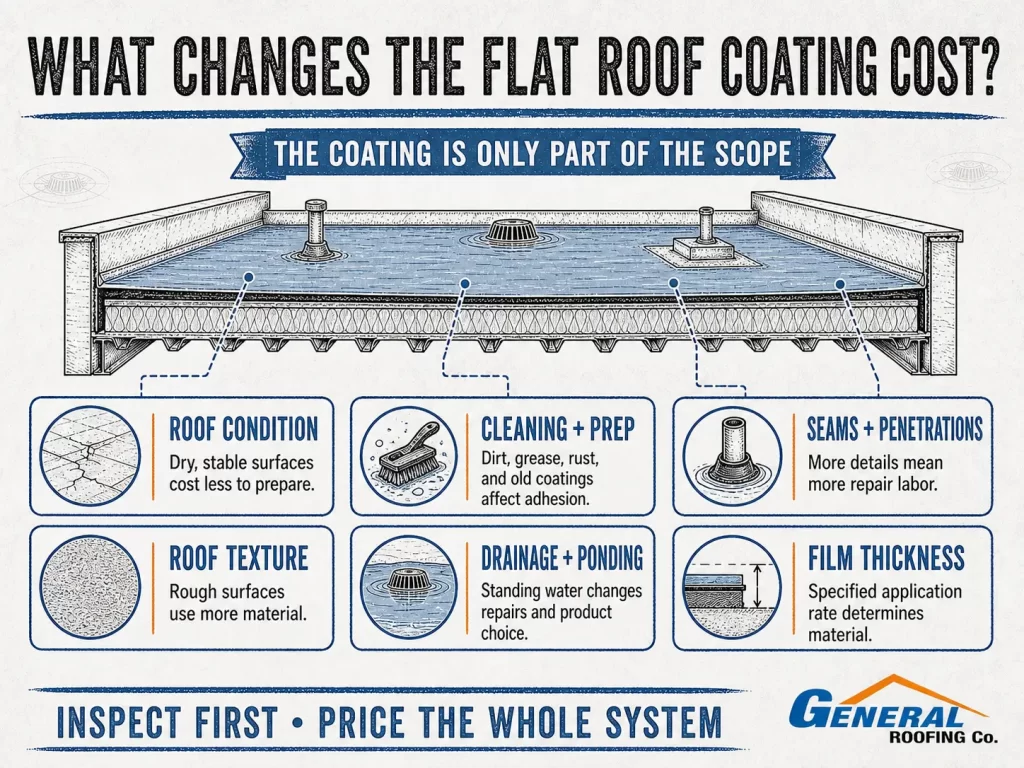
Roof condition
A coating works best on a roof that is dry, stable, and firmly attached. Small cracks and isolated defects can usually be repaired before coating. Saturated insulation, widespread blistering, severe delamination, or rotten decking can turn a coating project into a larger repair or replacement job.
If the building already has active leaks, coating should not be the first step. The leak source needs to be found and repaired through proper roof repair and maintenance.
Cleaning and surface preparation
Coating does not bond well to dirt, loose material, grease, chalking, biological growth, or an incompatible older coating. Some roofs need a thorough wash. Others need scraping, adhesion testing, rust treatment, or a specialty primer.
Preparation is not the glamorous part of the job, but skipping it is one of the fastest ways to waste an entire coating system.
Seams, flashing, and penetrations
Commercial flat roofs often have HVAC units, pipes, drains, vents, skylights, parapet walls, and old equipment curbs. Each one creates an interruption in the roof surface.
Seams and penetrations may need sealant, mastic, or reinforcing fabric before the main coating goes down. A large open warehouse roof can be straightforward. A smaller roof crowded with equipment may take much longer.
Roof texture
A rough roof uses more coating than a smooth one. Granulated modified bitumen, weathered spray foam, and uneven repairs can absorb or hold much more material.
Published coverage numbers usually assume a particular surface and application thickness. They should not be treated as guaranteed field coverage.
Drainage and ponding water
Water that sits on the roof changes the product decision. Some acrylic products tolerate brief ponding but are not intended for water that remains for long periods. Silicone systems are generally better suited to persistent wet conditions, although drainage problems should still be corrected where possible.
Standing water may also point to blocked drains, low areas, compressed insulation, or structural deflection. Our roof maintenance checklist covers the drainage areas and surface problems worth checking before rainy weather.
Required film thickness
Roof coatings are specified by application rate and finished film thickness, not by how white the roof looks after one pass.
Applying too little product lowers the upfront price, but it also leaves less material to handle weathering, movement, and ultraviolet exposure. A proposal should identify the product, number of coats, application rate, preparation, repairs, and warranty terms.
Acrylic roof coating cost vs. silicone roof coating cost
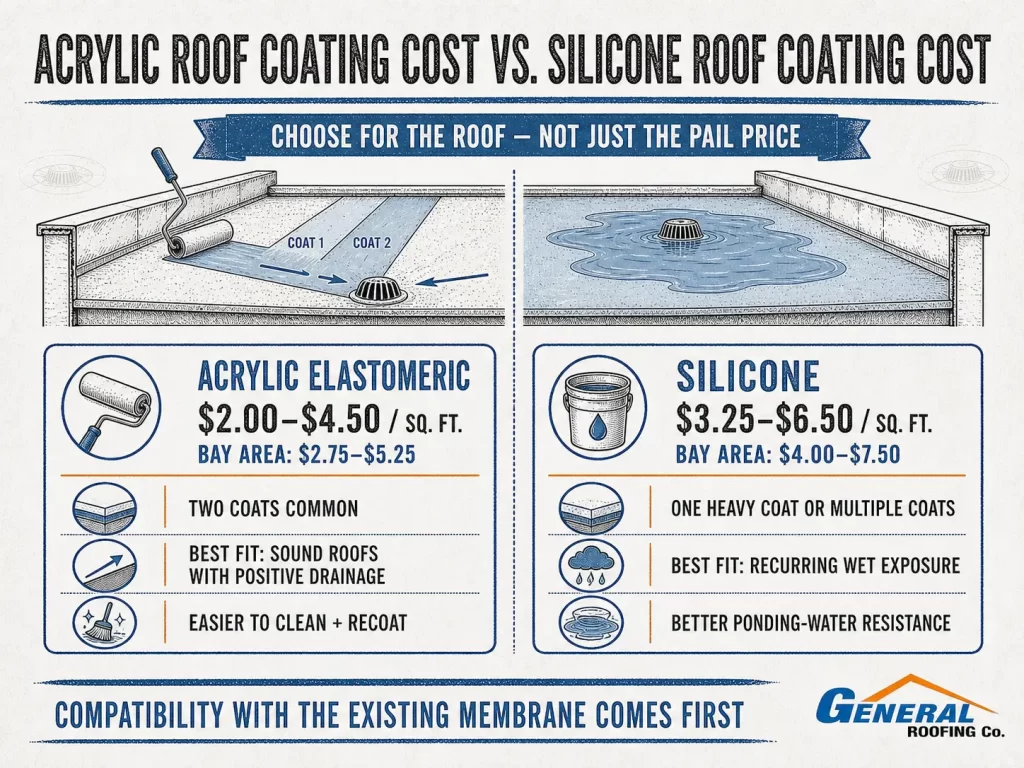
People often use the word elastomeric to mean acrylic coating. Technically, elastomeric describes a coating that can stretch and return toward its original shape. Acrylic and silicone products can both have elastomeric properties, but they behave differently on a roof.
| Factor | Acrylic elastomeric coating | Silicone coating |
|---|---|---|
| Typical installed cost | $2.00 to $4.50 per square foot | $3.25 to $6.50 per square foot |
| Bay Area planning range | $2.75 to $5.25 per square foot | $4.00 to $7.50 per square foot |
| Common application | Two coats | One heavy coat or multiple coats, depending on the system |
| Ponding water | Product-specific, often limited | Usually better resistance |
| Dirt pickup | Often easier to clean and recoat | Can attract dirt over time |
| Recoating | Usually straightforward with compatible acrylic | May require silicone-compatible preparation |
| Best fit | Sound roofs with positive drainage and a tighter budget | Roofs with wet exposure or recurring ponding concerns |
Acrylic is often the better value when the roof drains properly and the existing surface is compatible. Silicone costs more, but the extra expense may make sense on a commercial flat roof that regularly sees standing water.
Neither material is automatically the right choice. Compatibility with the existing membrane matters just as much as price.
Is elastomeric roof coating worth it?
Elastomeric roof coating can be worth the cost when the existing roof is still structurally sound and most of its problems are at the surface.
A good coating project can protect the membrane from sunlight and weather, seal properly repaired surface defects, and postpone the disruption of a full replacement. Reflective coatings may also reduce roof surface temperature. The U.S. Department of Energy’s cool roof guidance notes that reflective roofs can reduce heat flow into a building, although actual energy savings depend on climate, insulation, roof design, and the cooling system.
Coating is usually not worth it when the roof has wet insulation across large areas, failing attachment, major structural movement, or a membrane that has deteriorated beyond repair. In that situation, coating can make a bad roof look cleaner without fixing what is happening underneath.
Roof coating vs. roof replacement cost
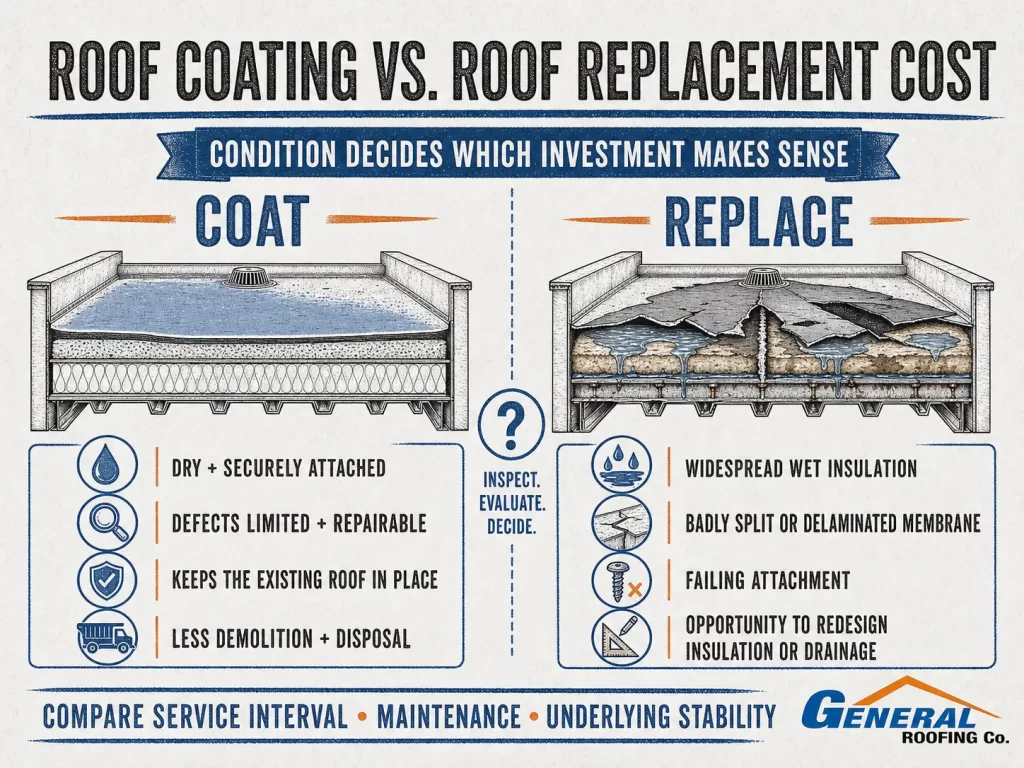
A coating project costs less than replacement because it normally keeps the existing roof in place. There is less demolition, less disposal, and no need to purchase an entirely new membrane system.
That does not make coating a cheap substitute for every old roof.
| Roof condition | Coating | Replacement |
|---|---|---|
| Roof is dry and securely attached | Often a good option | May be unnecessary |
| Defects are limited and repairable | Repair, then coat | Usually not the first choice |
| Insulation is wet in isolated areas | Possible after targeted replacement | Depends on the extent |
| Insulation is wet across large areas | Usually a poor choice | Often the better solution |
| Membrane is badly split or delaminated | Unlikely to be reliable | Usually required |
| Owner wants to change insulation or drainage | Limited ability to help | Better opportunity to redesign |
The useful comparison is not simply today’s coating price against today’s replacement price. It is the coating cost, expected service interval, maintenance needs, and likelihood that the underlying roof will remain stable.
Our guide to roof repair versus roof replacement covers the condition questions that should be answered before choosing either option.
How long does elastomeric roof coating last?
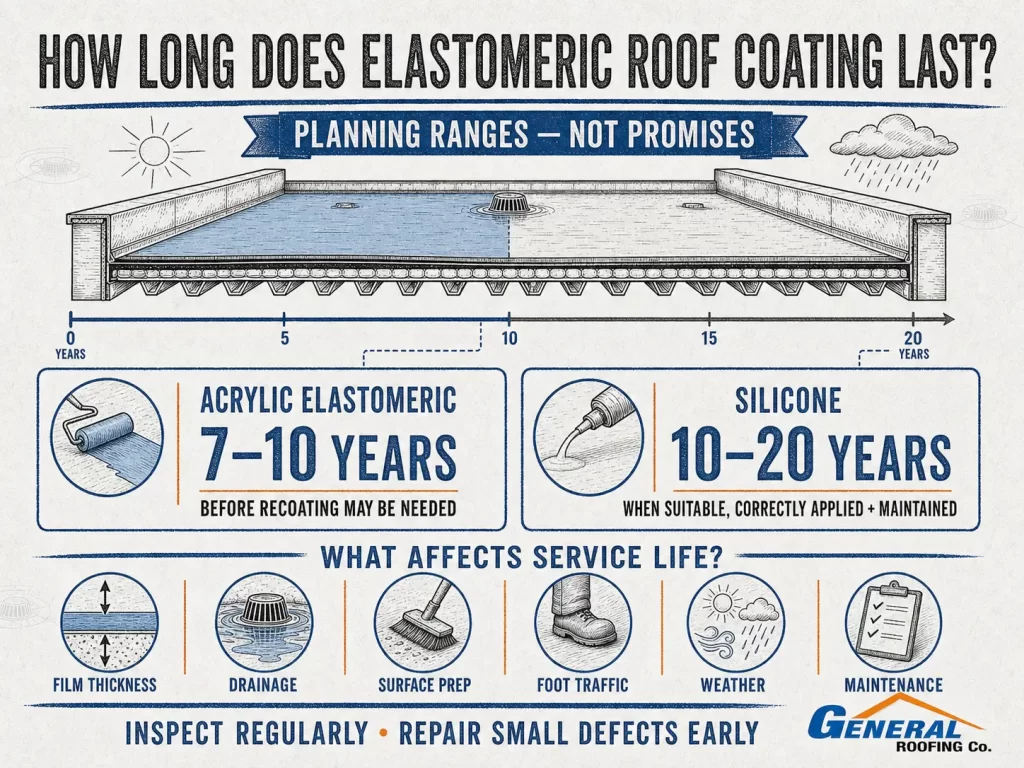
Acrylic elastomeric coatings often remain in service for about 7 to 10 years before recoating may be needed. Higher-build silicone systems may run 10 to 20 years when they are installed over a suitable roof and maintained.
Those are planning ranges, not promises. The actual elastomeric roof coating lifespan depends on:
- The amount of coating applied
- Roof drainage
- Surface preparation
- Foot traffic
- Weather exposure
- Compatibility with the existing membrane
- Whether small defects are repaired before they spread
Warranty length should not be confused with guaranteed roof life. Some warranties cover only replacement coating material, while commercial system warranties may require inspections, approved installers, documented application rates, and specific repair details.
A coated roof should still be inspected. Drains clog. Equipment technicians drop tools. Sealant ages. A renewable surface does not make the roof maintenance-free.
Frequently asked questions
Is elastomeric roof coating worth it?
Yes, when the existing roof is dry, stable, and repairable. Coating can extend its usable service life for far less than replacement. It is usually a poor investment when the roof has widespread moisture, failing insulation, or serious membrane deterioration.
How much does 5 gallons of elastomeric roof coating cover?
Five gallons commonly covers about 160 to 320 square feet of completed roof, depending on the product, surface texture, and number of coats.
A smooth acrylic roof may get close to 475 square feet from one pail per coat, but a two-coat system reduces the completed area to roughly 237 square feet. Rough surfaces may bring that down to around 160 square feet. A high-build silicone applied in one coat may cover about 320 square feet.
Always calculate coverage from the manufacturer’s required application rate, not from the largest number printed on the label.
How long will elastomeric roof coating last?
Acrylic coating commonly lasts around 7 to 10 years before recoating. Silicone systems may last 10 to 20 years. Roof condition, film thickness, drainage, weather, maintenance, and foot traffic can shorten or extend that interval.
Which is better, elastomeric or silicone roof coating?
Silicone is usually the better choice for roofs with persistent ponding water or frequent wet exposure. Acrylic elastomeric coating is often more economical on roofs with good drainage.
The existing membrane may settle the question. A coating that is not compatible with the roof underneath it is not a bargain at any price.
How many coats of elastomeric roof coating are needed?
Two coats are common for acrylic elastomeric coating. Silicone requirements vary. Some products are designed for one heavy coat, while others require multiple coats to reach the specified thickness.
Follow the technical data sheet for the exact product. Coat count is less important than applying the required amount of material and reaching the specified dry film thickness.
What is the best roof coating on the market?
There is no single best coating for every roof.
Silicone is often strongest around ponding-water resistance. Acrylic can be a better value on a sound roof with positive drainage. The best product is one that is compatible with the existing membrane, suitable for the site’s drainage and weather, and available as a complete system with the needed primers and repair products.
For reflective performance, the Cool Roof Rating Council’s Rated Products Directory lets building owners compare tested solar reflectance and thermal emittance values. A CRRC rating measures radiative performance, not overall waterproofing quality or product approval.
Does elastomeric roof coating stop leaks?
Elastomeric coating can seal small surface cracks and pinholes as part of a properly prepared system. It should not be poured or rolled over an active leak and treated as a repair.
Open seams, failed flashing, punctures, wet insulation, and damaged roof components need to be repaired first. Otherwise, water may continue entering below the new coating.
Final thoughts
Elastomeric roof coating cost usually runs from $2 to $6.50 per square foot, with Bay Area projects more often landing between $2.75 and $7.50. Acrylic generally has the lower upfront price. Silicone costs more but may be a better fit for commercial flat roofs with recurring wet conditions.
The lowest square-foot number is not always the least expensive choice. A thin coating over a poorly prepared roof can fail early. A properly scoped project starts with the roof condition, repairs what needs repair, and applies enough material to produce the system that was actually specified.
At General Roofing, we can inspect the existing roof, check whether coating is a sensible option, and prepare a scope based on the building rather than a generic online price. Property owners can request a roof estimate when they are ready for project-specific pricing.
Recent Comments