
A roof warranty can look reassuring right up until you need to use it. Then the fine print starts to matter. Some warranties cover defective shingles but not the labor to replace them. Others include workmanship, yet only for a limited period. A long warranty term can also become less valuable as the roof gets older.
Before choosing a roof system or signing a contract, it helps to know who stands behind each part of the job and what they have actually promised to cover.
What is a roof warranty?
A roof warranty is a written agreement that provides a remedy when a covered problem occurs during a stated period. The roofing material manufacturer, the contractor, or both may be responsible for it.
The word “warranty” does not automatically mean every leak or repair will be paid for. The cause still matters. So do the installation, maintenance history, claim deadline, and exclusions in the document.
The National Roofing Contractors Association separates the two warranties most owners encounter: a manufacturer warranty that generally addresses defects in the roof covering and a contractor warranty that addresses workmanship and installation issues.
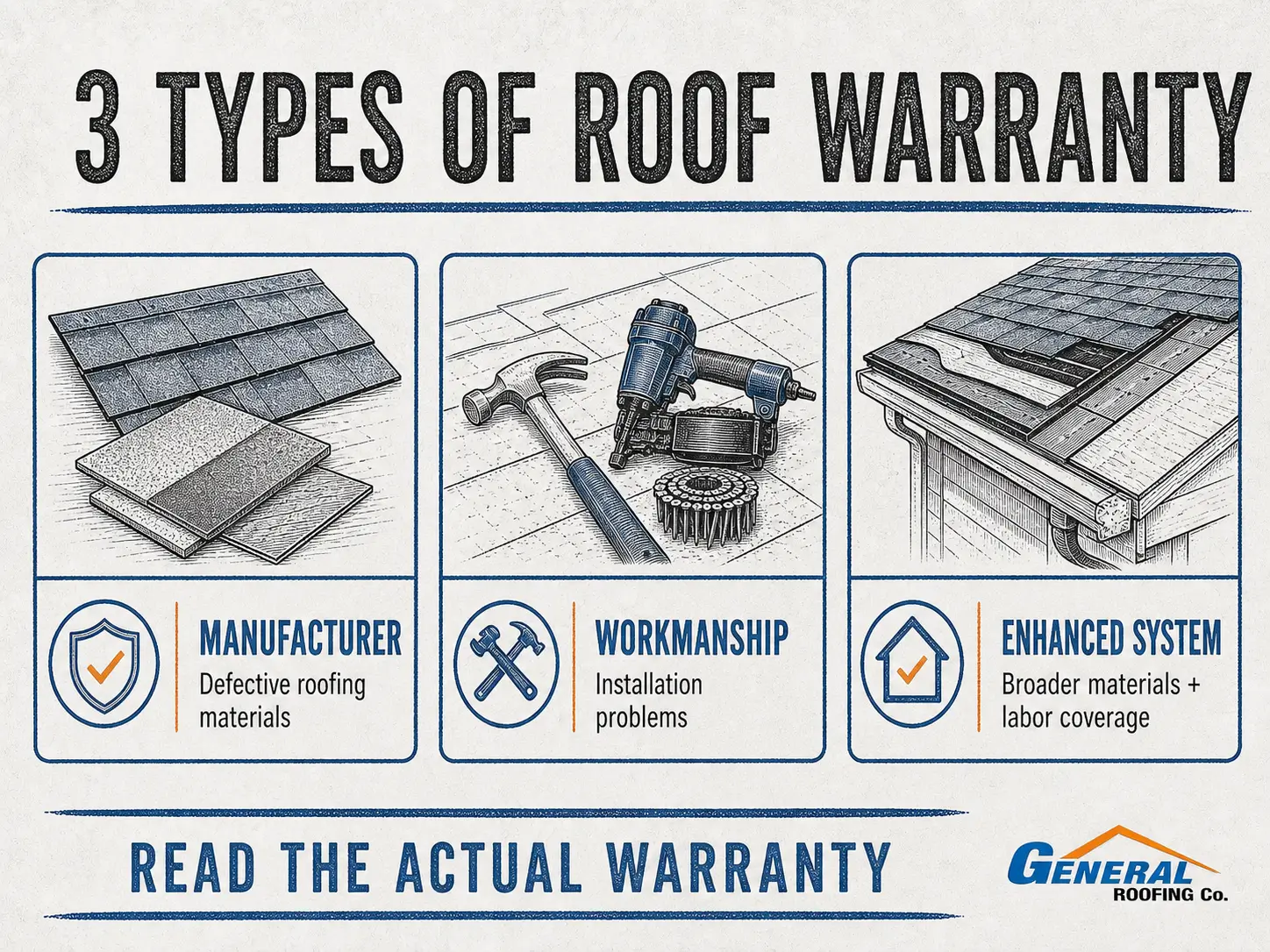
The three common types of roof warranty
Manufacturer material warranty
A manufacturer warranty typically covers a defect in the roofing product itself. On a shingle roof, for example, it may apply if the shingles fail because of a manufacturing problem rather than poor installation, storm damage, or normal aging.
Basic product coverage may provide replacement materials while leaving labor and other costs to the owner. Broader coverage may pay for tear-off, disposal, flashing, or installation labor. The warranty document spells out the actual remedy.
Terms such as “lifetime” deserve a closer look because the manufacturer defines them. GAF, for instance, explains that its lifetime term can depend on the owner and building type. The remedy can also change after an initial non-prorated period. Its residential warranty comparison guide shows the differences among coverage levels.
Roof workmanship warranty
A roof workmanship warranty comes from the contractor. It covers problems tied to the way the roof was installed, subject to the written terms.
A perfectly good roofing product can still leak when the installation around a vent, edge, transition, or flashing is wrong. A material warranty may not help if the product itself is fine.
There is no universal workmanship warranty length. The NRCA notes that many contractors offer one or two years, but there is no industry standard. A longer number is useful only when the warranty clearly explains what is covered, how a claim is handled, and who will perform the repair.
Enhanced manufacturer or roofing-system warranty
An enhanced warranty can provide broader coverage than a basic product warranty. Depending on the program, it may include multiple components in the roofing system, installation labor, tear-off and disposal, or workmanship for a defined period.
These warranties often have eligibility rules. They may require a complete group of qualifying products and installation by a contractor authorized or certified by the manufacturer. GAF says its enhanced warranty options are available through certified contractors and vary by certification level.
Do not choose by the program name alone. Ask for the actual warranty document and read the coverage schedule before making a decision.
What does a roof warranty cover?
There is no single answer that applies to every roof. Depending on the warranty, covered items may include:
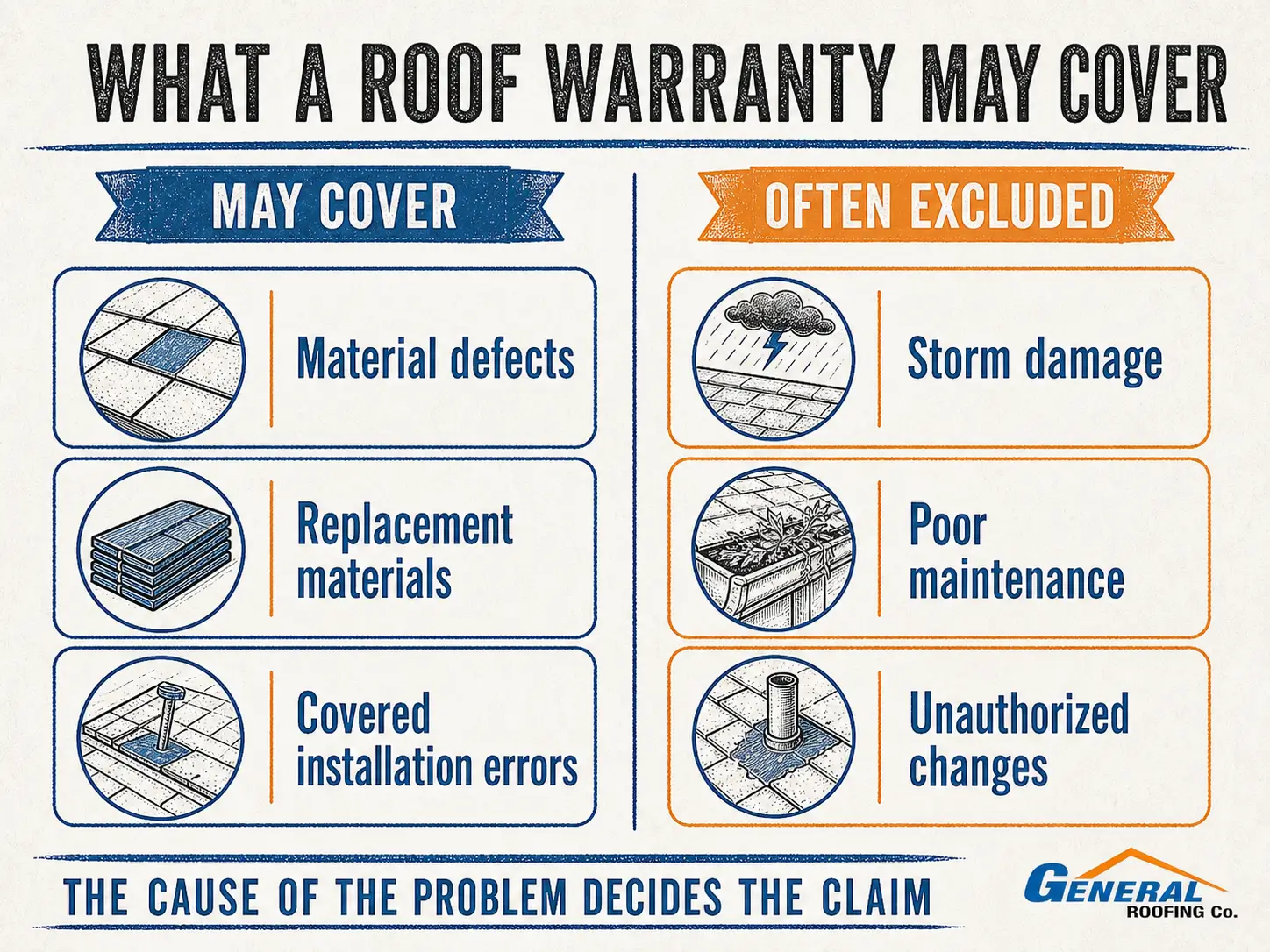
- Manufacturing defects in specified roofing materials
- Replacement materials for a covered failure
- Installation labor during a stated coverage period
- Tear-off and disposal under enhanced coverage
- Covered flashings or accessories listed in the warranty
- Installation errors under a workmanship warranty
Pay attention to the remedy, not only the covered event. A warranty might provide new materials, reimburse part of the bill, arrange a repair, or cap payment at a stated amount. Two warranties with the same term can be worth very different amounts when something goes wrong.
What usually is not covered?
Many roof warranty disputes begin with a simple assumption: if the roof leaks, the warranty must cover it. In reality, the cause of the leak controls the answer.
- Hail, wind, lightning, fire, or other outside events
- Damage from foot traffic, falling objects, pests, or other trades
- Problems caused by the roof deck or another non-covered building component
- Poor maintenance or failure to correct known drainage issues
- Unauthorized repairs, alterations, coatings, or added equipment
- Condensation, inadequate ventilation, or interior moisture
- Normal wear and cosmetic changes
- Installation errors under a product-only warranty
This is not a universal list. Read the exclusions in the warranty you are being offered. If the roof has solar equipment, HVAC units, skylights, or frequent service traffic, ask how later work will affect coverage.
A warranty also is not a substitute for property insurance. Warranties generally address covered product or installation problems. Insurance policies deal with covered losses and events under a separate contract.
How long does a roof warranty last?
Roof warranty terms range from a short contractor guarantee to manufacturer coverage advertised for several decades or a lifetime. The headline term tells only part of the story.
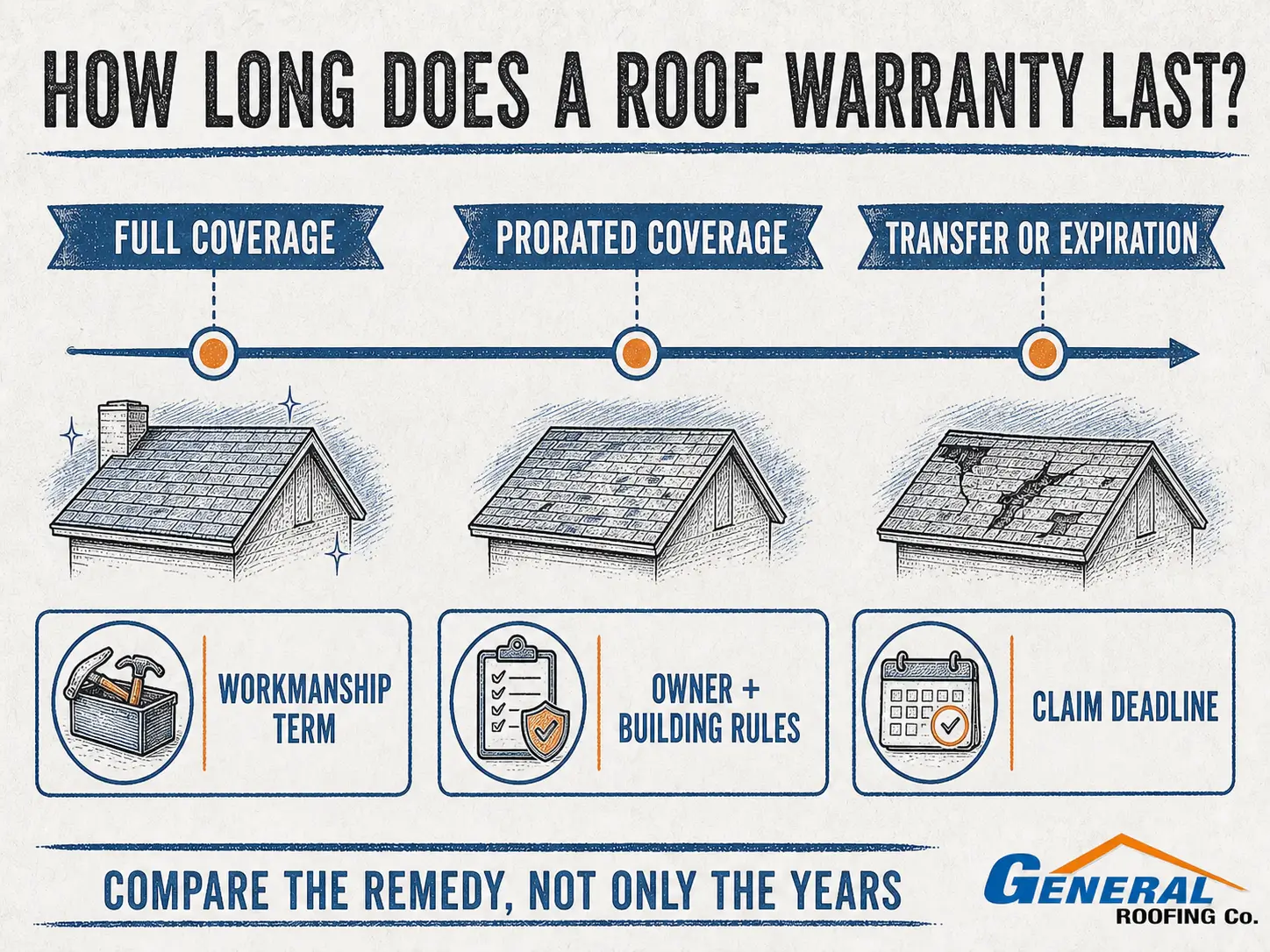
Check these details before comparing two options:
| Warranty detail | Why it matters |
|---|---|
| Full or non-prorated period | The remedy may be strongest during the early years. |
| Prorated period | The manufacturer’s contribution may decrease as the roof ages. |
| Workmanship term | Product coverage does not automatically cover installation mistakes. |
| Owner and building rules | Coverage can differ for a home, rental, association, or commercial property. |
| Transfer rules | A sale may require notice, documents, a fee, or action within a deadline. |
| Claim deadline | Waiting too long after discovering a problem can affect eligibility. |
A 40-year product warranty is not automatically better than a shorter warranty with broader labor and workmanship protection. Compare what will be paid, who will pay it, and when that coverage changes.
Can a roof warranty transfer to a new owner?
Some roof warranties can transfer, while others cannot. Even when transfer is allowed, the process may be time-sensitive.
For example, Owens Corning’s current transfer instructions say the second owner must contact the company within 60 days of the real estate transfer and provide ownership documentation. Some of its warranties may also require a fee. Other manufacturers and warranty programs use different rules.
If you are selling, gather the warranty certificate, roofing contract, invoices, product details, inspection records, and proof of registration before the property changes hands. If you are buying, ask for those records during the inspection period rather than after closing.
How to protect your roof warranty
You do not need to memorize every paragraph. You do need a clean paper trail and a basic plan.
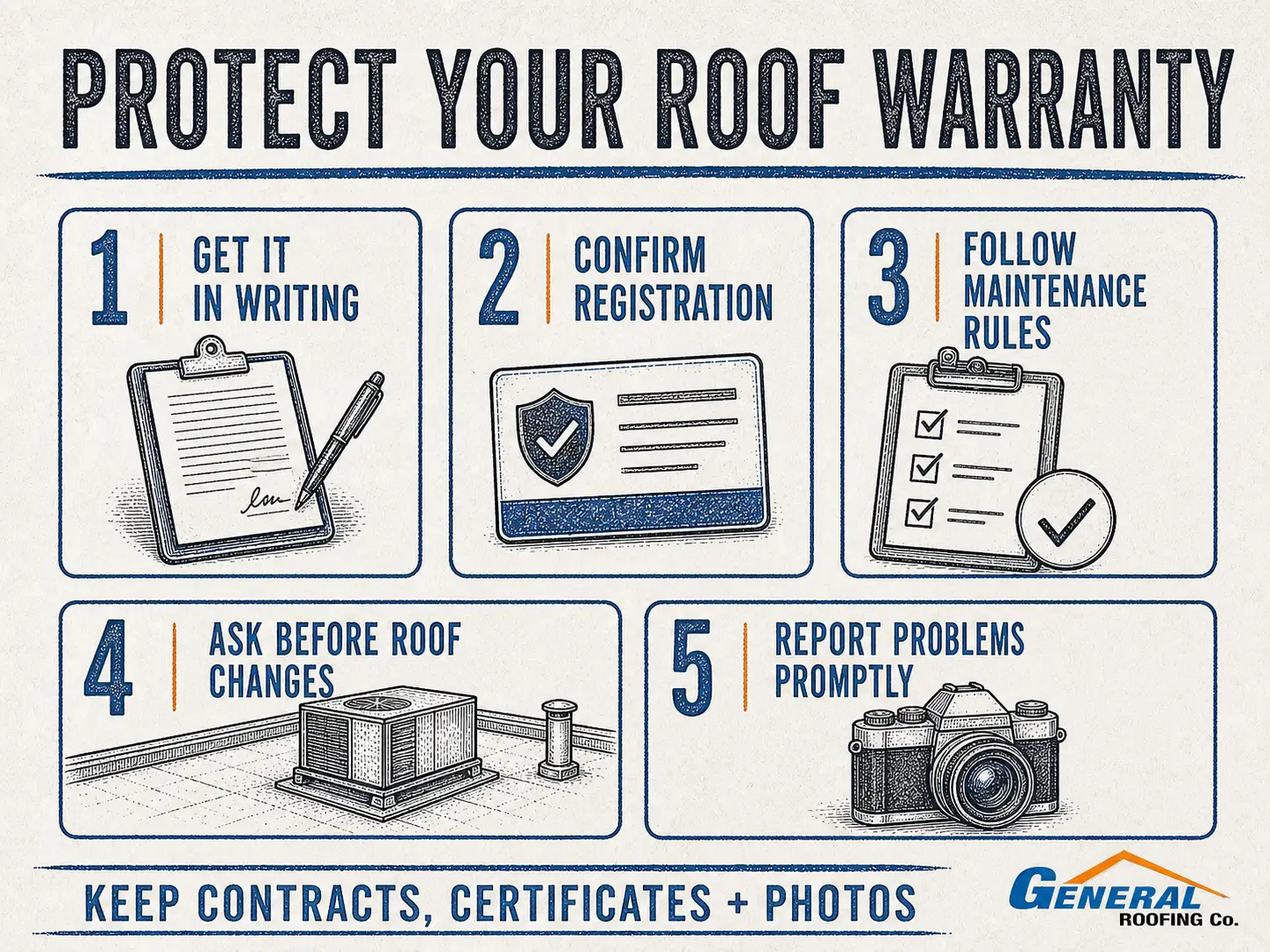
Get every warranty in writing
Do not rely on a verbal promise about coverage. California’s Contractors State License Board advises homeowners to get warranties for labor and materials in writing. Its home improvement contract guidance also stresses that contract details and changes should be documented.
Keep the signed contract, warranty certificates, final invoice, product names, color information, permit records, and installation photos together.
Confirm registration
Ask whether the manufacturer warranty must be registered, who will register it, and when you should receive confirmation. Do not assume the invoice completed that step.
Follow the maintenance requirements
Commercial and low-slope roof warranties may require inspections, maintenance, prompt leak reporting, or records of repairs. Even when a document does not require a formal program, routine care makes it easier to catch small problems before they reach insulation or the building interior.
Our roof repair and maintenance work includes evaluating existing conditions and helping owners plan the next practical step.
Call before changing the roof
Mounting solar panels, replacing rooftop equipment, cutting a new penetration, or applying a coating can affect coverage. Check with the contractor and manufacturer before another trade starts work.
Report problems promptly
Take photos, note when the problem appeared, limit further damage when it is safe to do so, and contact the responsible party using the method listed in the warranty. Some manufacturers require direct notice, so calling only the original installer may not satisfy the claim terms.
Questions to ask before choosing a roof warranty
Bring these questions to the estimate meeting:
- Which document covers the roofing materials?
- Is there a separate roof workmanship warranty?
- Does coverage include labor, tear-off, disposal, and flashing?
- When does proration begin?
- Which conditions or actions can void coverage?
- Is registration required, and who completes it?
- Can the warranty transfer to a new owner?
- Are inspections or maintenance records required?
- Who receives the first call when a leak appears?
- What coverage is available because of the installer’s manufacturer status?
We install products from several major roofing manufacturers. Our product resources page lists the manufacturers for which we are factory-authorized installers. The right warranty still depends on the selected system, property, and current program terms.
Roof warranty FAQ
Does a roof warranty cover leaks?
It can, but only when the leak results from a covered cause. A product defect, installation error, storm, damaged rooftop unit, and neglected drain may each fall under a different responsibility. The roof warranty and an inspection help determine what applies.
How long is a roof workmanship warranty?
There is no industry-wide standard. Contractor terms vary, and enhanced manufacturer warranties may offer separate workmanship coverage. Check the duration, exclusions, remedy, and claims process in writing.
Does a roof replacement warranty cover labor?
Some do and some do not. Basic manufacturer coverage may supply materials only. Enhanced coverage may include installation labor, tear-off, or disposal during specified periods. Never assume labor is included because the material term is long.
Can roof repairs void a warranty?
Unauthorized or incompatible repairs can affect coverage. Before hiring another trade or applying a patch or coating, contact the contractor or manufacturer and ask what methods and documentation are required.
Is a commercial roof warranty different from a residential warranty?
Often, yes. Commercial warranties may focus on an entire low-slope system and may include requirements for approved installers, inspections, maintenance, access, and prompt leak reporting. The building type can also affect the length and scope of coverage.
Final thoughts
A roof warranty is useful when the coverage fits the roof and the owner understands the rules. Look past the biggest number on the brochure. Find out whether materials, labor, workmanship, flashings, tear-off, and disposal are included, then check the exclusions, maintenance duties, and transfer process.
If you are planning a roof project in the Bay Area, we can review the system options and available warranty paths with you before the contract is signed. Start with a roof estimate so the roof warranty is part of the decision, not an afterthought.
Recent Comments