
Roof problems usually start quietly.
A little sealant cracks around a vent. Leaves pile up near a drain. A gutter starts pulling away from the fascia. One shingle lifts after a windy night and nobody notices because, honestly, who looks at their roof every week?
Then the first big rain hits and the ceiling starts telling on you.
A roof maintenance checklist gives you a simple routine to follow before that happens. You do not need to become a roofing expert. You just need to know what to look for, what to clean, what to photograph, and when it is time to call someone who works on roofs every day.
We also put together a downloadable roof maintenance checklist you can save, print, and use each season.
Why roof maintenance matters
Most roof maintenance is boring. That is kind of the point.
Cleaning out a gutter is boring. Checking flashing is boring. Looking for loose shingles from the ground is boring. But those small checks can help you avoid the much less boring version, which usually involves water stains, damp insulation, emergency repairs, and someone walking around your house with a moisture meter.
For homeowners, regular roof care helps catch problems before they turn into leaks. For commercial property owners and managers, it also helps with planning. A clean inspection record makes it easier to budget, track roof condition, and avoid getting surprised by the same leak over and over.
The National Roofing Contractors Association has long recommended routine roof inspections and maintenance because many roof problems are not found until leaking or visible damage has already started.
At General Roofing, our roof repair and maintenance services are built around that same idea: find the weak spot, fix what needs attention, and keep small roof issues from turning into bigger ones.
How often should you inspect your roof?
A good rule for most properties is twice a year: once in spring and once in fall.
Spring helps you catch what winter left behind. Fall helps you get ready before heavier rain, wind, leaves, and debris start causing problems.
You should also check the roof after:
| When to check | What you are looking for |
|---|---|
| After strong wind | Lifted shingles, loose flashing, fallen branches |
| After heavy rain | Active leaks, overflowing gutters, ponding water |
| After nearby tree work | Branch damage, debris, gutter clogs |
| After HVAC, solar, or satellite work | Punctures, cracked sealant, disturbed flashing |
| Before rainy season | Drainage problems, weak spots, loose materials |
Commercial roofs may need inspections more often, especially flat or low slope roofs with drains, rooftop equipment, foot traffic, or older membrane systems. Our roof asset management programs include roof reviews two to four times per year, depending on the building and roof condition.
The roof maintenance checklist
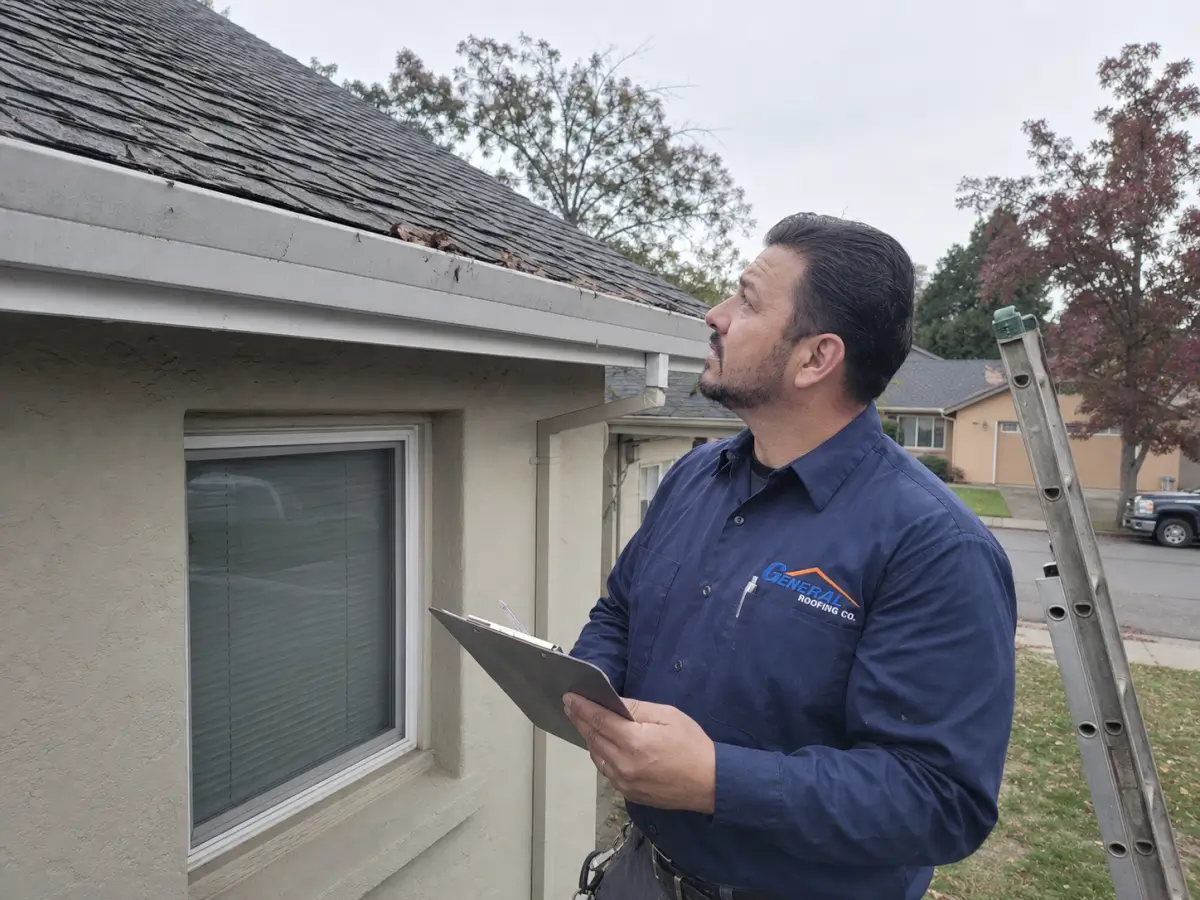
Start from the ground. Seriously.
Do not climb onto a roof unless you have the right equipment, experience, and fall protection. A roof can look dry and still be slippery. Tile can crack underfoot. Flat roofs can have soft spots you do not see until you step on them.
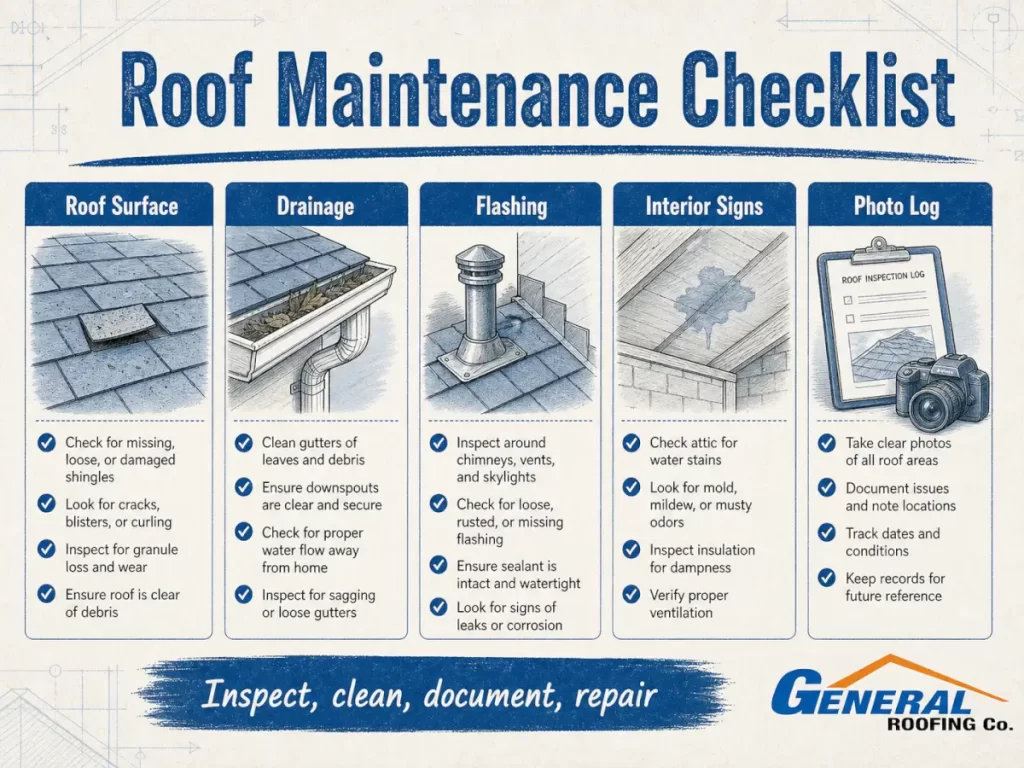
Use this roof inspection checklist as a practical starting point.
Check the roof surface
Look over the main roofing material first.
For shingle, tile, slate, or wood roofs, check for:
- Missing shingles or tiles
- Cracked, curled, or loose shingles
- Broken or shifted tiles
- Heavy asphalt granule loss
- Exposed underlayment
- Moss, algae, or plant growth
- Branches touching or rubbing the roof
- Sagging sections
For flat and low slope roofs, look for:
- Ponding water
- Open seams
- Cracks in the membrane
- Blisters or bubbles
- Punctures
- Loose edge metal
- Wrinkled or pulled membrane areas
- Debris around drains, curbs, or walls
Flat roofs deserve extra attention after rain. If water keeps sitting in the same spot, drainage may be off. That can wear down the membrane and, over time, cause bigger problems below the surface.
Clean gutters, drains, downspouts, and scuppers
Water needs a clean way off the roof. When it does not have one, it gets creative.
Check for:
- Leaves packed into gutters
- Roof granules collecting in gutter runs
- Downspouts that are clogged or disconnected
- Gutters pulling away from the fascia
- Water spilling behind gutters
- Commercial roof drains covered by debris
- Blocked scuppers
- Stains on exterior walls below drainage areas
The Institute for Catastrophic Loss Reduction recommends checking and cleaning roof drainage systems at seasonal changes and after severe weather. That includes gutters, drains, and scuppers.
This is one of the easiest roof maintenance tips to ignore, and one of the easiest to regret.
Inspect flashing and roof penetrations
A roof is usually strongest where it is uninterrupted. Leaks often show up where something cuts through or meets the roof.
Check around:
- Chimneys
- Skylights
- Plumbing vents
- Exhaust vents
- HVAC curbs
- Solar attachments
- Satellite mounts
- Roof hatches
- Parapet walls
- Valleys
- Sidewalls
Look for cracked sealant, rust, lifted flashing, missing fasteners, open gaps, or stains that show water has been running where it should not.
We commonly see cracked flashings, aged sealants, clogged gutters, damaged shingles, and skylight issues behind roof leaks. Our roof repair and maintenance services focus on finding those weak spots before they turn into bigger problems. Those areas are worth checking before the rainy season, not during it.
Check the attic or top floor
The outside of the roof will not tell you everything.
Inside, look for:
- Water stains on rafters or roof decking
- Damp or compressed insulation
- Musty smells
- Rusted nails
- Dark spots near vents or chimneys
- Light coming through roof boards
- Stains near skylights
- Peeling paint or bubbling drywall near ceilings
One annoying thing about roof leaks: the stain is not always directly below the leak. Water can travel along rafters, pipes, decking, or insulation before it finally shows up inside.
If you are already seeing stains, our guide on how to find a roof leak explains why tracing the source can be trickier than it looks.
Trim trees and clear roof debris
Trees are great. Branches scraping your roof all winter are not.
Branches can damage shingles, crack tiles, drop leaves into valleys, and clog gutters. On flat roofs, debris tends to collect around drains, walls, corners, and rooftop units.
Keep an eye on:
- Branches touching the roof
- Leaves sitting in valleys
- Debris around drains and scuppers
- Vines growing near fascia or roof edges
- Animal activity near vents or eaves
Skip the pressure washer unless the roofing manufacturer specifically allows it. Pressure washing can damage shingles, loosen granules, push water under materials, and cause more trouble than it solves.
Look at roof edges, fascia, soffits, and vents
Roof edges take a lot of abuse from wind and water. They are also common places for pests and moisture to sneak in.
Check for:
- Loose edge metal
- Bent drip edge
- Rotting fascia
- Damaged soffits
- Gutters pulling away from the house
- Gaps near eaves
- Blocked attic vents
- Peeling paint near roof edges
Ventilation matters too. If the attic smells damp, feels overly hot, or has condensation, something may be off. Poor ventilation can make roof and moisture issues worse over time.
Take photos every time
Photos make roof maintenance easier.
You do not need anything fancy. Just take clear pictures of the same areas each time so you can compare changes.
Photograph:
- Roof surface condition
- Gutters and downspouts
- Drains and scuppers
- Flashing
- Skylights and vents
- Any damage
- Interior stains
- Completed repairs
For commercial buildings, this matters even more. Photos help property managers track changes, plan repairs, and show what was checked after storms or vendor work.
With our roof maintenance programs, you get roof reports that show what we found, what needs attention, and photos when they help explain the issue.
Seasonal roof maintenance
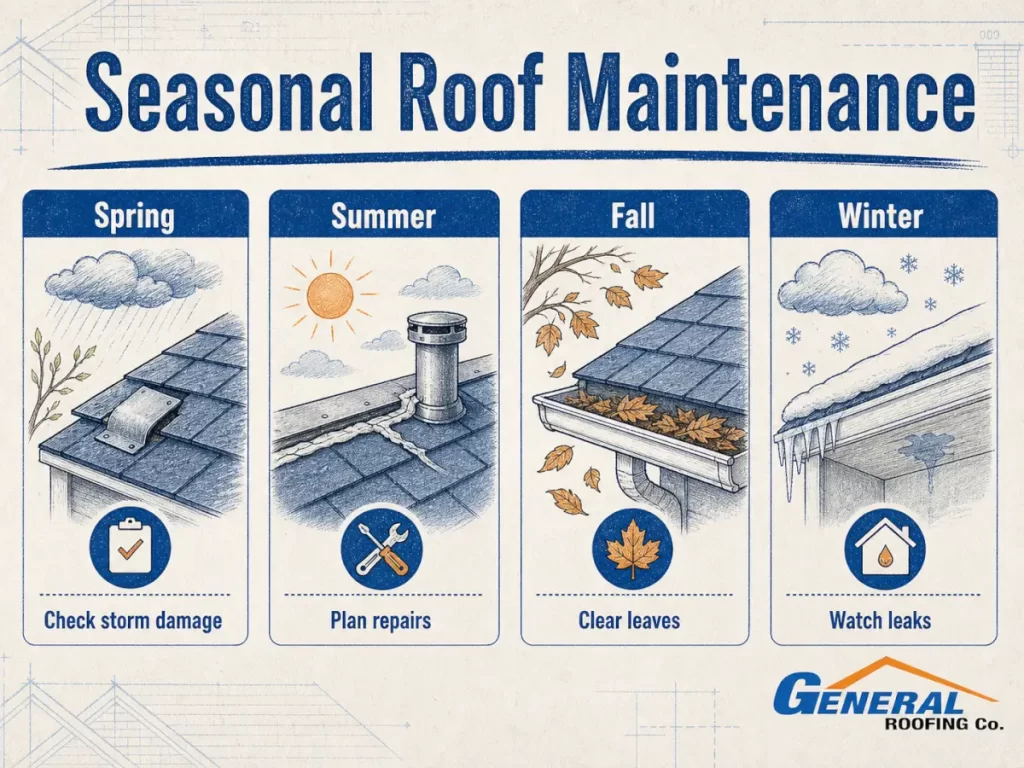
Roof maintenance gets easier when you split it by season. You are not trying to inspect everything randomly. You are checking the problems most likely to show up at that time of year.
Spring roof maintenance
Spring is the reset.
Check for:
- Wind damage
- Loose flashing
- Clogged gutters
- Cracked sealant
- Debris from winter storms
- Attic moisture
- Small leaks that appeared during the rainy season
If the roof leaked during winter, do not wait until the next storm cycle to deal with it. Dry weather is usually a better time to inspect, repair, and plan bigger work.
Summer roof maintenance
Summer is a good time to handle repairs while the weather is more predictable.
Look for:
- Heat damage
- Brittle sealants
- Cracked shingles
- Membrane blisters
- UV wear
- Ventilation issues
- Flat roof soft spots
For commercial roofs, summer is also a good time to review repair history and budget for work before the next wet season.
Fall roof maintenance
Fall is the big one.
If you only schedule one roof check a year, fall is usually the one to protect. Leaves, rain, wind, and clogged drainage can gang up on a roof fast.
Check for:
- Leaves in gutters
- Debris in valleys
- Downspout clogs
- Flashing gaps
- Loose shingles or tiles
- Branches hanging over the roof
- Blocked flat roof drains
- Clogged scuppers
The goal is simple: get water off the roof before rainy weather starts testing every weak spot.
Winter roof maintenance
Winter maintenance is mostly about watching from a safe place and reacting quickly.
Look for:
- Active leaks
- New ceiling stains
- Overflowing gutters
- Fallen branches
- Wind-lifted roofing
- Water backing up around drains
- Storm damage
Do not climb onto a wet or storm-damaged roof. Take photos from the ground and call a roofer if something looks wrong.
Home roof maintenance checklist
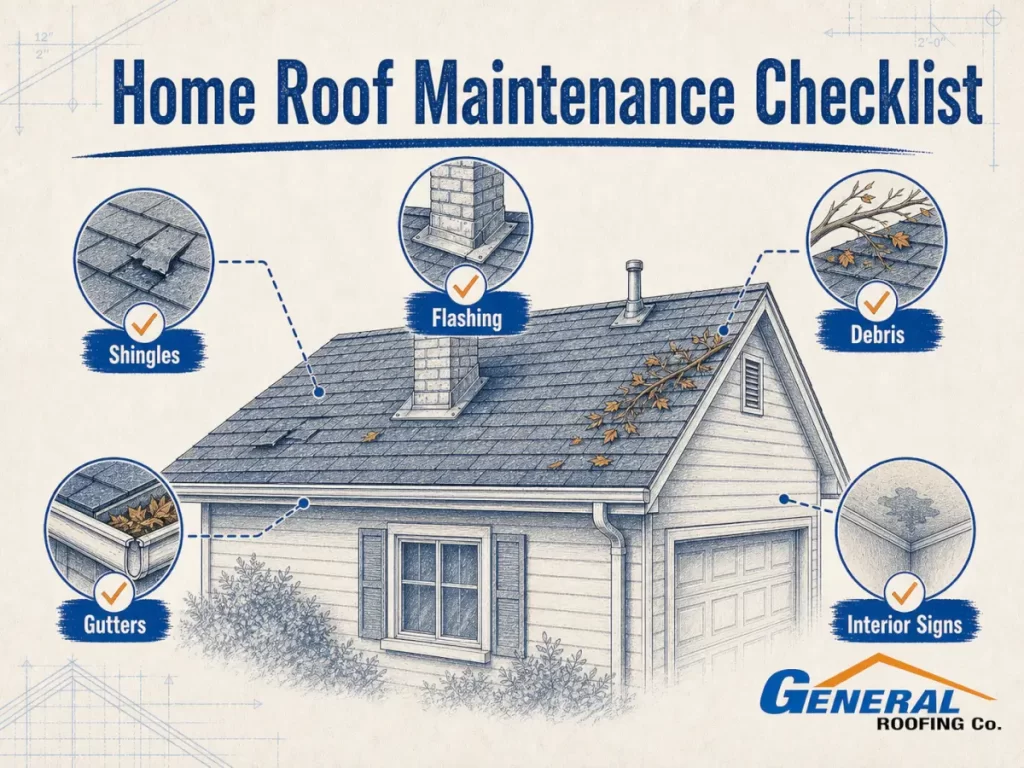
A home roof maintenance checklist does not need to be complicated. Most homeowners just need a consistent routine.
Twice a year, check:
- The roof from the ground
- Gutters and downspouts
- Shingle granules in gutters
- Flashing around vents, chimneys, and skylights
- Tree branches near the roof
- Attic stains or damp insulation
- Ceiling spots or bubbling paint
- Bathroom and kitchen vent exhaust
- Fascia and soffits
- Any areas that have leaked before
If the roof is older, has leaked more than once, or seems to need repair after repair, it may be worth reading our guide on roof repair vs replacement. Sometimes a repair makes sense. Sometimes the roof is trying pretty hard to retire.
Commercial roof maintenance checklist
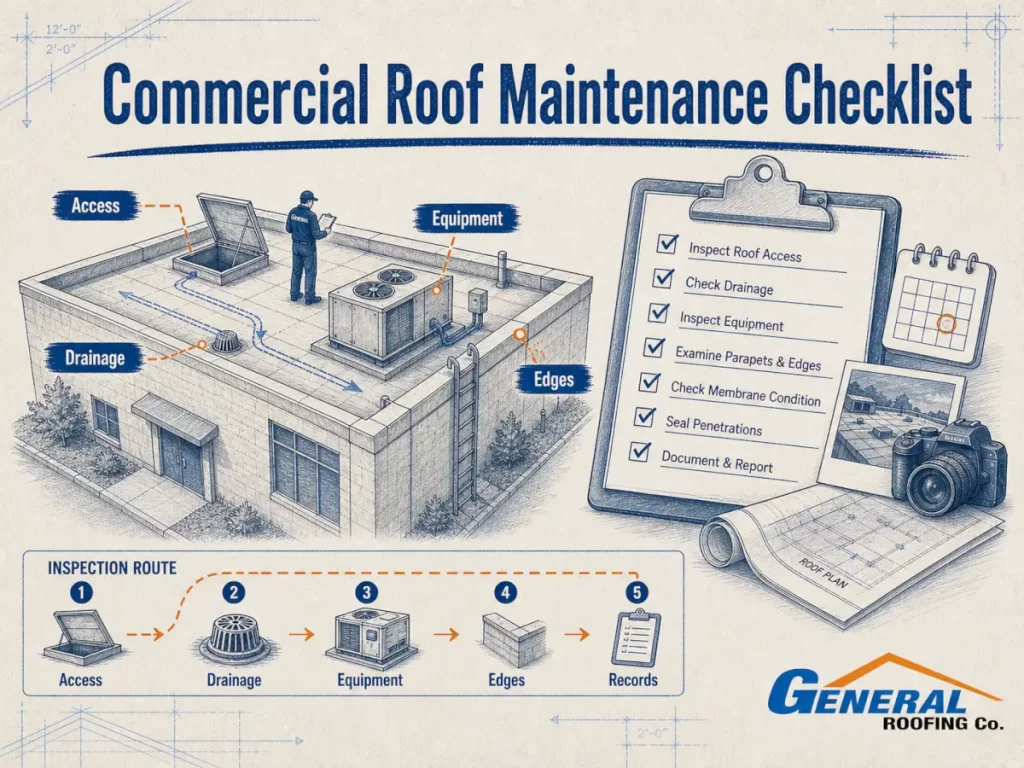
Commercial roof maintenance needs a more detailed system because the roof usually has more ways to fail.
A commercial roof may have drains, HVAC units, pipe penetrations, curbs, parapet walls, walk pads, seams, and regular foot traffic. That is a lot happening on top of a building.
Check:
- Membrane seams
- Ponding water
- Drain baskets and strainers
- Scuppers and overflow drains
- HVAC curbs
- Pipe penetrations
- Parapet walls
- Counterflashing
- Edge metal
- Walk pads
- Blisters, punctures, and cuts
- Loose fasteners
- Wet insulation concerns
- Ceiling stains
- Debris after storms
- Damage after vendor work
Keep a maintenance log too. Note the inspection date, who checked the roof, what was found, what was cleaned, what was repaired, and what still needs follow up.
GAF’s scheduled maintenance checklist points to common commercial roof maintenance concerns like debris, clogged drains, weather damage, and damage from foot traffic. Some roof guarantees may also require regular cleaning or maintenance, depending on the system and coverage.
For businesses, we at General Roofing can help with commercial roof maintenance and asset management so small issues do not get buried until the next leak.
Flat roof maintenance checklist
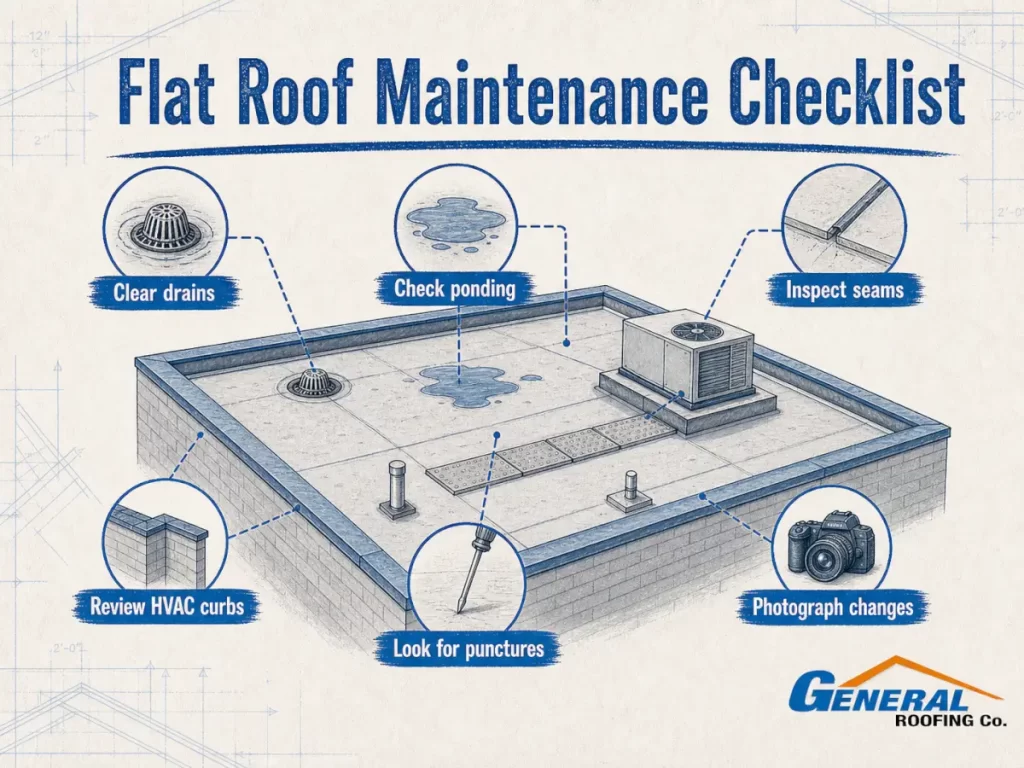
Flat roofs are not actually flat. They are supposed to move water toward drains or scuppers. When that drainage slows down, problems can build quietly.
Use this flat roof maintenance checklist:
- Clear debris from drains and scuppers
- Check for ponding water after rain
- Inspect seams for lifting or splitting
- Look around walls, curbs, and penetrations
- Check for punctures from tools or foot traffic
- Inspect around HVAC units
- Look for soft spots
- Check edge metal
- Watch for blisters or bubbles
- Make sure walk pads are in place
- Photograph the same areas each visit
If the same puddle keeps showing up after every rain, get it checked. Ponding water can shorten the life of the roof and may point to drainage, slope, insulation, or structural issues.
What homeowners can do safely
You can handle some roof maintenance without stepping onto the roof.
Most homeowners can:
- Look at the roof from the ground
- Use binoculars to spot obvious damage
- Clean gutters from a stable ladder if it is safe
- Check the attic for stains
- Look for damp insulation
- Trim small reachable branches
- Take photos after storms
- Watch ceilings for new stains
Leave the risky work alone.
That includes walking the roof, tracing leaks, repairing flashing, patching membrane, replacing tile, sealing skylights, working on steep slopes, or doing anything near power lines. General Roofing’s roof maintenance guidance is clear on this: roof system work should be handled by a licensed roofer.
When to call a roofer
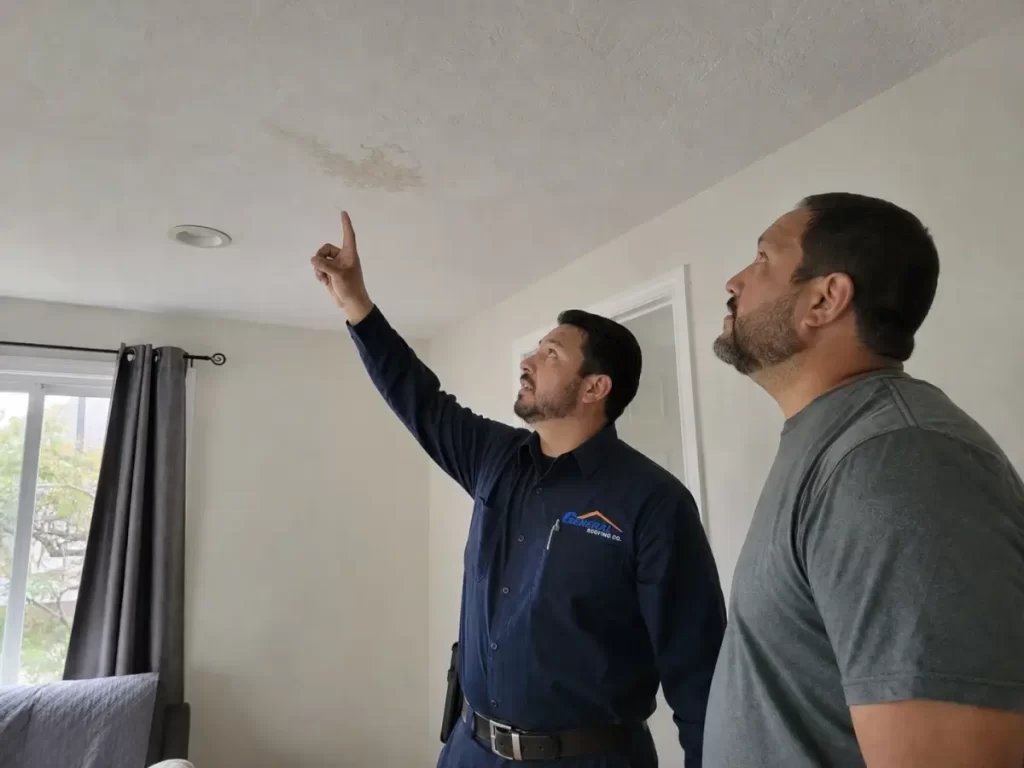
Call a roofer when you see:
- Active leaking
- Repeat leaks
- Missing shingles or tiles
- Cracked or lifted flashing
- Ponding water on a flat roof
- Wet insulation
- Sagging roof areas
- Soft spots
- Open seams
- Storm damage
- A roof that has not been inspected in years
Also call if you are unsure. Roof guessing gets expensive fast, especially when water is already getting under the surface.
A small repair may fix it. But if the roof is older, worn out, or leaking in multiple places, a professional inspection can help you figure out whether repair or replacement makes more sense.
If you are in the East Bay Area and want someone to take a closer look, we at General Roofing can help with roof repair and maintenance. For commercial properties, our roof maintenance and asset management programs can also help you stay ahead of leaks instead of chasing them after the next storm.
Downloadable roof maintenance checklist
A roof checklist works best when you actually use it. Keep a copy somewhere easy to find, especially if you manage multiple properties or want a simple record of seasonal roof maintenance.
The downloadable PDF can help you track:
- Spring and fall inspections
- Gutter cleaning
- Drain and scupper cleaning
- Flashing checks
- Interior leak signs
- Flat roof drainage issues
- Commercial roof inspection items
- Follow up repairs
- Photo documentation
Print a copy for your records and save a digital copy with your roof photos. Next season, you will not have to rely on memory. You can see what changed.
FAQ
What is included in a roof maintenance checklist?
A roof maintenance checklist usually includes the roof surface, flashing, gutters, downspouts, roof drains, vents, skylights, chimneys, fascia, soffits, attic signs, and interior water stains. Commercial roof checklists should also include membrane seams, rooftop equipment, parapet walls, walk pads, scuppers, and drainage areas.
How often should roof maintenance be done?
Most roofs should be checked in spring and fall, plus after major storms. Older roofs, flat roofs, commercial roofs, and roofs with a history of leaks may need inspections more often.
Can I do roof maintenance myself?
You can do basic visual checks from the ground, clean gutters if you can do it safely, look inside the attic, and document visible issues. Repairs, steep roof work, leak tracing, flashing work, and flat roof membrane repairs should be handled by a licensed roofer.
What is preventative roof maintenance?
Preventative roof maintenance means inspecting, cleaning, documenting, and fixing small roof issues before they turn into leaks. It usually focuses on drainage, flashing, sealant, roof surface damage, debris, and early signs of moisture.
Do flat roofs need more maintenance?
Yes, flat and low slope roofs often need more frequent maintenance because drainage matters so much. Debris, ponding water, open seams, punctures, and rooftop equipment can all create leak risks if nobody checks them regularly.
What is the best time of year for roof maintenance?
Fall is one of the best times for roof maintenance because you can clear debris, clean drainage areas, check flashing, and prepare for rain. Spring is also useful because it helps catch damage from winter weather.
Final thoughts
A roof maintenance checklist does not need to be fancy. Check the roof. Keep water moving. Watch the flashing. Look inside for stains. Take photos. Fix small problems before they become expensive ones.
That is the whole game.
For homeowners, this can mean fewer surprise leaks. For property managers, it can mean cleaner records, better planning, and fewer emergency calls.
If your roof has not been inspected in a while, or you are already seeing signs of damage, we at General Roofing can help with roof repair and maintenance, roof maintenance programs, and roof system replacements when repair is no longer the smart move.
Recent Comments