

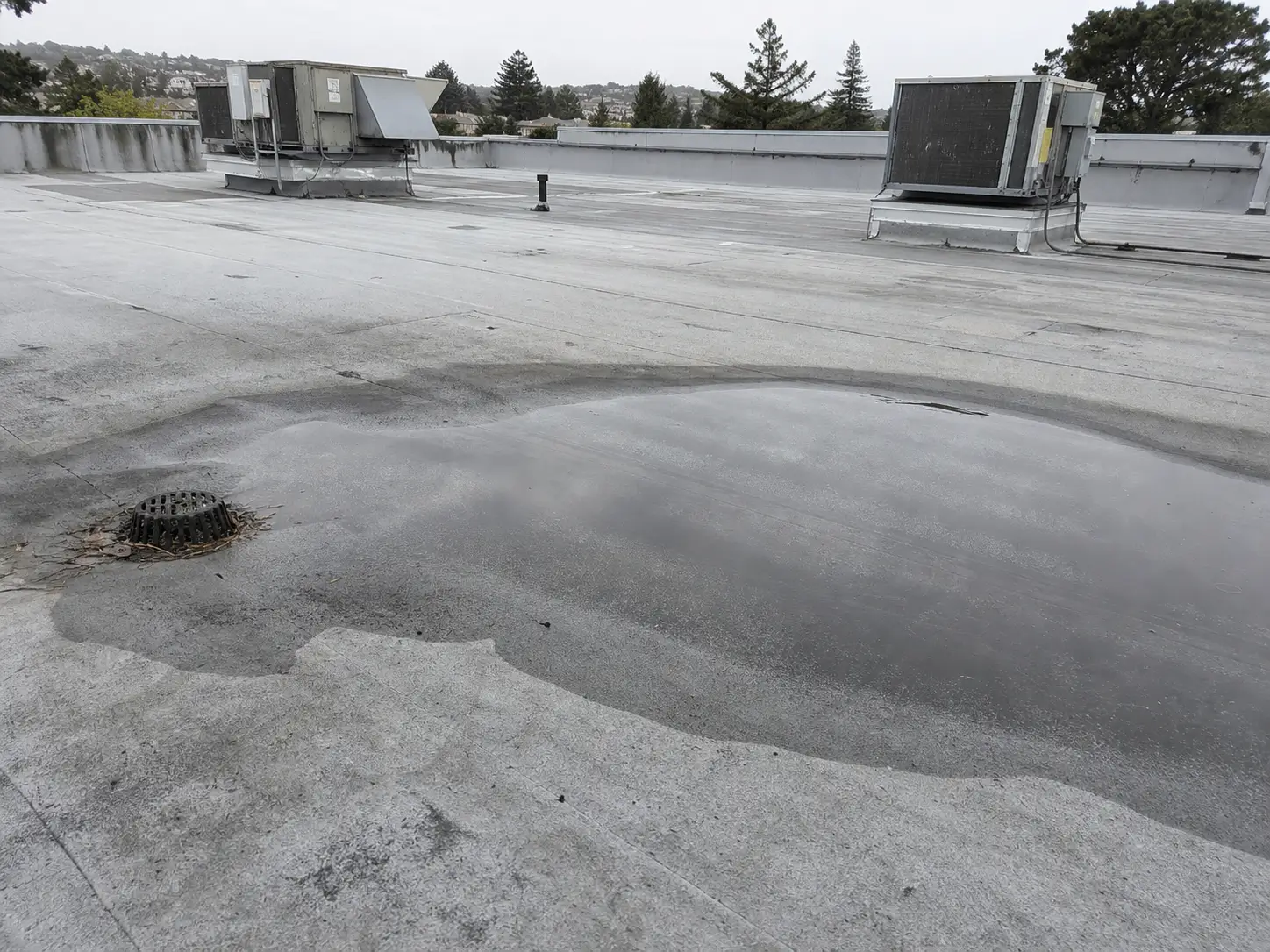
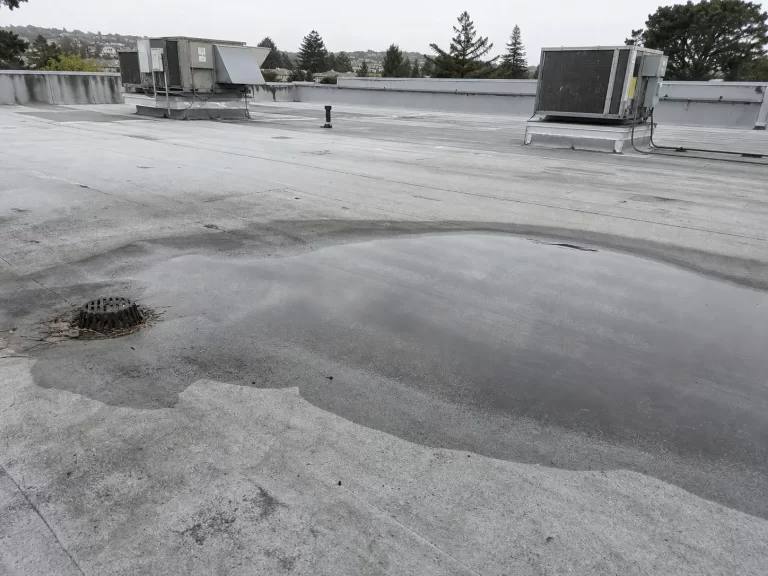
A puddle on a flat roof right after a storm is not automatically a disaster. Water needs time to reach drains, scuppers, and gutters, especially during heavy rain.
Water that stays put is different. Ponding water on a flat roof can point to clogged drainage, a low spot, damaged insulation, or a roof deck that has started to sag. Leave it alone long enough and a drainage problem can turn into a membrane repair, wet insulation, or a leak inside the building.
What counts as ponding water on a flat roof?
Ponding water is standing water that remains on a roof after the rain has stopped and normal drainage should have cleared the surface.
The roofing industry commonly uses 48 hours as the point when lingering water is considered ponding. That does not mean every puddle that disappears within 47 hours is fine. A recurring pool in the same location still deserves attention, especially if it is getting larger or deeper.
The amount of time that is acceptable also depends on the roof system, local weather, drainage design, and manufacturer requirements. The National Roofing Contractors Association’s roofing guidelines provide technical resources covering roof design, materials, installation, and building code requirements.
Flat roofs are not supposed to be completely level. They are low-slope roofs built to direct water toward internal drains, scuppers, or gutters. When water has nowhere to go, something in that drainage path is not working properly.
Is ponding water bad for flat roofs?
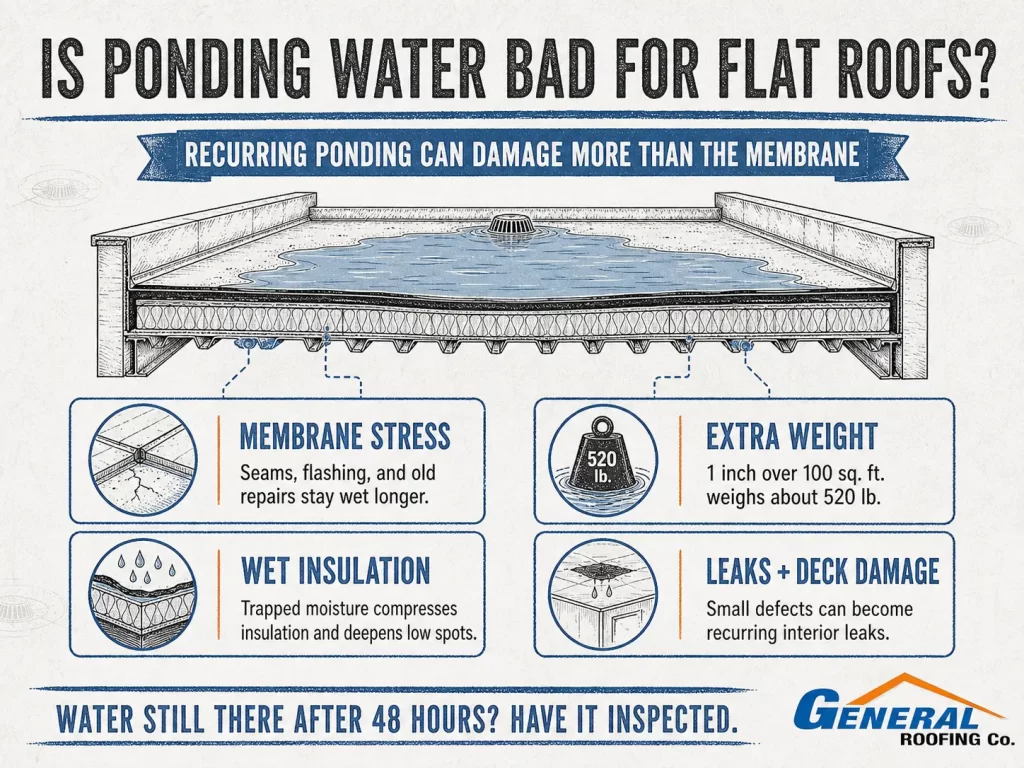
Yes, recurring ponding water is bad for most flat roofs.
It may not cause an immediate leak, but it keeps the membrane wet longer and places extra stress on seams, flashing, penetrations, coatings, and previous repairs. Small defects that stay dry during normal conditions can become leak points when they sit below water for days.
There is also the weight to consider. One inch of water covering 100 square feet weighs about 520 pounds. A large commercial flat roof can collect a surprising amount of weight when drains are clogged or a low area continues to deepen.
Over time, standing water on a flat roof can contribute to:
- Open seams and weakened adhesives
- Deteriorated coatings or asphalt surfaces
- Water entering around drains and flashing
- Saturated roof insulation
- Sagging roof decking
- Plant, algae, or insect growth
- Recurring interior leaks
- Premature roof replacement
Roof drainage is also a structural issue, not just a membrane issue. The International Building Code requirements for roof assemblies address roof drainage and the need to account for water loads.
Common causes of ponding water on a flat roof
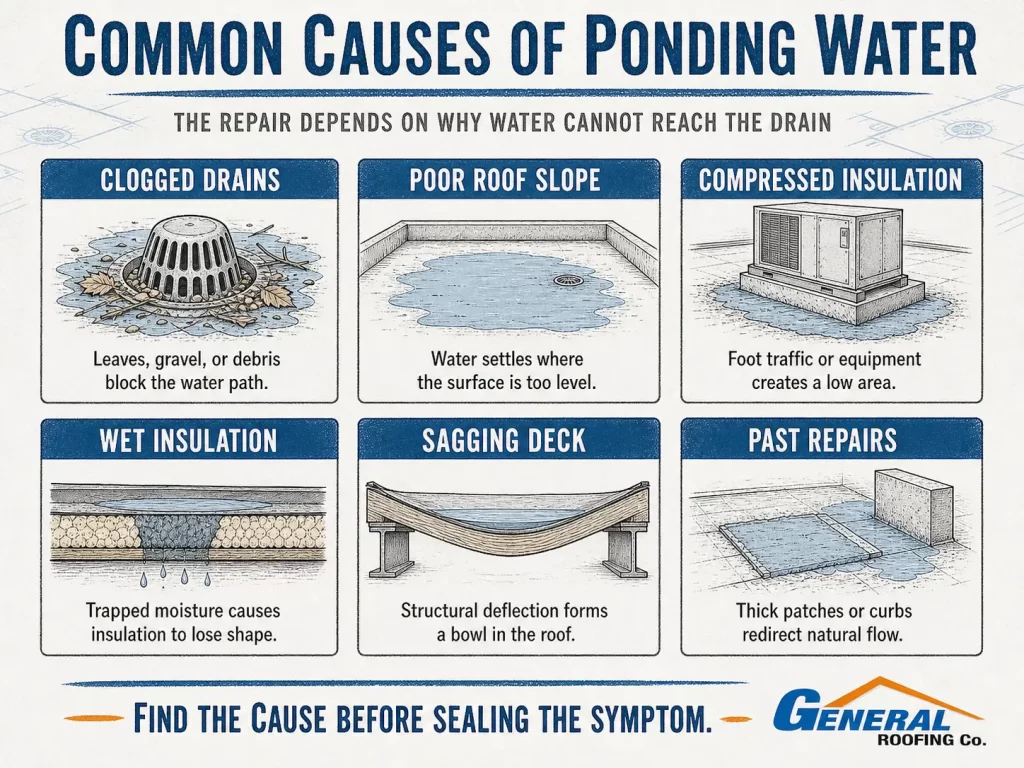
The repair depends on why the water is collecting. Coating a wet area or adding sealant around it will not correct a blocked drain or a sagging deck.
| Cause | What may be happening |
|---|---|
| Clogged drains or scuppers | Leaves, gravel, dirt, roofing material, and trash are blocking the water path. |
| Blocked gutters or downspouts | Water reaches the roof edge but cannot move through the rest of the drainage system. |
| Poor roof slope | The roof was built without enough slope, or previous roofing work changed the drainage pattern. |
| Compressed insulation | Foot traffic, equipment, or installation problems created a low area beneath the membrane. |
| Wet insulation | Water trapped below the membrane caused insulation to compress or lose its shape. |
| Roof deck deflection | The deck or supporting structure has sagged, creating a bowl where water collects. |
| Poor drain placement | A drain is located above the roof’s lowest point or does not serve the full drainage area. |
| Past repairs | Thick patches, uneven coatings, or poorly designed curbs are blocking the natural flow of water. |
Clogged drains, scuppers, and gutters
Debris is one of the simplest causes of flat roof ponding water, but it is also one of the easiest to overlook. A drain may look clear from a few feet away while leaves and roofing granules are packed beneath its strainer.
Water can also back up when the roof drain is open but the connected pipe, gutter, or downspout is blocked. Building owners dealing with overflowing roof edges or stained exterior walls should also check for the signs of commercial gutter problems.
Low spots and poor slope
A flat roof needs a slight, consistent slope. Low spots may have been present since installation, or they may develop after years of movement, repairs, heavy foot traffic, or compressed insulation.
Ponding that appears in the middle of an open roof area often points to a slope problem rather than a clogged perimeter gutter.
Wet or damaged insulation
Once water gets below the membrane, insulation can become saturated and compress. The surface drops, more water collects, and the low spot gets worse.
This creates an unpleasant loop. Ponding contributes to a leak, the leak damages the insulation, and the damaged insulation creates deeper ponding.
Structural movement or deck sagging
A growing pond can indicate movement in the roof deck or supporting structure. This needs more than a surface patch.
A roofing contractor may need to coordinate with a structural engineer when the deck is visibly deflected, the water is unusually deep, or the ceiling and framing below show movement. Building owners should not assume the membrane is the only issue.
How do you fix ponding water on a flat roof?
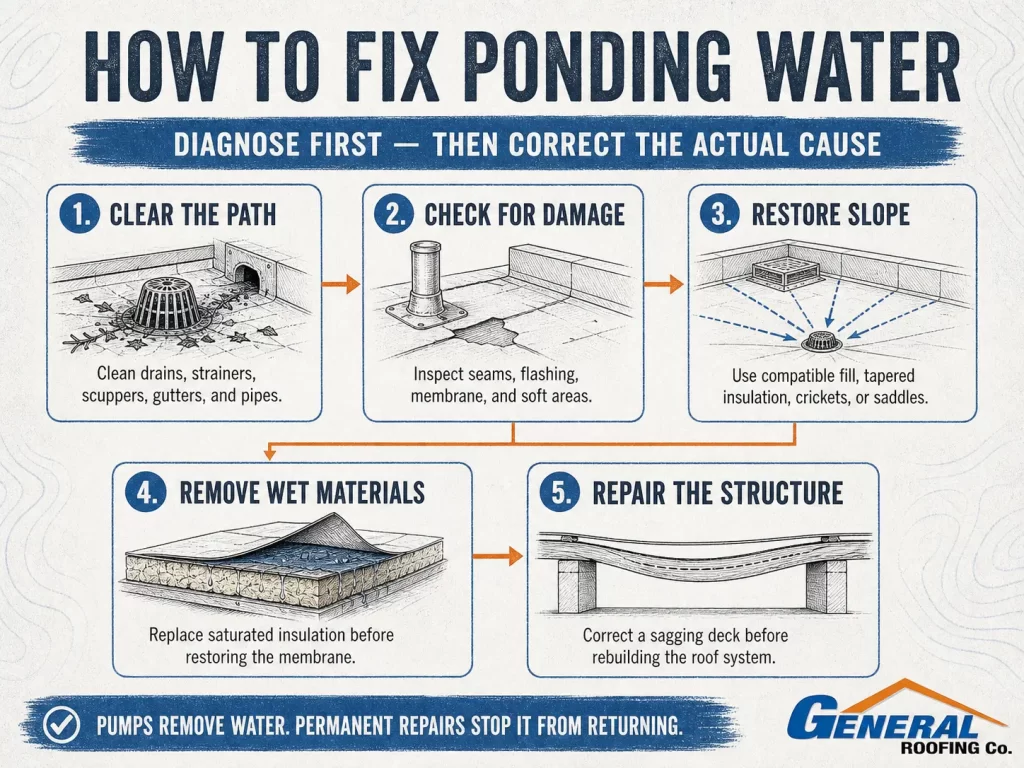
To fix ponding water on a flat roof, first identify why the water is collecting. The repair may involve clearing drains, correcting the roof slope, replacing wet insulation, rebuilding a low area, or repairing structural deflection.
Here are the most common approaches:
| Problem | Typical repair |
|---|---|
| Debris around a drain | Clean the drain, strainer, pipe, and surrounding roof area. |
| Damaged drain or scupper | Repair or replace the drain assembly and surrounding flashing. |
| Minor isolated low spot | Rebuild the area using materials compatible with the existing roof system. |
| Poor drainage direction | Install tapered insulation, crickets, or saddles to redirect water. |
| Too few drains | Add or relocate drains or scuppers after proper drainage calculations. |
| Saturated insulation | Open the roof, remove wet insulation, and restore the membrane. |
| Sagging deck | Inspect the structure and repair or reinforce it before restoring the roof. |
| Failed membrane or seams | Repair the membrane after correcting the drainage problem. |
Tapered insulation is a common solution when the existing structure does not provide enough slope. The insulation is installed at varying thicknesses to create a path toward the drain.
Crickets and saddles can also move water around HVAC curbs, skylights, walls, and other rooftop obstacles. They work like small ridges that split the flow and direct it toward drainage points.
A pump or temporary siphon may remove water so the roof can be inspected, but it is not a permanent ponding water roof repair. The puddle will return during the next storm unless the underlying drainage problem is corrected.
For roofs with leaks, soft areas, or recurring drainage trouble, our roof repair and maintenance services start with finding the actual cause before recommending a repair. The ceiling stain alone rarely tells the whole story.
How to stop water from sitting on a flat roof
Good drainage starts with routine maintenance. The goal is to keep water moving and catch low spots before they spread.
A practical prevention plan includes:
- Keep drains, scuppers, gutters, and downspouts clear.
- Inspect the roof after major storms and rooftop construction work.
- Check recurring ponding areas at roughly 24 and 48 hours after rainfall.
- Repair punctures, open seams, and failed flashing before water reaches the insulation.
- Protect the membrane from HVAC crews, solar installers, and other foot traffic.
- Document drainage problems with dated photos.
- Schedule professional inspections before the wet season.
Our roof maintenance checklist covers the roof surface, drainage, flashing, penetrations, gutters, and warning signs inside the building.
Do not walk onto a wet roof to inspect a puddle unless you have the proper access, training, and fall protection. Wet membranes can be extremely slippery, and skylights may not support a person’s weight. OSHA’s fall protection requirements include specific rules for work on low-slope roofs and around roof openings.
Commercial flat roof ponding needs a documented plan
Commercial flat roof ponding is easy to ignore because the roof is usually out of sight. Tenants may not report anything until ceiling tiles are stained or water reaches inventory, equipment, or occupied space.
Property managers should document:
- The date and time the rain stopped
- The pond’s approximate length, width, and depth
- Whether the water remains after 24 or 48 hours
- The nearest drain, scupper, wall, or rooftop unit
- Any soft areas, open seams, or visible repairs
- Interior stains or leaks below the area
- Whether the pond has grown since the last storm
This gives the roofer something more useful than “there is a puddle somewhere near the HVAC unit.”
A professional commercial flat roof inspection should cover drainage, membrane condition, seams, flashings, penetrations, equipment curbs, old repairs, and signs of wet insulation. Our commercial roof maintenance programs include recurring inspections, drainage cleaning, minor repairs, photos, and condition reports.
What to check during a flat roof inspection
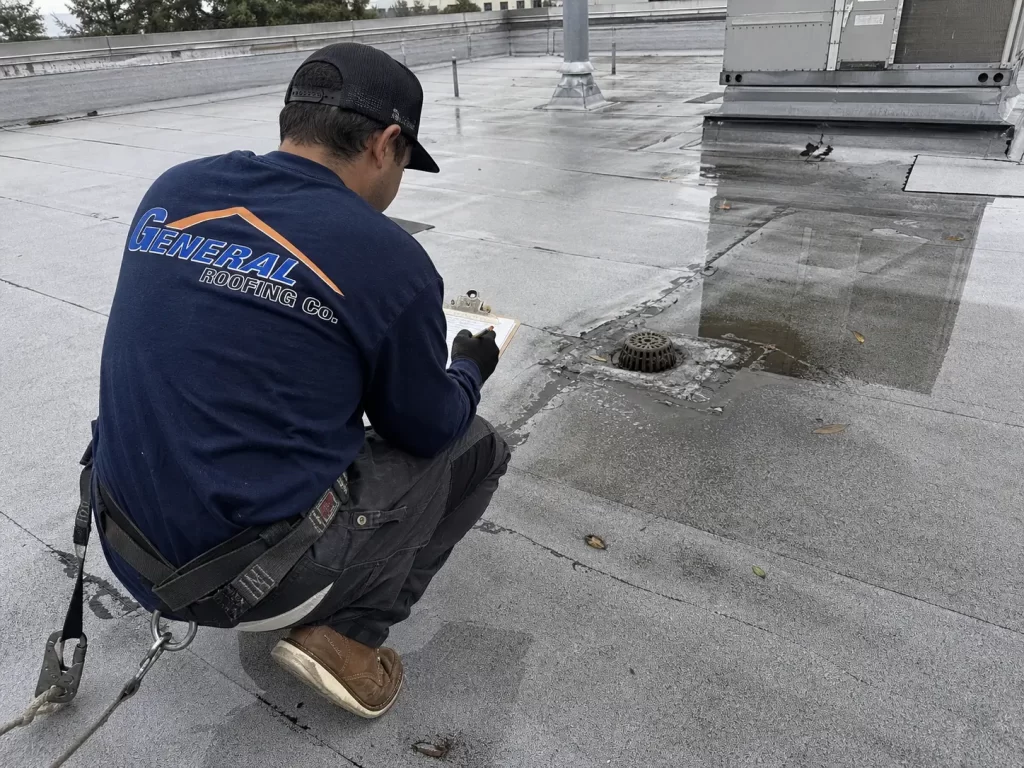
A flat roof inspection after ponding water appears should answer three questions:
- Where should the water be going?
- What is stopping it from getting there?
- Has water already entered the roof system?
The inspection should include:
- Roof drains and drain strainers
- Scuppers, gutters, and downspouts
- The slope around the pond
- Membrane seams and laps
- Flashing around walls and equipment
- Cracks, blisters, punctures, and worn coatings
- Soft or compressed areas
- Previous patches
- Interior ceiling and wall stains
- Insulation moisture, when suspected
Infrared scanning or other moisture testing may help locate wet insulation on larger roofs. Test results still need to be compared with visual findings and the roof’s construction.
If the ponding area is part of a larger pattern of recurring leaks and widespread damage, review the difference between roof repair and roof replacement. Continually patching an old, saturated roof can cost more without solving much.
Why are there pebbles on some flat roofs?
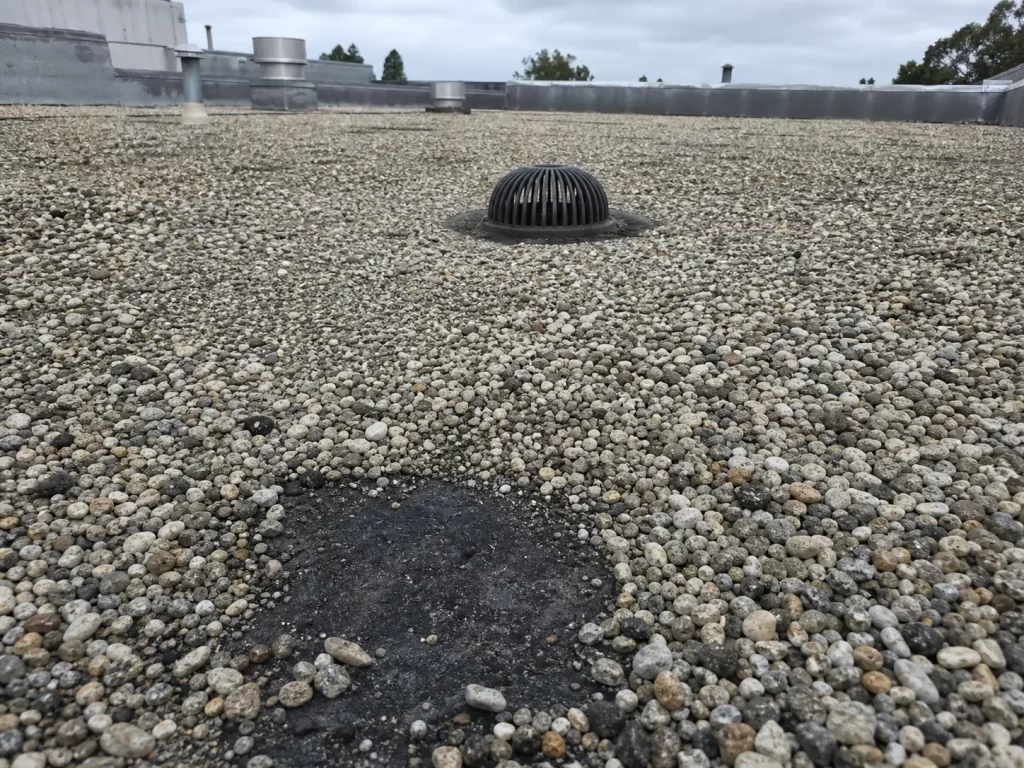
Pebbles or gravel on a flat roof are usually part of a built-up or ballasted roof system.
On older built-up roofs, gravel protects the asphalt surface from sunlight, weather, and physical damage. On some single-ply systems, stone ballast helps hold the membrane and insulation in place.
The pebbles are not there to absorb ponding water or improve drainage. In fact, loose gravel can move toward drains and contribute to blockages when strainers are missing or damaged. It can also hide cracks, blisters, and low areas during a quick visual check.
The type and purpose of the gravel depend on the roof assembly. It should not be removed or redistributed without knowing how the system was designed. The federal Whole Building Design Guide’s roofing systems resource provides an overview of common low-slope roof assemblies and their components.
FAQ
How do you fix ponding on a flat roof?
Fix ponding by correcting its cause. Clear blocked drainage, repair damaged drains or scuppers, add tapered insulation or crickets, replace wet insulation, and repair any damaged membrane. Structural sagging may require an engineer and deck repairs.
How much ponding is acceptable?
There is no single acceptable depth for every roof. Water should drain or evaporate within about 48 hours after rain stops under normal drying conditions. Any deep, growing, or recurring pond should be inspected sooner.
How long can water sit on a flat roof?
Water should normally clear within 24 to 48 hours. Water that remains longer than 48 hours is commonly treated as ponding. Manufacturer requirements may be stricter, so the roof warranty and system specifications should also be checked.
How do you stop water from sitting on a flat roof?
Keep drains clear, correct low spots, maintain gutters and scuppers, and use tapered insulation or drainage crickets where needed. Repeated ponding will continue until the slope or drainage problem is fixed.
Is pooling on a flat roof bad?
Yes. Repeated pooling increases stress on the membrane, seams, flashing, insulation, and roof structure. It can lead to leaks, saturated insulation, deck damage, and a shorter roof life.
How do you eliminate water ponding?
Start with a roof and drainage inspection. The permanent solution may be drain cleaning, drain replacement, new scuppers, tapered insulation, rebuilt low areas, wet insulation removal, or structural repairs.
What causes ponding on a roof?
Common causes include clogged drains, blocked gutters, insufficient slope, compressed insulation, wet insulation, deck sagging, poor drain placement, and uneven previous repairs.
Why put pebbles on a flat roof?
Pebbles may protect a built-up asphalt roof from sun and weather or act as ballast on certain membrane systems. They are part of the roof assembly, not a cure for standing water.
What are the common problems with flat roofs?
Common flat roof problems include ponding water, clogged drains, open seams, membrane punctures, damaged flashing, blistering, shrinking, failed coatings, wet insulation, and leaks around rooftop equipment.
Final thoughts
Ponding water on a flat roof is not something to panic over the moment rain stops, but it should not become a permanent roof feature either.
Start with the drainage system. If the drains are clear and the same area still holds water, the roof may have a low spot, compressed insulation, or structural movement. Fixing the source early is usually far less expensive than replacing wet insulation or repairing interior water damage later.
For an idea of what different repairs may involve, read our California flat roof repair cost guide. Property owners in the Bay Area can also request a roof estimate to have the ponding area, drainage system, and roof condition evaluated.
Recent Comments