

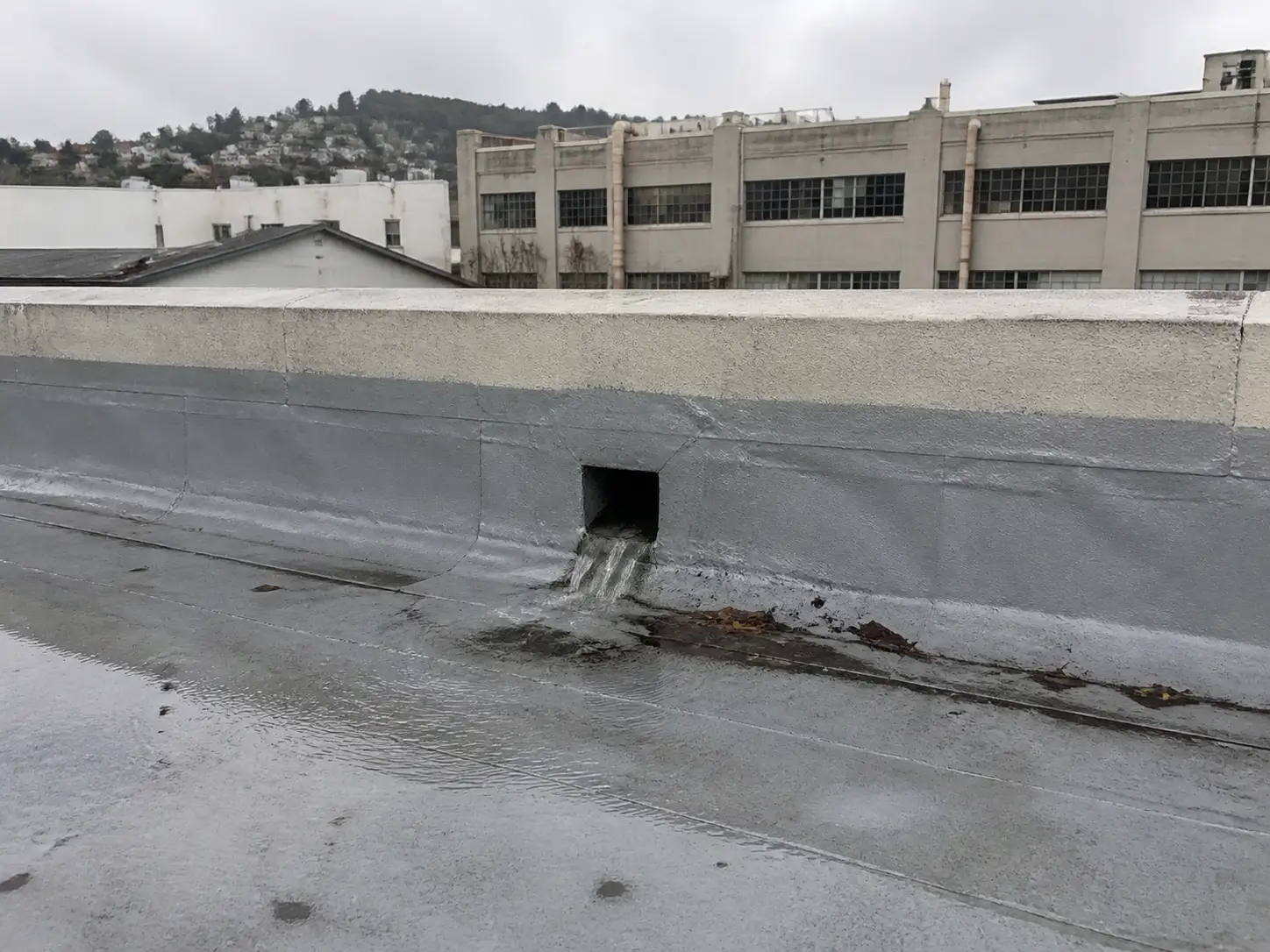
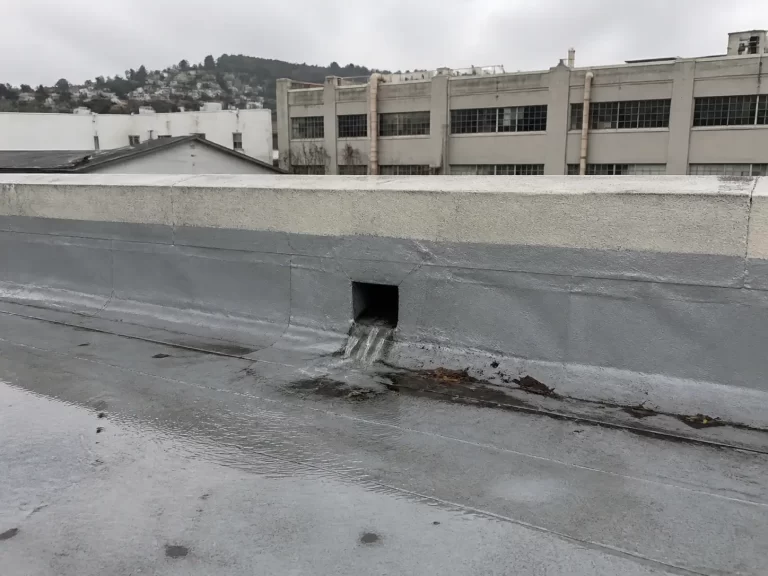
A roof scupper is easy to overlook. It is usually just a metal-lined opening near the edge of a flat roof. During a hard rain, though, that opening may be doing most of the work that keeps water from collecting on the roof.
If a scupper is blocked, undersized, or pulling away from the wall, the warning signs tend to show up quickly: standing water, stains down the building, damaged flashing, or a waterfall where one does not belong. Knowing what to look for can help you catch a drainage problem before it becomes a roof leak.
What is a roof scupper?
The 2025 California Building Code defines a scupper as an opening in a wall or parapet that lets water drain from a roof. You will see them most often on flat and low-slope roofs with raised perimeter walls.
Water moves toward the roof scupper through the roof’s slope or a tapered insulation system. From there, it may:
- Fall freely away from the wall
- Empty into a conductor head and downspout
- Flow into an exterior gutter
- Pass through the parapet as part of an overflow system
Primary scuppers vs. overflow scuppers
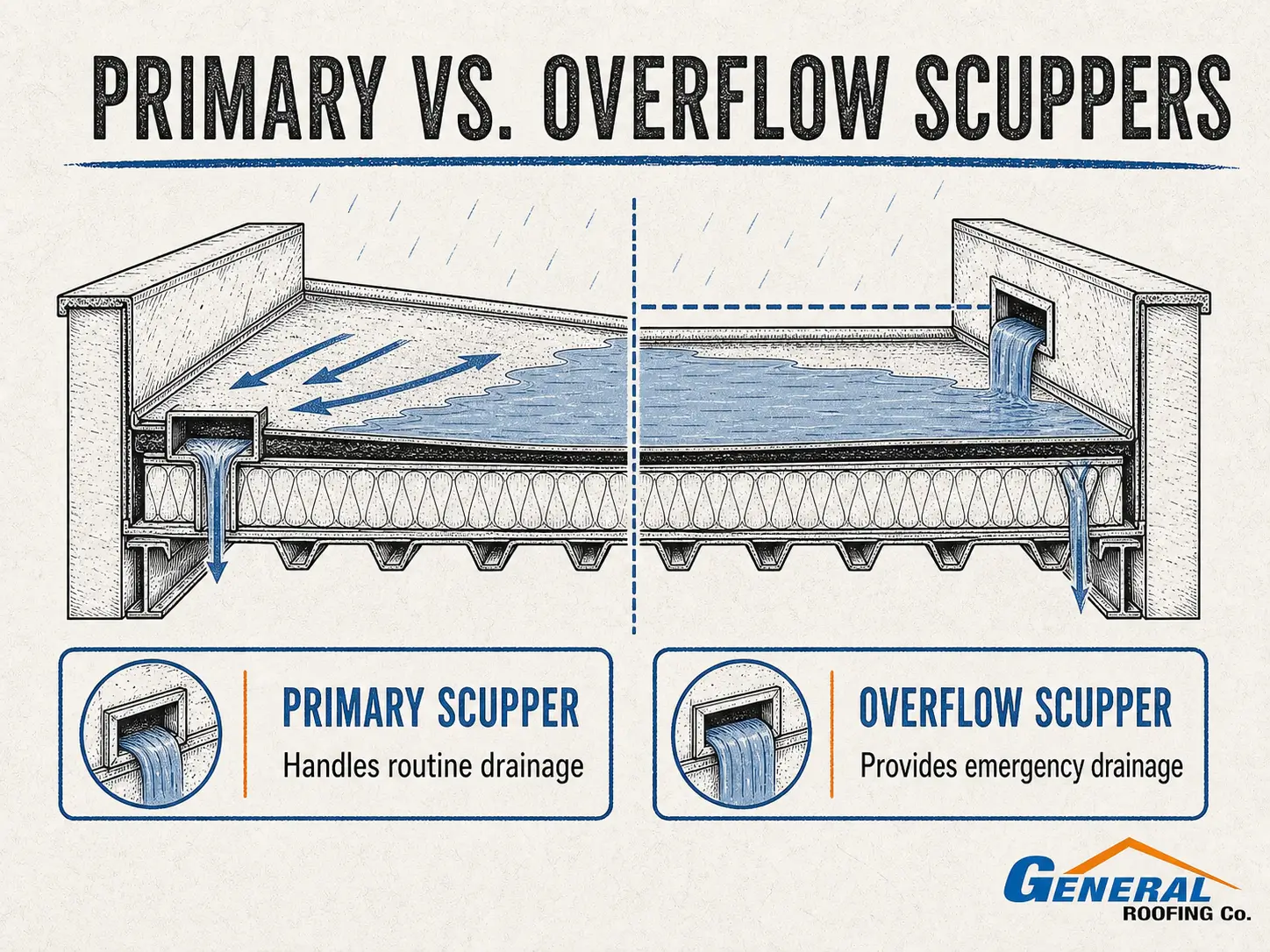
Primary roof scuppers
A primary scupper handles routine drainage. It sits at or near a low point so rainwater can leave the roof during normal weather. Many primary scuppers feed a conductor head or downspout that carries water toward the ground.
Overflow scuppers
An overflow scupper sits higher than the primary drainage point. It stays dry most of the time. If the main roof drain or scupper becomes blocked, water rises to the overflow opening and gets a second way out.
This is more than a backup for a soggy day. The International Plumbing Code’s secondary-drainage provisions call for emergency roof drains or scuppers where a roof perimeter could trap water if the primary drains backed up. The code also addresses sizing and separate discharge for secondary systems.
Roof scuppers, drains, and gutters are not the same thing
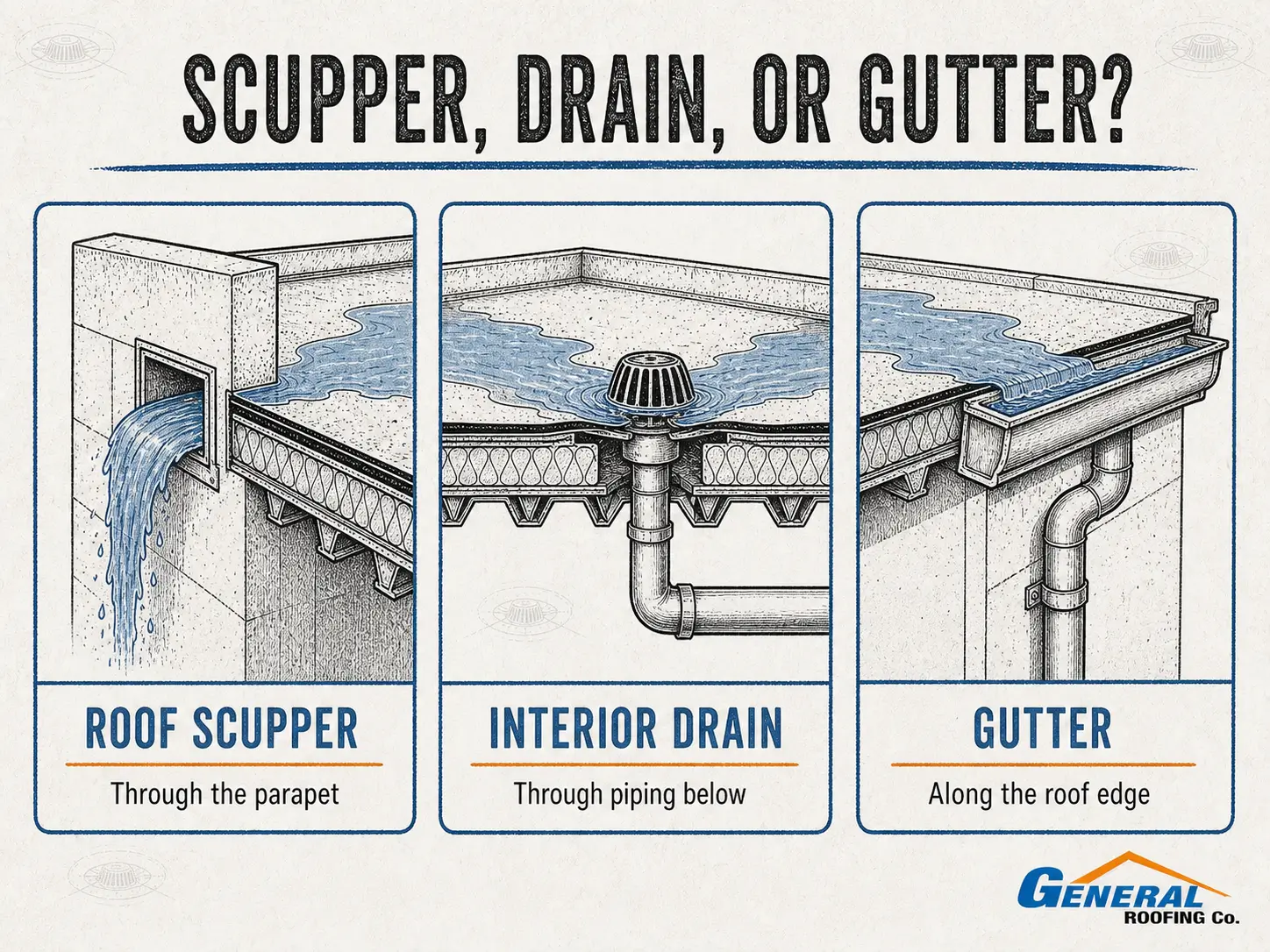
All three move rainwater, but they do it differently.
| Drainage component | Where it sits | How it moves water | Common concern |
|---|---|---|---|
| Roof scupper | Through a parapet or perimeter wall | Sends water through the roof edge | Blockage, failed flashing, wall staining |
| Interior roof drain | At a low point within the roof area | Connects to piping inside the building | Clogged strainer, pipe blockage, leaks below the roof |
| Gutter | Along the outside roof edge | Collects runoff and feeds downspouts | Debris, sagging, loose joints, overflow |
Some commercial roof drainage systems combine these parts. A scupper may empty into a conductor head, which then feeds a downspout. The scupper gets water through the wall. The conductor head and downspout control where it goes next.
Common roof scupper problems
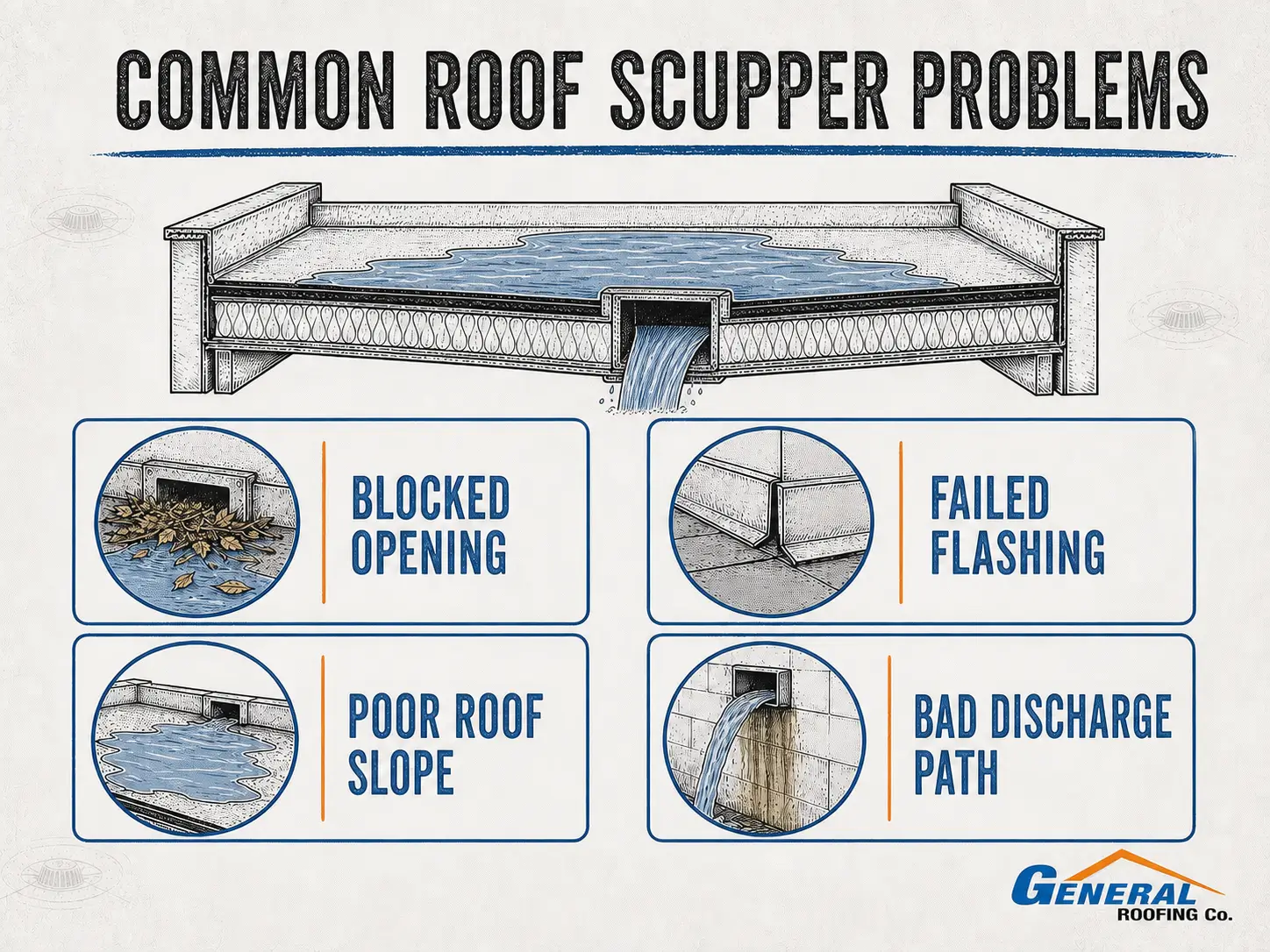
Leaves and debris block the opening
Scuppers sit at low points, so windblown leaves, dirt, roofing granules, and small bits of trash collect near them. A narrow opening can clog quickly. Even a partial blockage slows drainage and gives sediment more time to settle.
GAF’s commercial drain maintenance guidance recommends making drains and scuppers part of regular roof inspections because debris commonly gathers around these low areas.
Flashing separates around the scupper
A roof membrane has to transition into and around the scupper opening without leaving a gap. Corners are especially vulnerable. Building movement, age, poor adhesion, or an incompatible repair can open the flashing and let water enter the wall or roof assembly.
Watch for splits, lifted membrane edges, cracked sealant, rust, and damp areas below the opening. More sealant may hide a moving joint for a while, but it rarely fixes why the joint opened.
The roof does not slope toward the opening
A clear scupper cannot drain water that never reaches it. Low spots can form when insulation compresses, the deck deflects, or a previous repair changes the drainage path. Water may sit several feet from a perfectly open scupper.
If puddles remain after the rest of the roof dries, the issue may be slope rather than a clogged roof drain. Our guide to ponding water on a flat roof covers the other common causes.
The scupper is too small for the drainage area
A roof scupper detail should account for the roof area it serves, local rainfall, and whether the opening is primary or secondary. A small opening that works in light rain may fall behind during a stronger storm.
Scupper sizing is best left to a professional. Changes can affect the roof, wall, and stormwater system, and code requirements may apply. A roofer, designer, or plumbing professional can evaluate the full drainage path rather than treating the opening as an isolated piece of sheet metal.
Water dumps against the building
A working scupper can still create trouble at ground level. If water drops onto an entrance, walkway, storefront, or foundation, the discharge needs a better route. A conductor head and downspout may solve the problem, but the receiving parts also have to be sized and secured correctly.
Signs a roof scupper needs attention
You do not need to wait for an indoor leak. Check the drainage system if you notice:
- Water standing near a scupper after surrounding areas have dried
- An overflow scupper discharging during ordinary rain
- Leaves, sediment, or roofing debris packed into the opening
- Rust, holes, loose metal, or sharp edges around the scupper box
- Open seams or lifted membrane at the corners
- Water stains below the opening or inside the wall
- A loose conductor head or downspout
- New bubbling, cracking, or soft spots in nearby roofing
Roof scupper maintenance
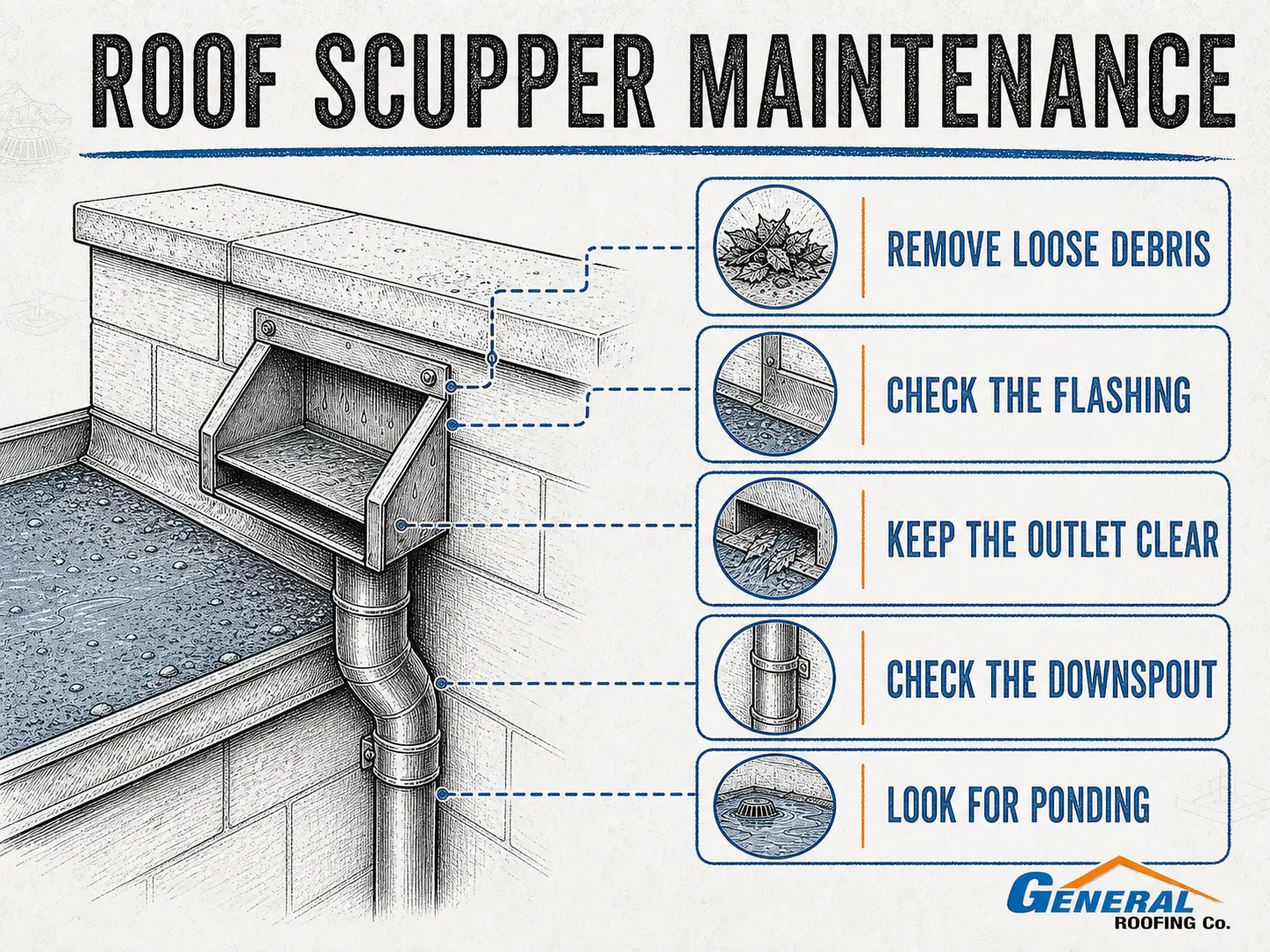
Start with the roof surface around the opening. Remove loose debris without pushing it into the scupper or downspout. Check that strainers, screens, and conductor heads are secure and that water has an unobstructed path away from the building. Look closely at membrane corners and metal joints.
A maintenance visit should also check the bigger picture:
- Is the roof directing water toward the scupper?
- Are primary and overflow openings both clear?
- Does the downspout discharge safely?
- Has rooftop work added debris or changed the drainage path?
- Are there soft areas, open seams, or wet insulation nearby?
Drainage should be checked during scheduled roof inspections and after unusual storms or rooftop construction. A building surrounded by trees may need more frequent cleaning than an open property. There is no honest one-size-fits-all schedule.
If the scupper can only be reached from the roof, do not improvise access. Roof edges, wet membranes, ladders, and skylights create real fall hazards. OSHA’s roofing fall-prevention guidance explains why proper access and fall protection matter even for work that looks quick.
Our roof maintenance checklist can help you track drainage along with membrane, flashing, and rooftop-equipment conditions.
When a scupper needs repair instead of cleaning
Cleaning may restore flow when debris is the only problem. Repair is more likely when the metal is corroded, the flashing has separated, water is getting behind the wall, or the surrounding roof has deteriorated.
A proper repair may involve removing failed material, checking the substrate for moisture, installing or resetting the metal scupper, and rebuilding the flashing with materials compatible with the roof system. If the opening is badly located or too small, the fix may require drainage design changes rather than a patch.
For commercial properties in the Greater East Bay Area, our roof repair and maintenance services include drainage checks and repairs for low-slope roof systems.
FAQ
What is the purpose of a roof scupper?
A roof scupper lets rainwater pass through a parapet or perimeter wall. It can serve as the main drainage outlet or as an emergency overflow when the primary system cannot keep up.
Where should a roof scupper be located?
A primary scupper usually sits at a roof low point. An overflow scupper sits higher so it begins draining only after water rises above the normal drainage level. Exact placement and sizing depend on the roof design, drainage area, rainfall, and applicable code.
How do you clean a clogged roof scupper?
Loose surface debris can be removed from a safely accessible area, but do not force material into a downspout or pipe. If water still backs up, the blockage may be farther down the system. Roof access and work near an edge should be left to trained people with the right safety equipment.
Why is water coming out of the overflow scupper?
The primary drain may be clogged, undersized, or overwhelmed. Water may also be collecting because the roof has developed a low spot. Treat overflow discharge as a reason to inspect the primary drainage system.
Can a leaking scupper be sealed with roof cement?
Roof cement may not bond correctly to every membrane, and it will not repair wet insulation, failed metal, or movement at a wall joint. The repair should match the roof system and address the damaged flashing or substrate beneath it.
Does every flat roof need a scupper?
No. Some roofs drain through interior drains or over an open edge. Roof layout, parapet walls, structural design, local rainfall, and code requirements determine which primary and secondary drainage components are needed.
Final thoughts
A roof scupper is a small part with a very visible job: get rainwater off the roof before it has time to collect. Keep the opening and discharge path clear, watch the flashing around it, and pay attention when an overflow scupper starts running.
If your roof scupper leaks, backs up, or leaves water standing nearby, our team can inspect the drainage path and find out whether it needs cleaning, local repair, or a larger correction.
Recent Comments