

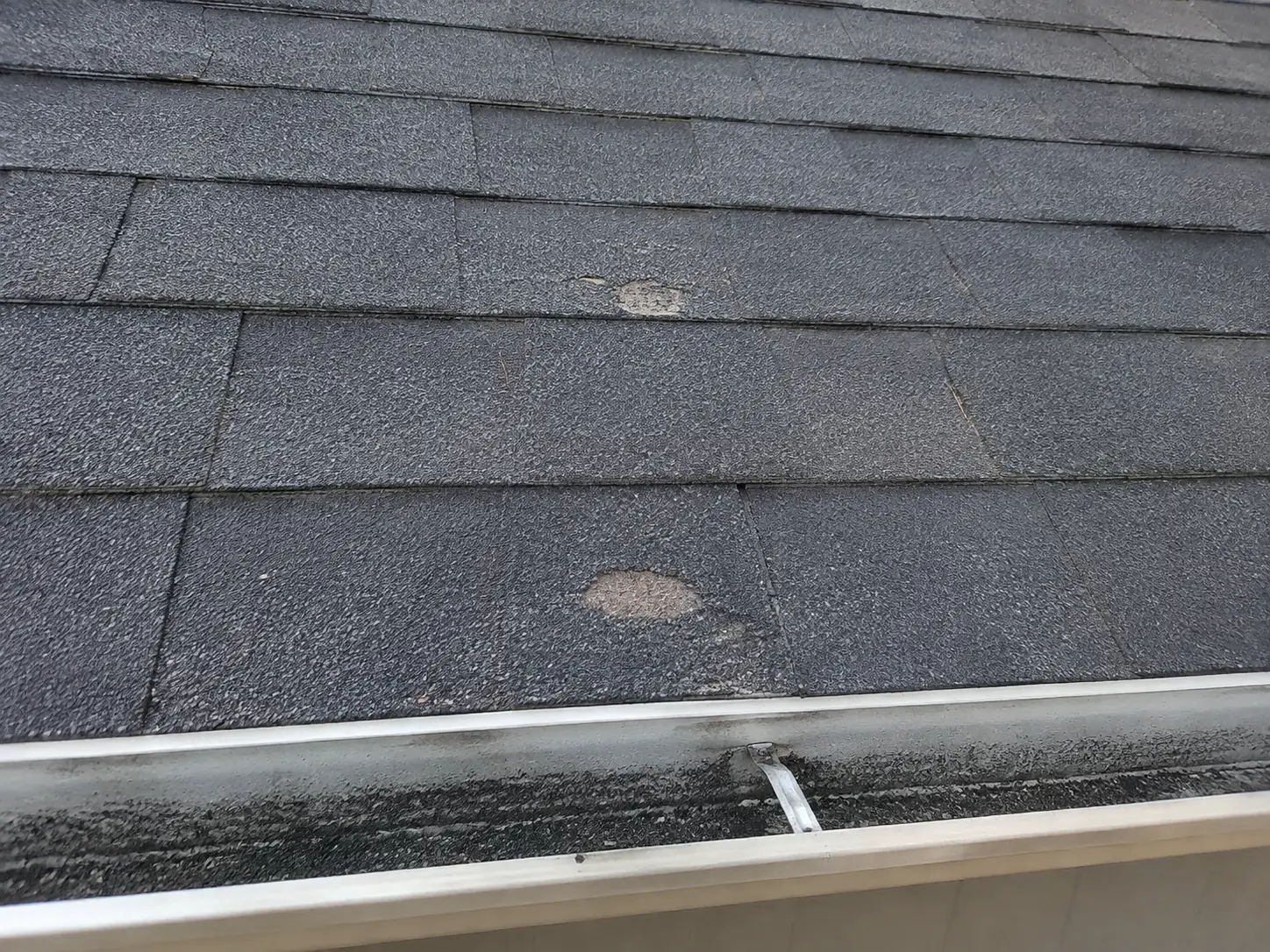
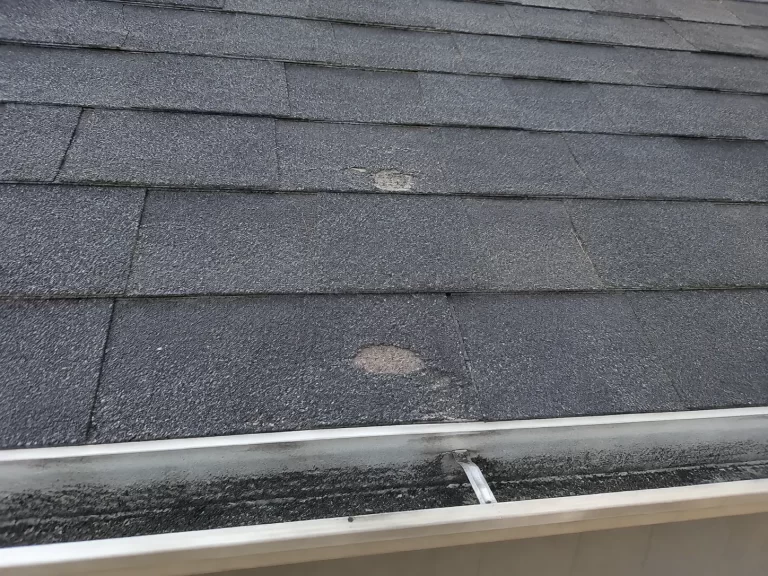
Finding a pile of gritty, sand-like material in your gutters can be unsettling. It usually came from your asphalt shingles, but it does not automatically mean the roof is failing. Some roof granule loss is normal, especially on a new roof. Heavy or uneven loss can be a warning that shingles are wearing out or have been damaged.
A few loose granules tell you very little. You can probably find some on any shingle roof. Pay attention to how much you find, where the loss appears, and whether the shingles show other signs of trouble.
What are roof granules?
The rough surface of an asphalt shingle is made from small mineral granules embedded in an asphalt coating. They create the shingle’s color and texture, but they are not there for looks alone.
Granules help shield the asphalt from sunlight and everyday weather exposure. Once a shingle loses enough of that surface, the asphalt beneath it has less protection. CertainTeed describes the same progression: exposed asphalt becomes brittle and more prone to cracking as ultraviolet light keeps working on it.
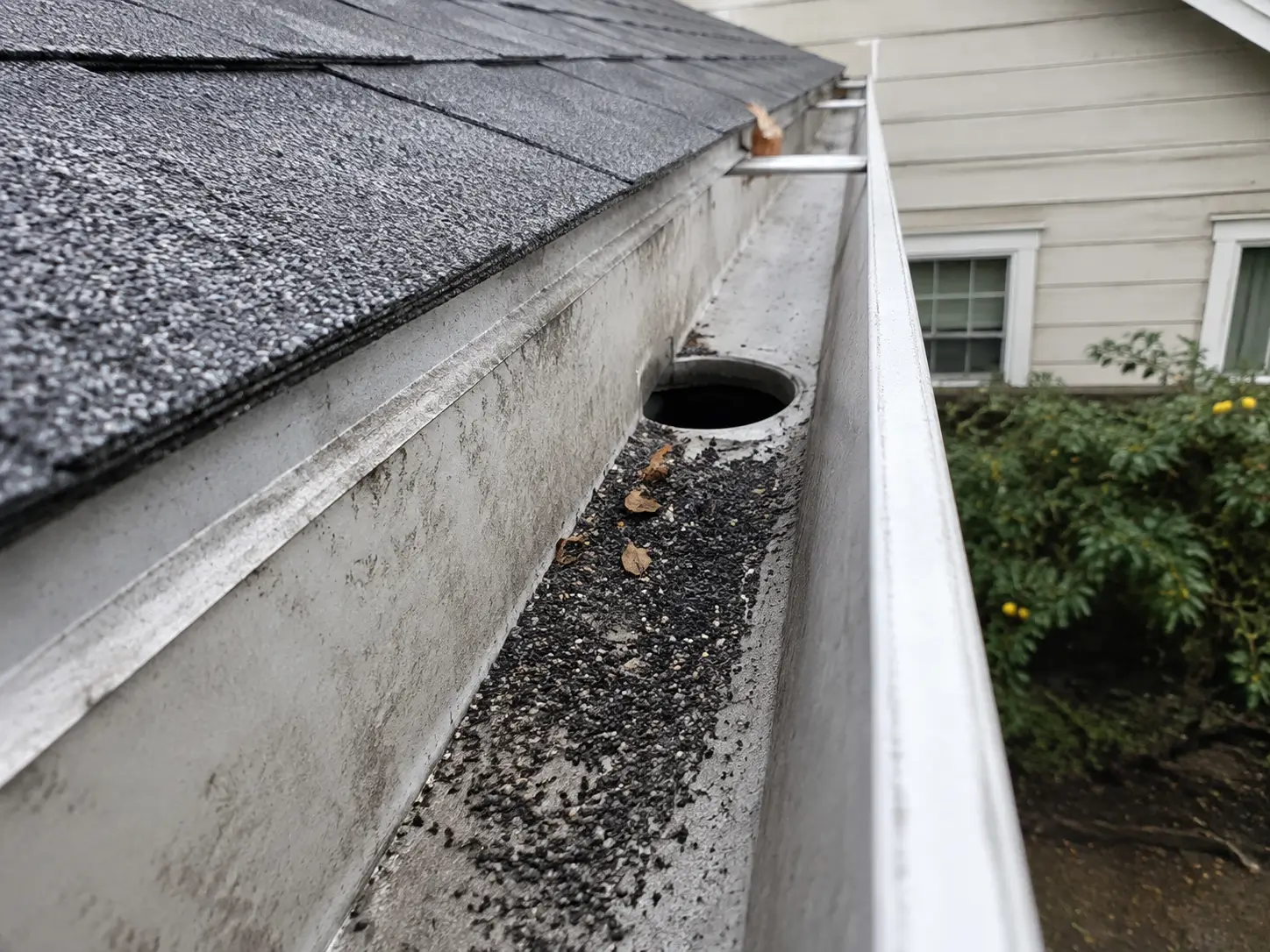
You may notice loose granules:
- In gutters or at downspout outlets
- On a patio, walkway, or driveway below the roof
- In roof valleys
- Around the base of downspouts after rain
- As thin or discolored patches on the shingles
Loose granules often look like coarse black, gray, or colored sand. On their own, a small amount does not tell you much. The condition of the roof puts that grit into context.
Is roof granule loss normal?
Yes, within limits.
New shingles are manufactured with extra surface granules. Some of those loose granules can come off during packaging, installation, and the first several rainstorms. GAF’s technical guidance on new shingles explains that this early shedding usually decreases over time and is not, by itself, a manufacturing defect.
Older shingles also lose granules gradually through natural weathering. Rain moves loose material toward the gutters. Wind carries debris across the roof. Sunlight and temperature changes slowly age the asphalt that holds the granules in place.
Normal loss tends to be light and fairly even. It becomes more concerning when it is heavy, concentrated in certain spots, or paired with visible shingle damage.
What causes roof granule loss?
Several different conditions can produce the same gritty material in a gutter. The age and recent history of the roof usually offer the best clues.
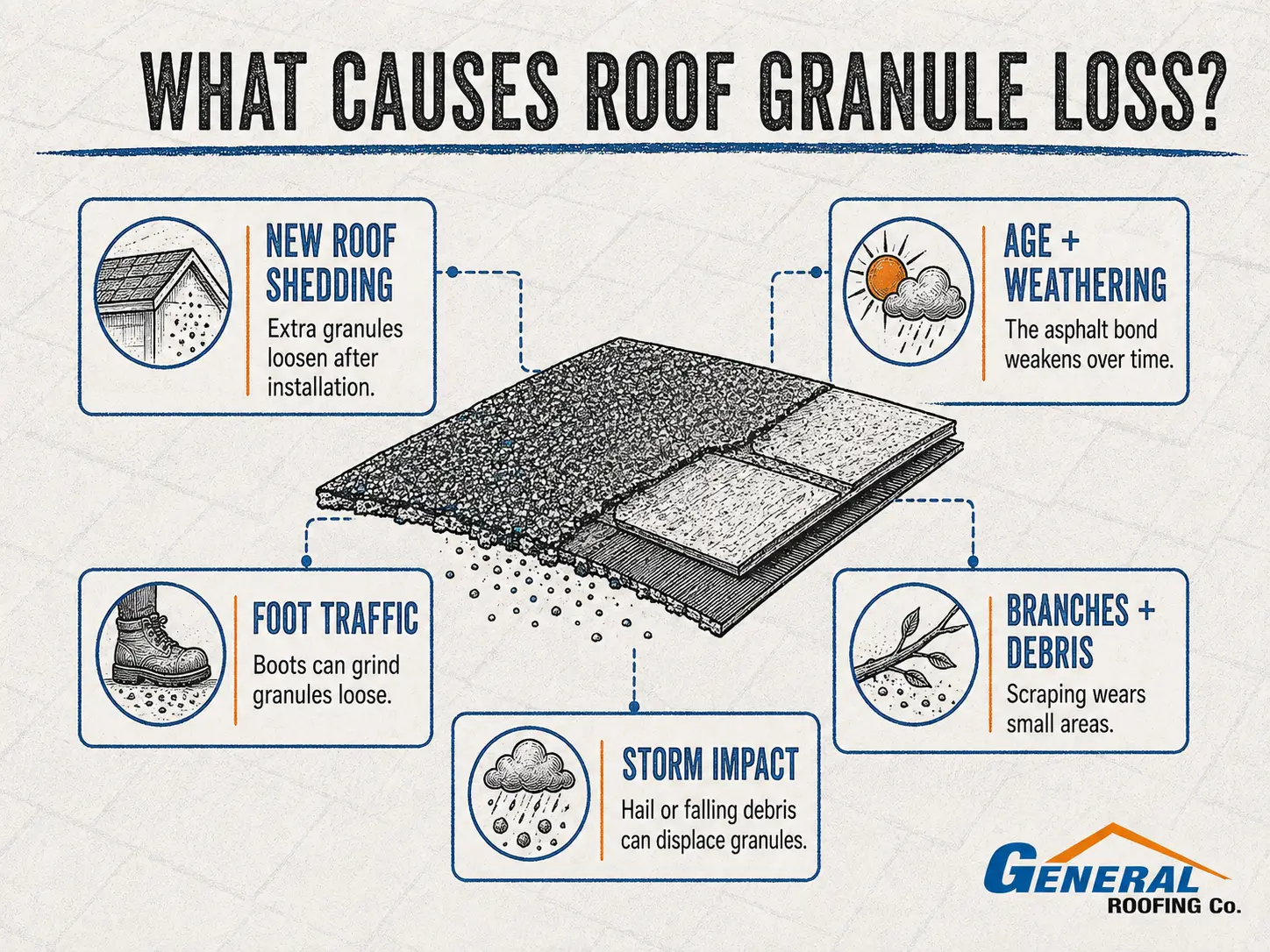
Normal shedding from new shingles
A recently installed roof may shed noticeable granules for a while. The material often collects during the first rains because water carries loose granules off the roof at once.
The amount should taper off. If heavy shedding continues for months, the roof changes color, or bare asphalt becomes visible, have the installation checked.
Age and weathering
As asphalt shingles age, the bond between the asphalt and mineral surface gradually weakens. Granule loss often becomes more noticeable near the later part of a roof’s service life.
Age-related wear rarely happens in isolation. You may also see curling edges, cracking, brittle tabs, exposed asphalt, or repeated small leaks. If you are unsure how the roof’s age fits into the picture, our guide to how long a roof lasts in California explains how material, installation, maintenance, and climate affect service life.
Foot traffic
Walking on hot shingles can loosen granules, especially when boots twist or dig into the surface. Contractors servicing solar panels, gutters, satellite equipment, or HVAC components may need roof access, but unnecessary traffic should be avoided.
Do not climb onto a roof to inspect granule loss yourself. A worn surface can be slippery, and walking the roof may create more damage.
Branches and debris
Overhanging branches can scrape the shingle surface. Windblown debris can do something similar, and piles of leaves may hold moisture against the roof.
Damage from contact is often localized. Look from the ground for a worn strip beneath a branch or a patch that differs from the surrounding shingles.
Storm or impact damage
Hail can displace granules and leave concentrated impact marks. The Insurance Institute for Business & Home Safety identifies displaced granules as one of the ways hail can damage asphalt shingles. Falling branches can also bruise or crack the shingle mat beneath the surface.
Storm damage can be hard to distinguish from ordinary aging without a close inspection. The direction of the marks, their pattern, and the condition of nearby roof components all matter.
Manufacturing or adhesion problems
Inadequate granule adhesion is possible, though it is less common than normal shedding and weathering. It may affect a specific batch or appear as unusual, widespread loss on a roof that is not old enough to show that level of wear.
Keep the installation contract, product information, and warranty documents. If a material issue is suspected, those records will help the contractor and manufacturer evaluate it.
Signs that roof granule loss needs attention
A handful of grit is less important than the pattern you see over time. Schedule an inspection if you notice any of the following:
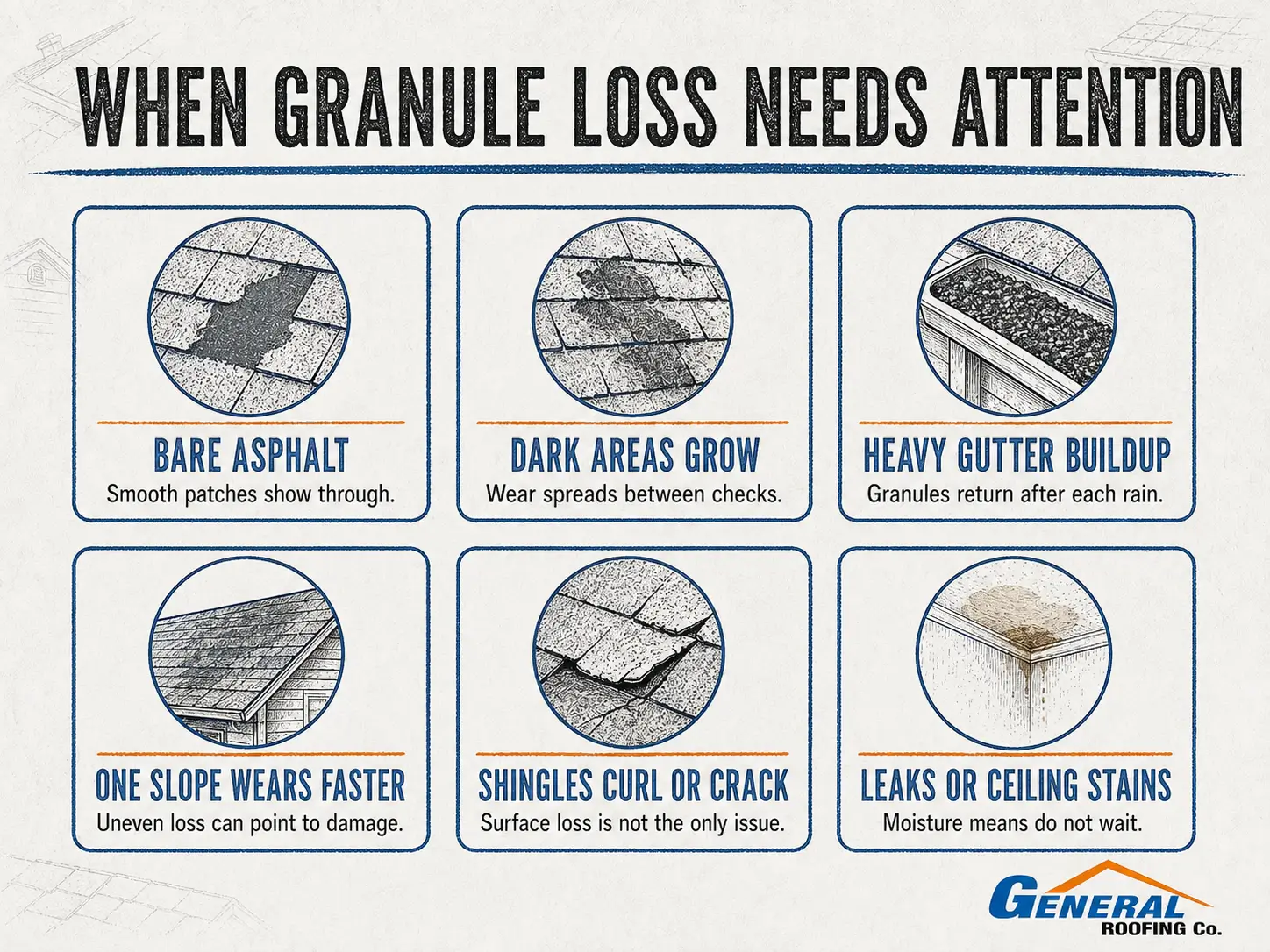
- Bare, smooth, or shiny asphalt patches on shingles
- Dark areas that keep getting larger
- Granules washing out of the downspouts after every rain
- One roof slope losing much more material than the others
- Curling, cracking, lifted, or missing shingles
- A sudden increase in granules after a storm
- Roof color that looks blotchy or faded in specific areas
- New ceiling stains, attic moisture, or active leaks
- Heavy loss on a roof that is still relatively new
Photos can make changes easier to track. Take pictures from the same safe ground-level locations after cleaning the gutters, then compare them following the next few storms.
Granules in the gutter: how much is too much?
There is no useful cup-by-cup rule for homeowners. Roof size, gutter layout, recent rainfall, roof age, and how long it has been since the last cleaning all change what ends up in the gutter.
Instead, look for a trend.
A thin layer of grit during the first season after installation may be normal. A sudden pile from an older roof deserves more attention. Repeated heavy accumulation matters too, particularly when bare patches are visible from the ground.
Do not rely on the gutter alone. A roofer will compare the granule loss with the shingle condition, roof age, flashing, valleys, penetrations, drainage, and any signs of moisture below the roof surface.
Can you repair shingles that are losing granules?
You cannot glue lost granules back on and restore the shingle. The right fix depends on why they came loose and how much of the roof is affected.
A small area damaged by a branch or isolated impact may be repairable by replacing individual shingles. Widespread age-related loss usually points to a larger roof condition rather than a spot repair. If the shingles are brittle, cracked, and worn across several slopes, replacement may be the more reliable option.
The decision should account for more than appearance. A sound repair needs compatible replacement material, a stable surrounding roof, and enough remaining service life to make the work worthwhile. Our roof repair versus replacement guide covers the factors that usually shape that choice.
What to do when you notice roof granule loss
Start with a safe ground-level check. Note where the granules collected and look for visible color changes, missing shingles, or debris on the roof. Check the attic and ceilings for moisture or staining.
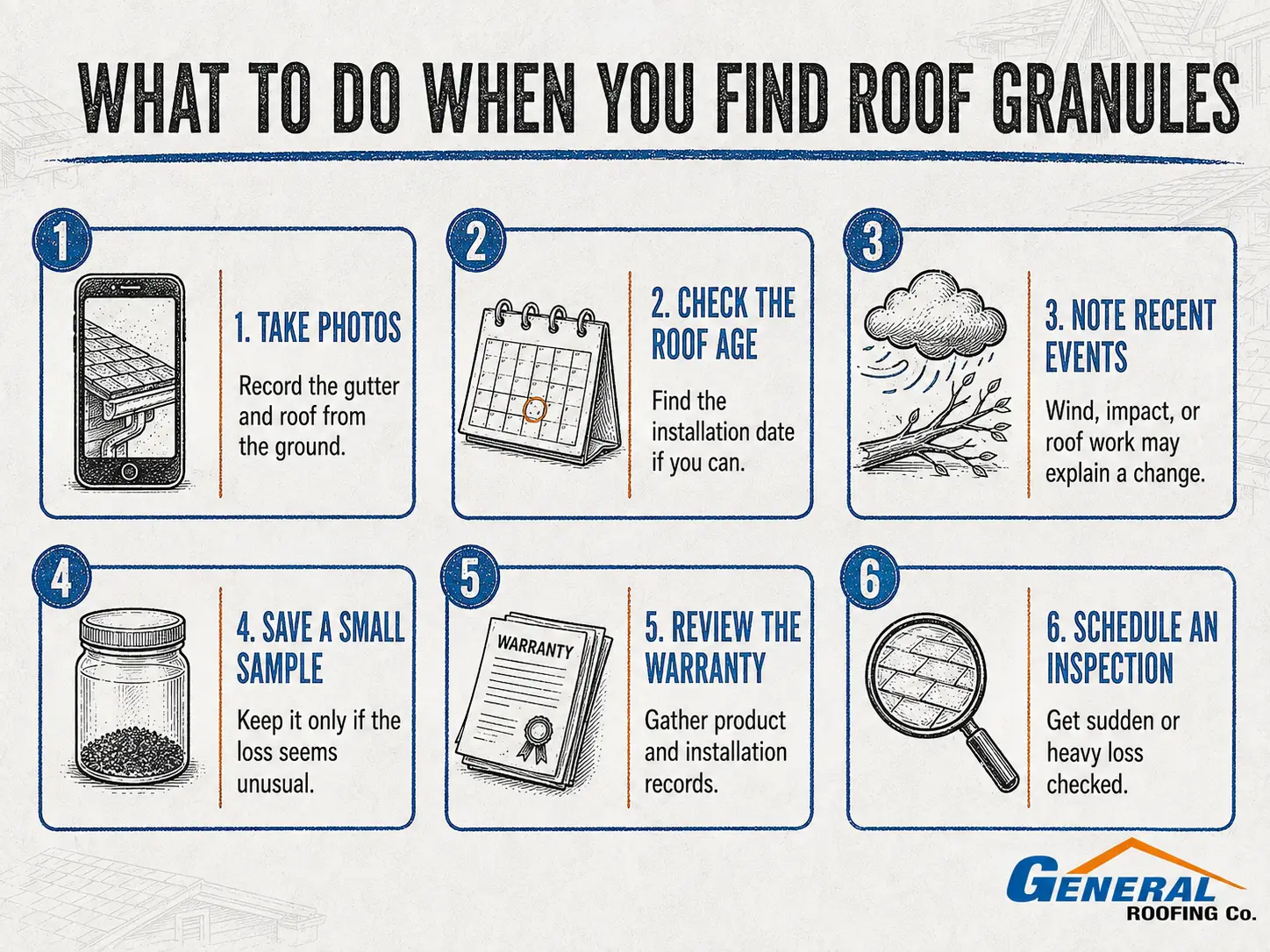
Then:
- Photograph the granules and visible roof areas.
- Record when the roof was installed, if known.
- Note any recent wind, hail, branch impact, or roof work.
- Keep a small sample only if the loss seems unusual.
- Review the shingle warranty and installation paperwork.
- Arrange a professional inspection if the loss is heavy, sudden, or paired with damage.
Avoid pressure washing, aggressive brushing, or coating the shingles with an unapproved product. Those approaches can loosen more material and may complicate a warranty review.
Across the Bay Area, our roof repair and maintenance team can inspect the roof, explain whether the loss looks routine or excessive, and identify repairs that should be handled before the next stretch of wet weather.
FAQ
Do new roofs lose granules?
Yes. New asphalt shingles commonly shed some loose manufacturing granules during transport, installation, and early rainstorms. The shedding should decrease. Ongoing heavy loss, visible color change, or bare patches should be inspected.
Does granule loss mean I need a new roof?
Not always. Light, even loss can be normal. A new roof may simply be releasing excess granules, while one damaged area may only need a local repair. Widespread bare spots, brittle shingles, leaks, and advanced age make replacement more likely.
Can rain cause shingle granule loss?
Rain carries already-loose granules into gutters and downspouts. Normal weathering can loosen granules over time, but a large amount after one storm may also reveal impact damage or advanced shingle wear.
Are granules in gutters covered by a roof warranty?
Coverage depends on the product, cause, installation, and warranty terms. Normal shedding and weathering are usually treated differently from a confirmed manufacturing defect. Keep photos and installation records, and have the roof evaluated before filing a claim.
How often should I check my gutters for roof granules?
Look when gutters are cleaned and after major storms. Checking the same locations over time is more useful than reacting to one small amount. If the accumulation keeps increasing, pair the gutter check with a professional roof inspection.
Final thoughts
Roof granule loss is not automatically an emergency. A small amount can be part of a shingle roof’s normal life, especially soon after installation. Heavy, uneven, or sudden loss is different, particularly when it comes with bare asphalt, damaged shingles, or moisture indoors.
If the pattern looks unusual, an inspection can tell you whether to keep watching it, repair one area, or plan for replacement. That is a much easier call to make before a worn patch starts leaking.
Recent Comments