

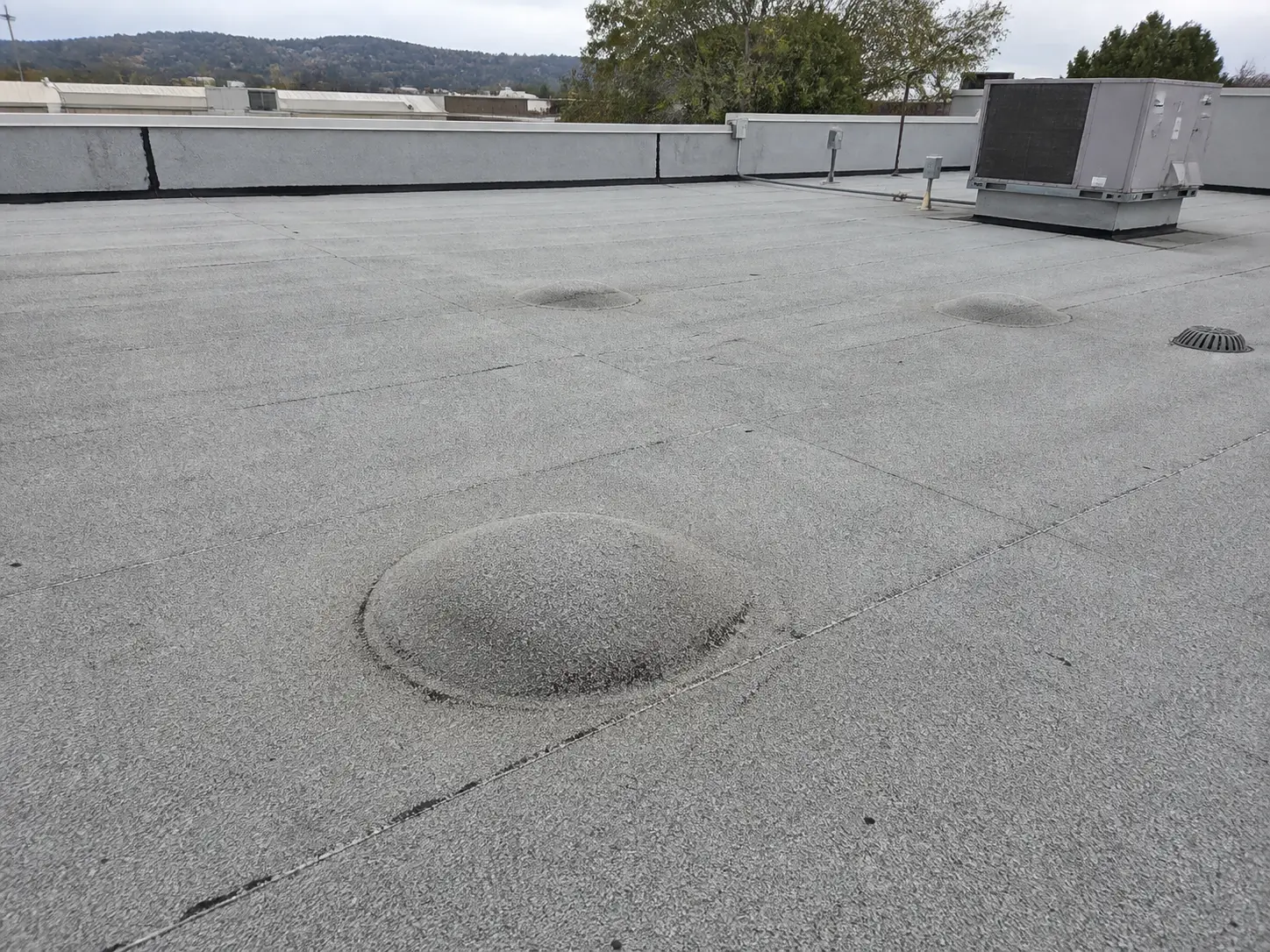
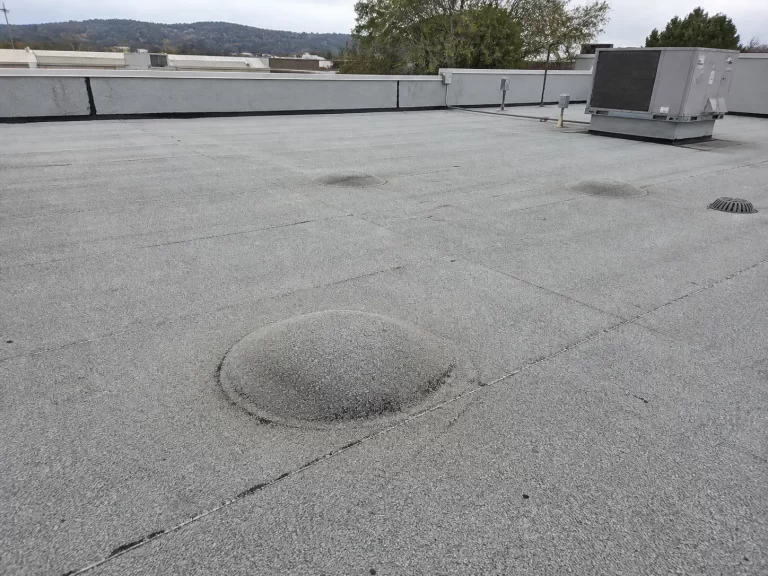
A raised bubble on a flat roof can look harmless, especially when the roof isn’t leaking. But roof blistering is a sign that part of the membrane has separated, and the pocket underneath may contain air, moisture, or both. Some blisters stay stable. Others split under heat, foot traffic, or normal roof movement and give water a direct path into the assembly.
What you do next depends on where the blister is, how big it is, whether the surface has cracked, and what kind of roof you have. Cutting into every bubble is a bad plan. So is pretending they’re all harmless.
What is roof blistering?
Roof blistering happens when a raised pocket forms in or beneath a roofing membrane. The National Roofing Contractors Association’s roofing glossary describes a blister as a raised area caused by internal pressure, often from trapped air, water, or solvent vapor between layers of roofing material or between the membrane and its substrate.
On a built-up or modified bitumen roof, a blister may sit between membrane plies or between the membrane and the layer below it. Coated roofs can bubble too, usually where the coating has lost its grip on the surface.
Not every raised defect is a blister. A long ridge may be a buckle, while a soft area could point to wet insulation. The shape gives you clues, but someone still needs to inspect the roof up close.
What causes roof blisters?
Most blisters start with a void, poor adhesion, or trapped moisture. Heat then adds pressure. Air and moisture vapor inside the pocket expand as the roof surface warms, pushing the membrane upward.
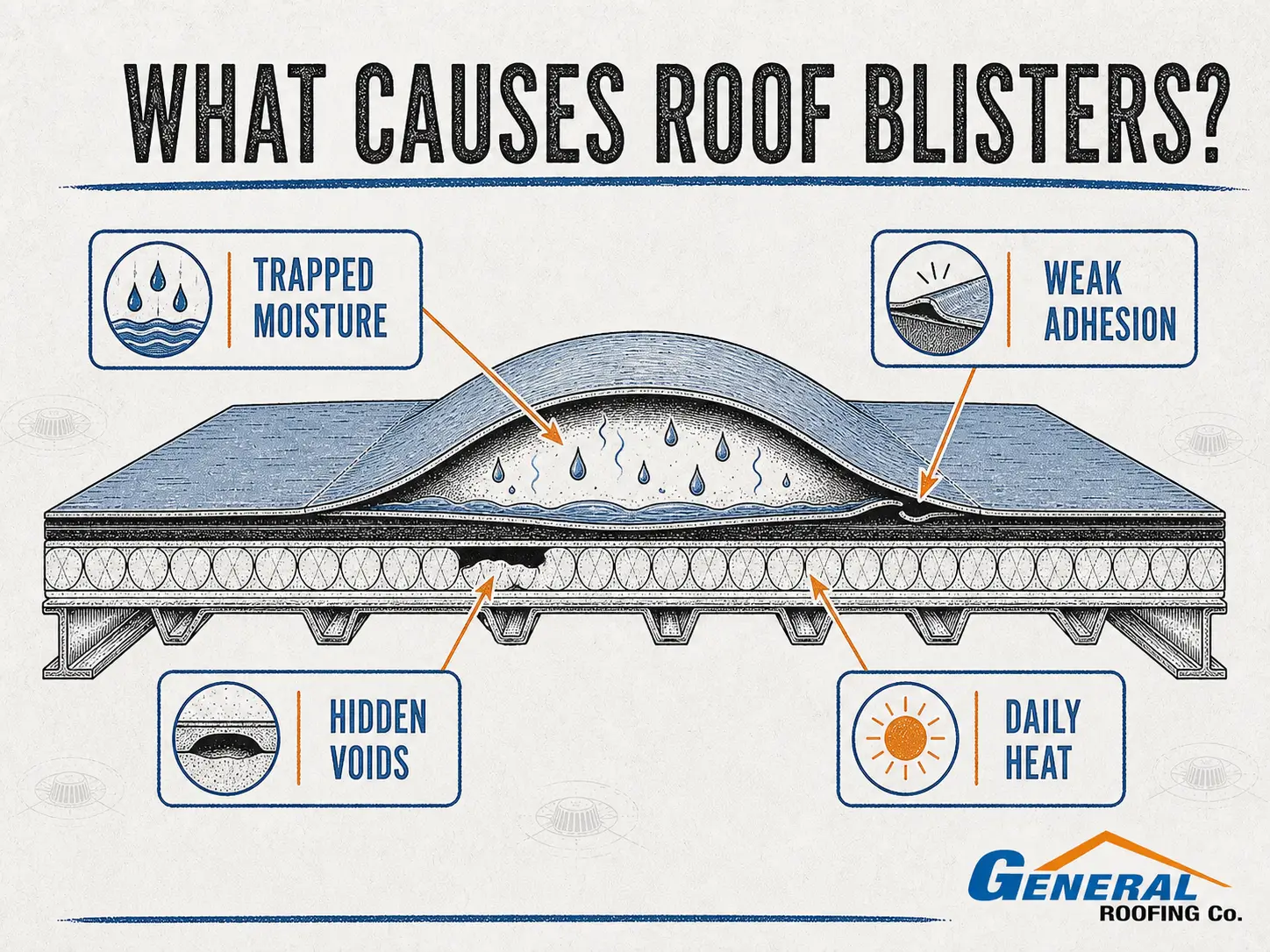
Moisture trapped in the roof assembly
Moisture can enter during installation if materials, insulation, or the deck aren’t fully dry. It can also get into an older assembly through leaks, open seams, damaged flashings, or condensation from inside the building.
Once moisture is sealed between layers, repeated heating and cooling can make the pocket grow. That’s why some blisters look more pronounced in warm weather.
Incomplete adhesion between layers
Roofing plies and adhered membranes need consistent contact with the surface below. Skipped adhesive, debris, wrinkles, or an irregular substrate can leave a void. NRCA’s review of blistering in built-up roofs lists those same installation problems as common contributors.
Those small voids may sit quietly at first. Once the roof heats up, though, they give vapor pressure somewhere to build.
Applying material over a damp or damaged surface
Coatings and reroofing materials need the right substrate conditions. Covering wet insulation or coating over a damp membrane can trap the existing problem beneath a new surface. GAF’s coating guidance calls for a clean, dry roof with no trapped moisture, plus repairs to damaged membrane, flashings, and penetrations before application.
The same rule applies to a roof recover. Existing blisters, splits, wet materials, and deck problems need attention before another system goes over them. A new top layer can’t make hidden moisture disappear. It just makes the moisture harder to find.
Heat and daily temperature swings
Sunlight doesn’t usually create the original void, but it can make the defect worse. Air or vapor inside the pocket expands as the roof heats, then contracts as it cools. That daily cycle flexes the membrane.
Installation sequencing and weather exposure
An unfinished roof left exposed between installation phases can collect moisture or suffer damage. GAF’s built-up roofing manual warns that phased installation makes blisters and moisture infiltration more likely.
What a roof blister looks like
A blister looks like a rounded bubble in the roof surface. It may be a few inches wide or cover a much larger patch. On a granulated cap sheet, the surface may look normal even though the membrane is lifted underneath.
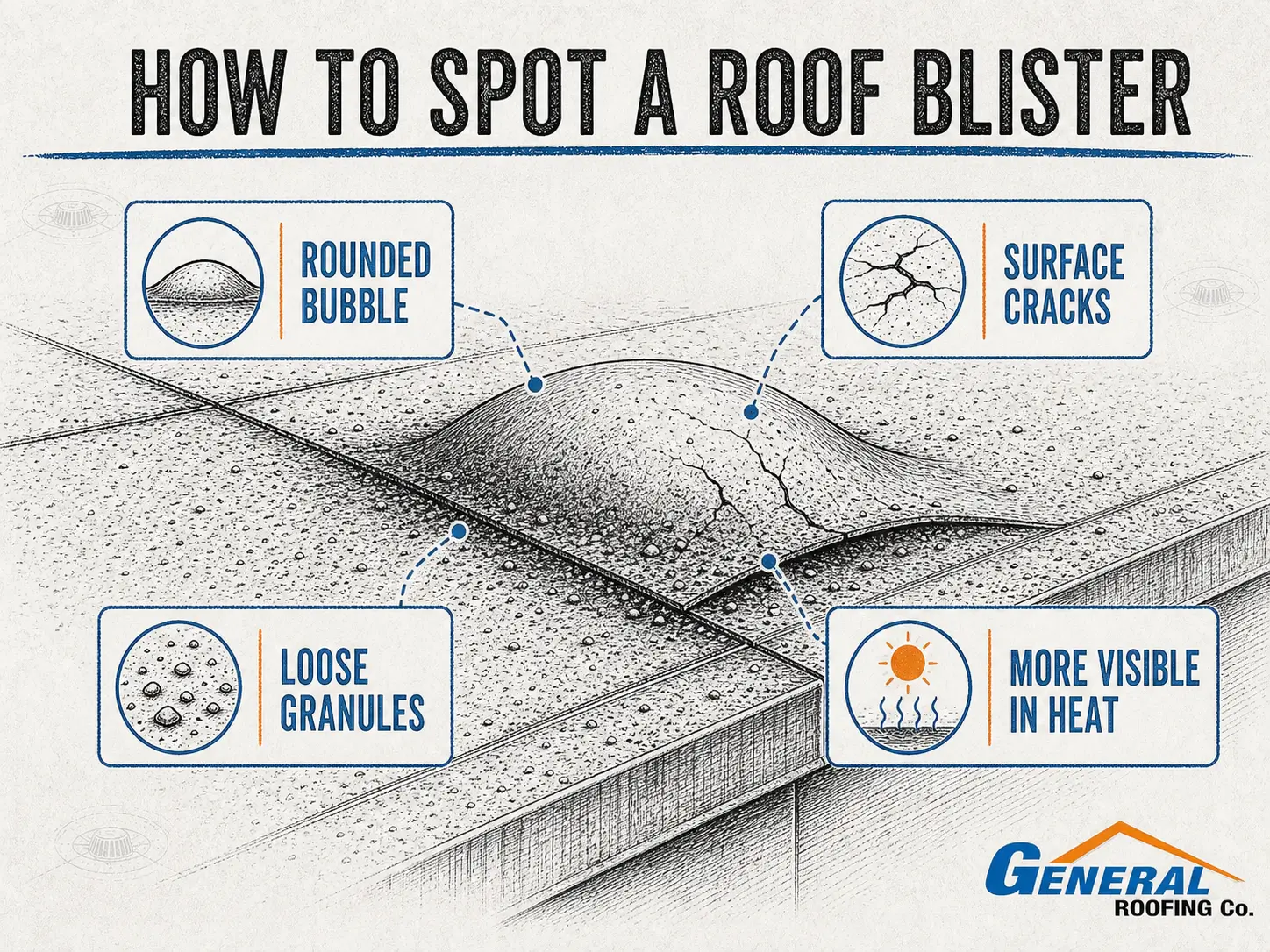
Common signs include:
- A dome-shaped bump that feels hollow or slightly flexible
- A bubble that becomes more pronounced on hot afternoons
- Cracks or splits across the top of the raised area
- Loose surfacing or missing granules around the blister
- Water staining, damp insulation, or interior leakage nearby
- A cluster of raised areas rather than one isolated spot
Don’t step on a suspected blister to see what happens. Don’t poke it either. A brittle membrane can crack, and opening a sealed pocket without a repair plan is a quick way to turn a dry defect into a leak.
Are roof bubbles always serious?
No. A small, intact blister away from seams, edges, penetrations, and regular foot traffic may remain stable. Repairing it could cause more disruption than monitoring it.
The risk goes up when a blister:
- Is cracked, split, or losing its surface protection
- Is growing or changing shape
- Sits in a walkway or service area around rooftop equipment
- Reaches a seam, flashing, drain, curb, or roof edge
- Feels weak enough to rupture under normal traffic
- Appears alongside active leaks or wet insulation
- Is one of many blisters spread across the roof
A modest blister at a critical seam can be more urgent than a larger, stable one in an undisturbed area.
Roof blistering vs. roof alligatoring
These defects get confused all the time on older asphalt roofs.
Roof blistering creates a raised pocket. Roof alligatoring is a surface pattern of cracks that resembles reptile skin. Alligatoring usually develops as asphalt loses flexibility and ages under sun and weather exposure. A roof can have both problems at the same time, and cracking across the top of a blister makes rupture more likely.
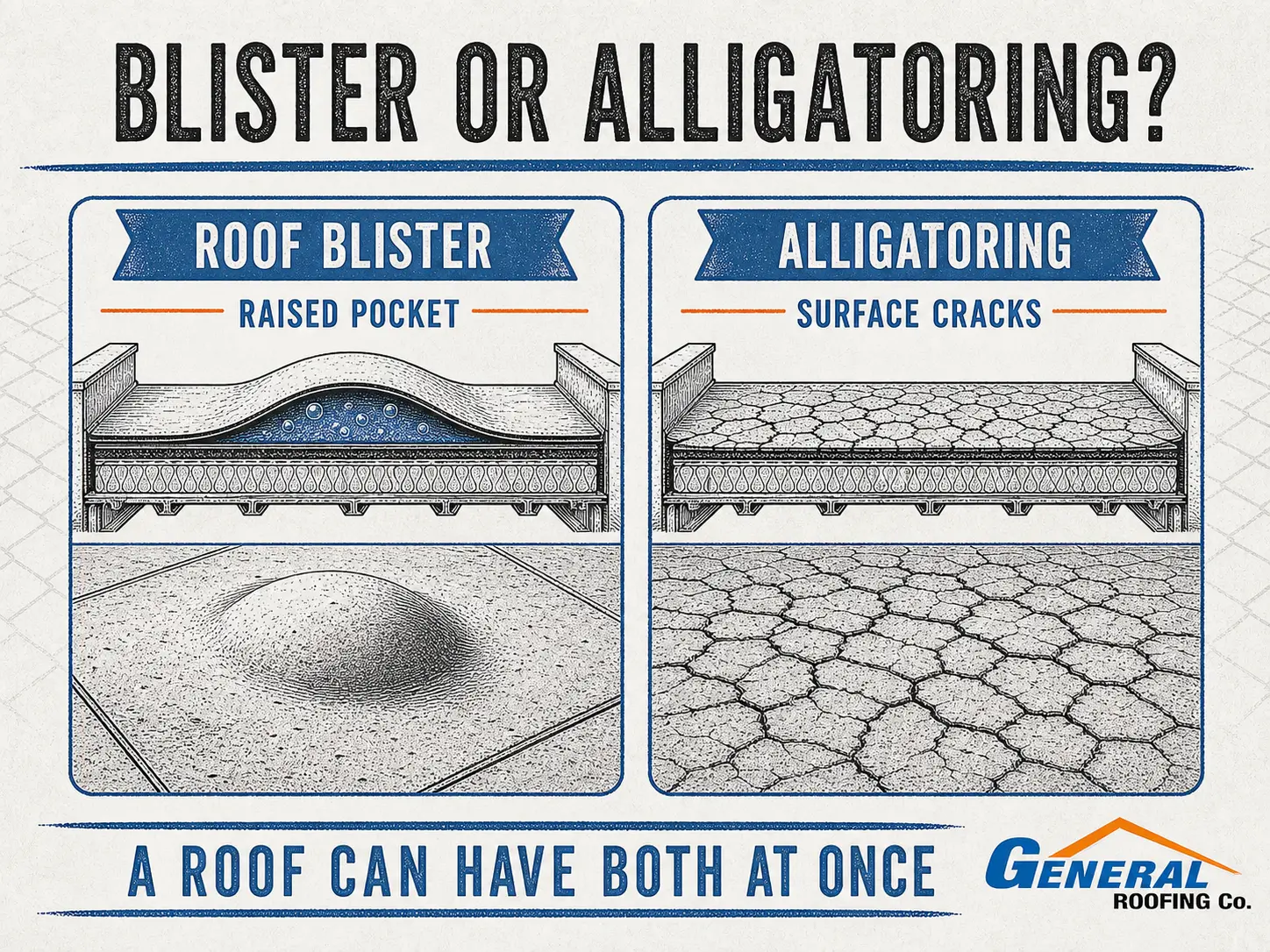
Another useful distinction is ponding water. A blister rises above the roof surface, while ponding water collects in a low area because drainage is slow or the roof has settled. If water remains on your roof after rain, our guide to ponding water on a flat roof explains the causes and repair options.
How contractors repair roof blisters
There isn’t a universal patch for every roof bubble. The repair has to match the membrane and whatever is happening below it.
A contractor will usually map the blistered area, inspect the nearby seams and flashings, and look for moisture. If the roof is large or has a history of leaks, a moisture scan or a carefully placed test cut can keep a small repair from becoming a blind guess.
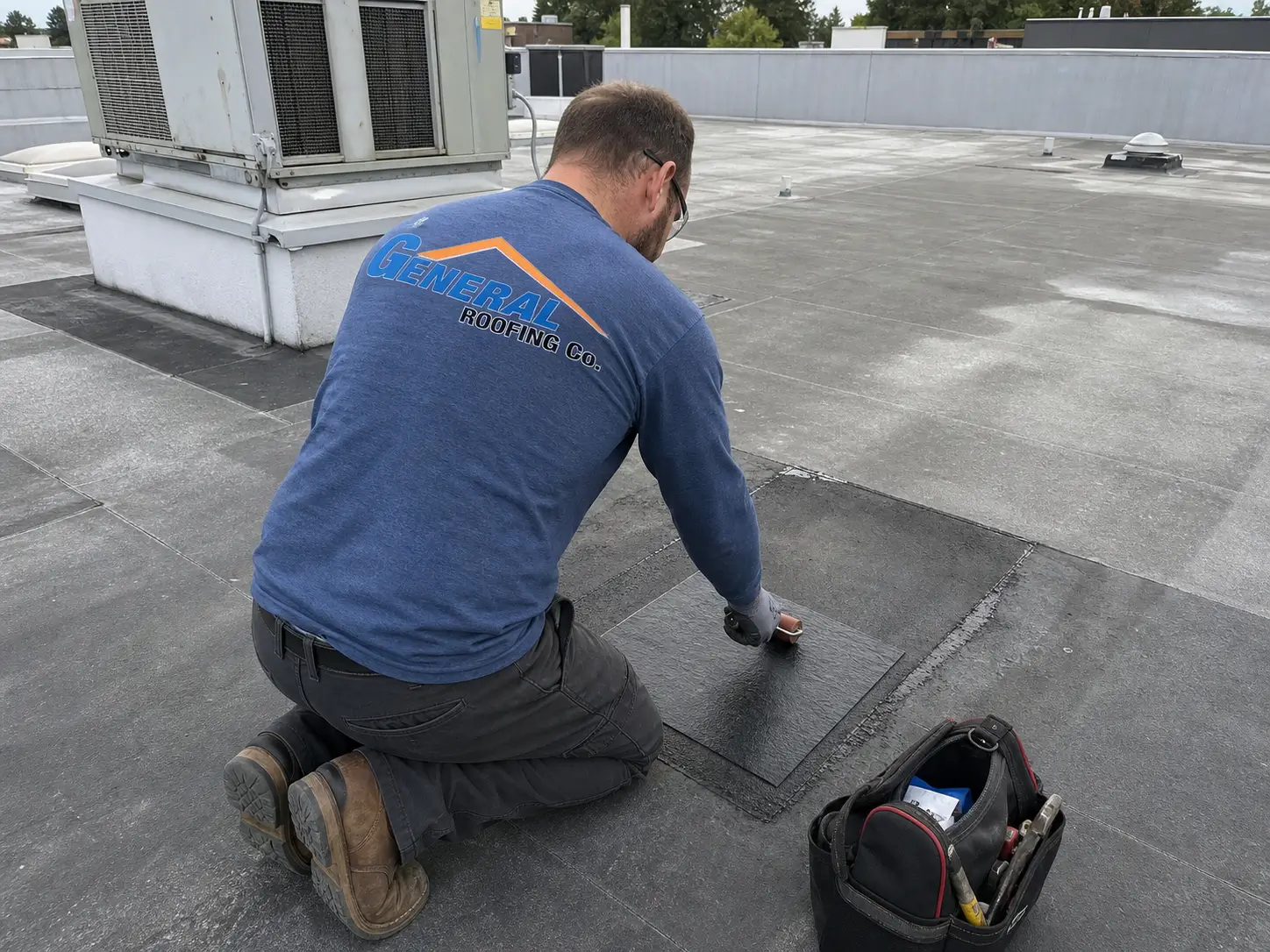
If repair is needed, the work may involve:
- Opening or removing the affected membrane in a controlled area
- Checking the substrate and insulation for trapped moisture or deterioration
- Removing wet or damaged materials
- Allowing the repair area to dry as required
- Restoring the membrane with compatible materials and proper overlap
- Sealing the repair and inspecting nearby weak points
Some intact blisters can be reinforced instead of cut out. Some are better left alone and watched. The manufacturer’s repair requirements and the warranty also matter, so this isn’t a good place to improvise with roof cement and a utility knife.
If you need a professional assessment, our roof repair and maintenance services cover built-up, modified bitumen, and single-ply systems throughout the Greater East Bay Area.
When the problem is bigger than one blister
One isolated blister is often a local defect. A roof covered in bubbles tells a different story.
Lots of blisters can mean moisture has spread through the assembly. They can also point to weak adhesion across a wider area or an aging membrane that has lost too much flexibility. If fresh bubbles keep appearing far from the last patch, it’s time to stop treating each one as a separate surprise.
A repair can still make sense when the surrounding membrane is sound and wet material is limited. The math changes when damage covers a large area, insulation is wet in several places, the deck has deteriorated, or the roof is already near the end of its useful life.
Age alone doesn’t decide it. Our overview of commercial roof lifespan by roofing type can help you put the roof’s condition in context. For a decision based on actual roof conditions, start with an inspection rather than a repair guess.
How to reduce the chance of roof blistering
Building owners can’t control every installation detail on an existing roof, but a few habits lower the chance that a small defect becomes expensive.
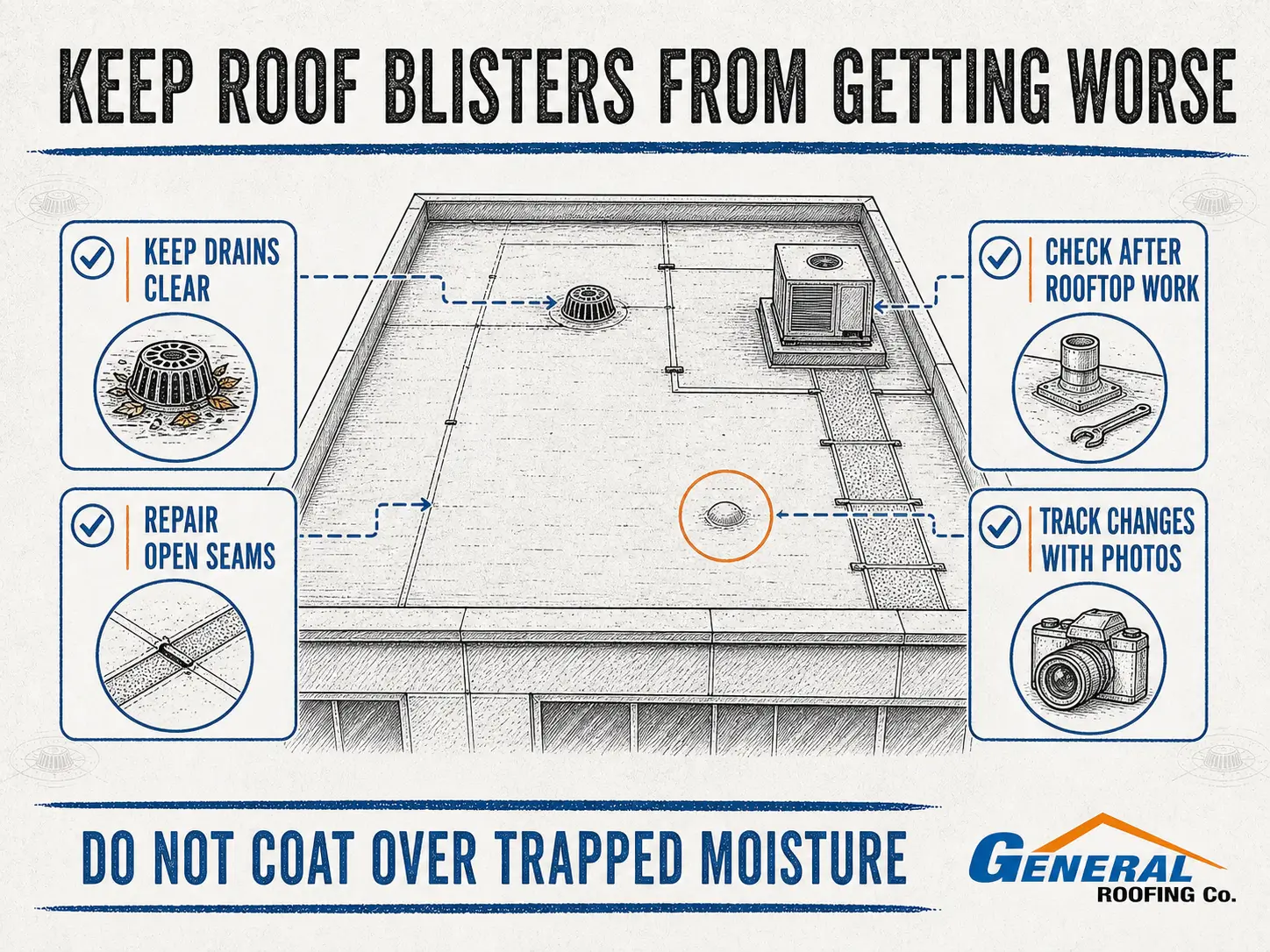
- Keep drains and scuppers clear so water leaves the roof as designed.
- Schedule regular inspections and document changes in known blisters.
- Have the roof checked after HVAC work or other rooftop traffic.
- Repair open seams, punctures, and damaged flashings before moisture spreads.
- Don’t coat or recover a roof until wet areas and existing defects have been evaluated.
- Use compatible materials and follow the roof manufacturer’s repair requirements.
- Keep service crews on designated walk pads where possible.
A simple maintenance record helps. Take photos from the same spot each time, because memory is terrible at judging whether a bubble has grown half an inch since last spring. Our roof maintenance checklist covers the other membrane, drainage, flashing, and rooftop equipment checks worth tracking.
FAQ
Can a roof blister cause a leak?
Yes, but an intact blister may not be leaking yet. The bigger concern is rupture. Heat, aging, hail, tools, or foot traffic can split the raised membrane and let water into the roof assembly.
Should you pop roof blisters?
No. Puncturing a blister without removing damaged material and restoring the membrane correctly can create a direct leak path. Have it evaluated before disturbing it.
Can roof coating fix blistering?
Coating over an active blister doesn’t correct trapped moisture or poor adhesion underneath. Existing defects and wet materials need to be assessed and repaired before a coating is applied.
Does roof blistering mean the whole roof needs replacement?
Not necessarily. A few stable or repairable blisters may be a local issue. Widespread blistering, wet insulation, repeated leaks, or extensive membrane deterioration can make a larger repair or replacement more practical.
How often should roof blisters be checked?
Include them in every scheduled roof inspection and check again after severe weather or heavy rooftop work. If a blister grows, cracks, or starts leaking, arrange an evaluation sooner.
Final thoughts
Roof blistering isn’t an automatic emergency, but it’s worth a closer look. First identify the roof system and find out whether the pocket is dry and stable. Then check the surrounding membrane before deciding whether to watch it or repair it.
If you’ve noticed roof bubbles on a flat roof in the Greater East Bay Area, we can inspect the area and explain whether it needs monitoring, a local repair, or a broader roofing plan.
Recent Comments