
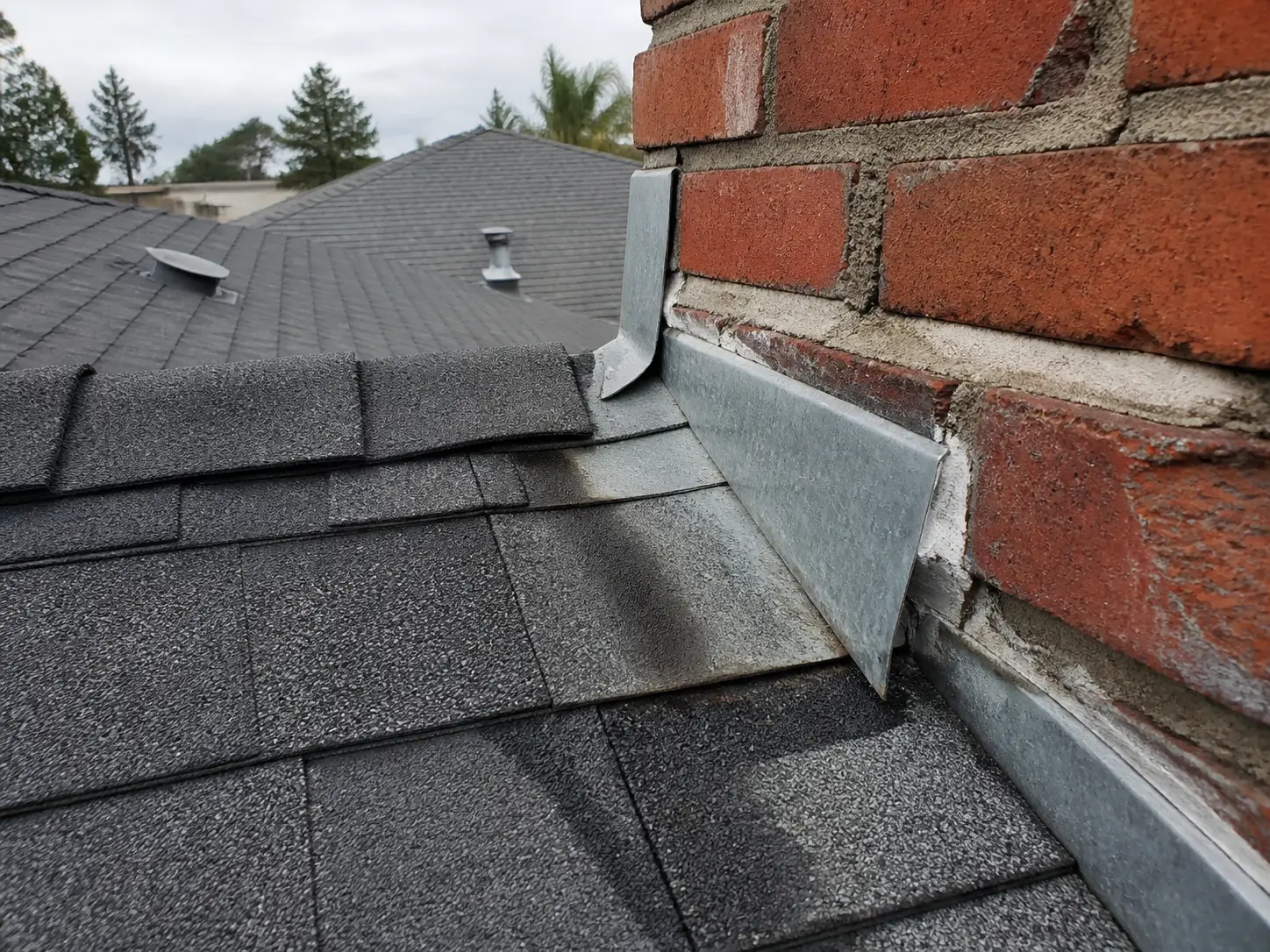
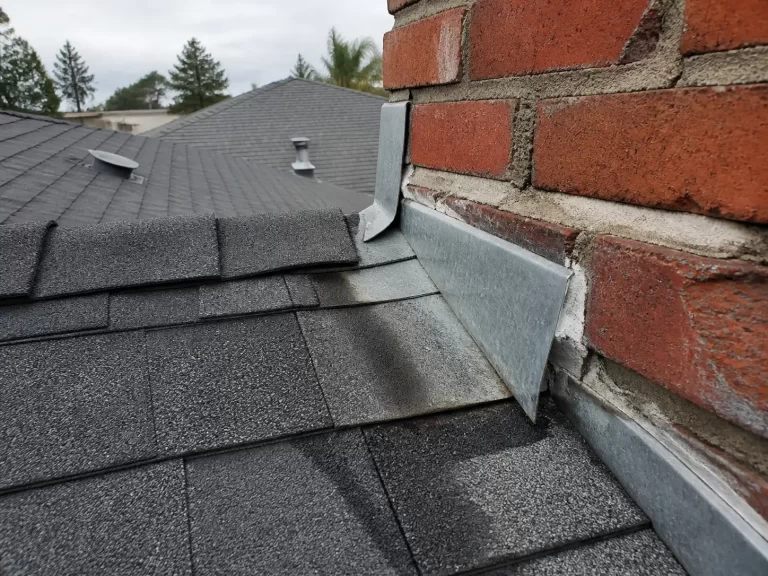
Roof flashing is easy to overlook until water gets inside. A loose edge beside a chimney, a cracked pipe boot, or a failed wall seam can let rain travel beneath an otherwise sound roof. An early roof flashing repair may prevent damaged decking, stained drywall, and a much larger job.
What roof flashing does
Flashing is the material that protects the places where a roof changes direction, meets another surface, or has an opening. You will often find it around chimneys, skylights, plumbing vents, roof edges, valleys, parapet walls, and rooftop equipment.
Those areas are harder to waterproof than an uninterrupted roof plane. Properly installed flashing moves water over the roof covering and toward the drainage system. The Insurance Institute for Business & Home Safety describes the same job at roof edges and penetrations: direct water away before it enters the building.
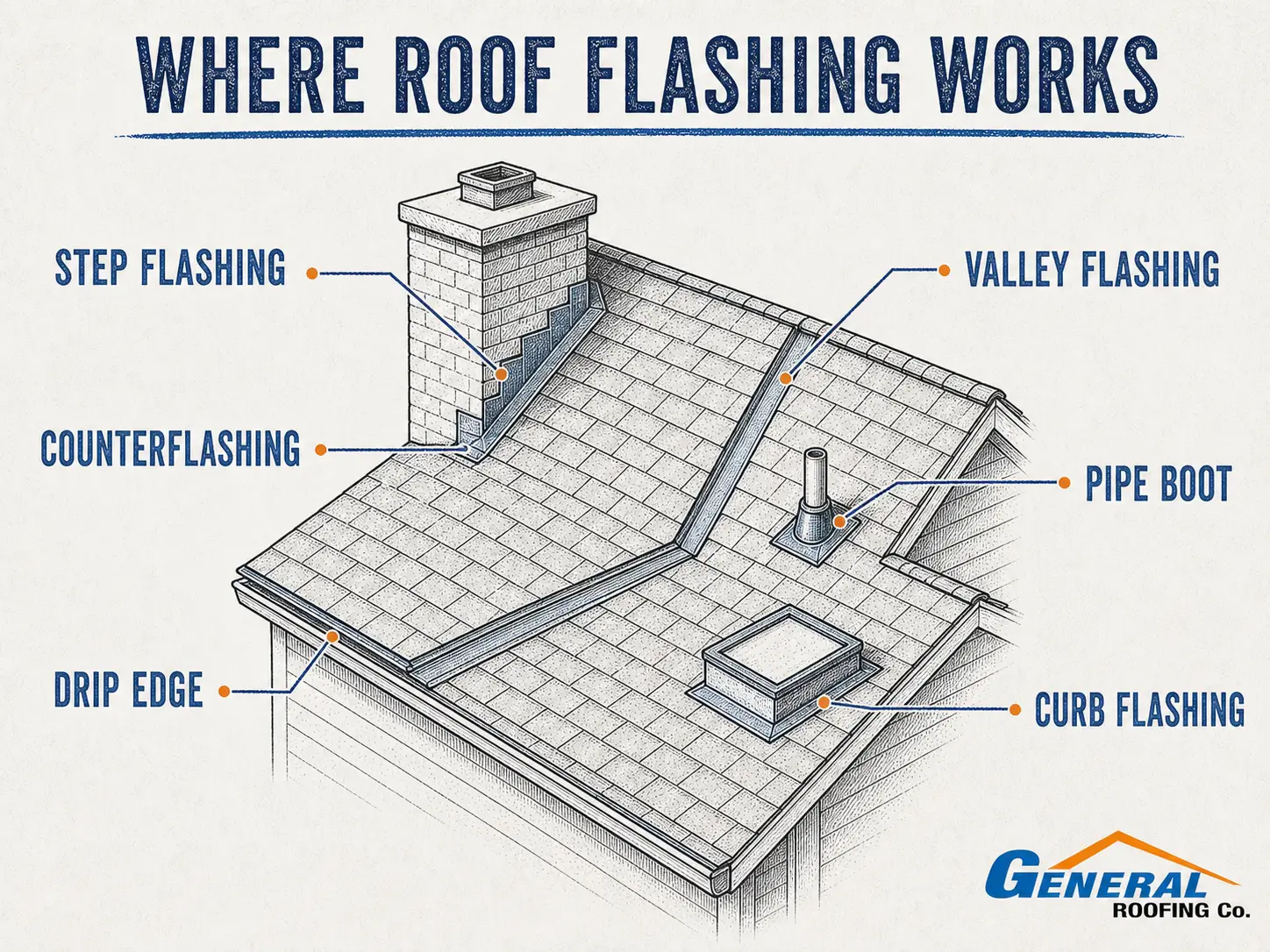
- Step flashing protects the joint where a sloped roof meets a wall.
- Counterflashing covers and protects the upper edge of base or step flashing.
- Valley flashing manages concentrated runoff where two roof slopes meet.
- Drip edge helps guide water away from the roof edge and into the gutter.
- Pipe boots and penetration flashing seal around vents, pipes, and equipment supports.
- Curb flashing protects raised bases beneath skylights, hatches, and commercial rooftop equipment.
Each detail has to work with the roof around it. A patch that ignores how water moves across the area is unlikely to last.
Signs you may need roof flashing repair
A flashing problem does not always announce itself with a drip. Water can travel along the deck, framing, or insulation before it reaches a visible surface. The stain inside may be several feet from the opening outside.
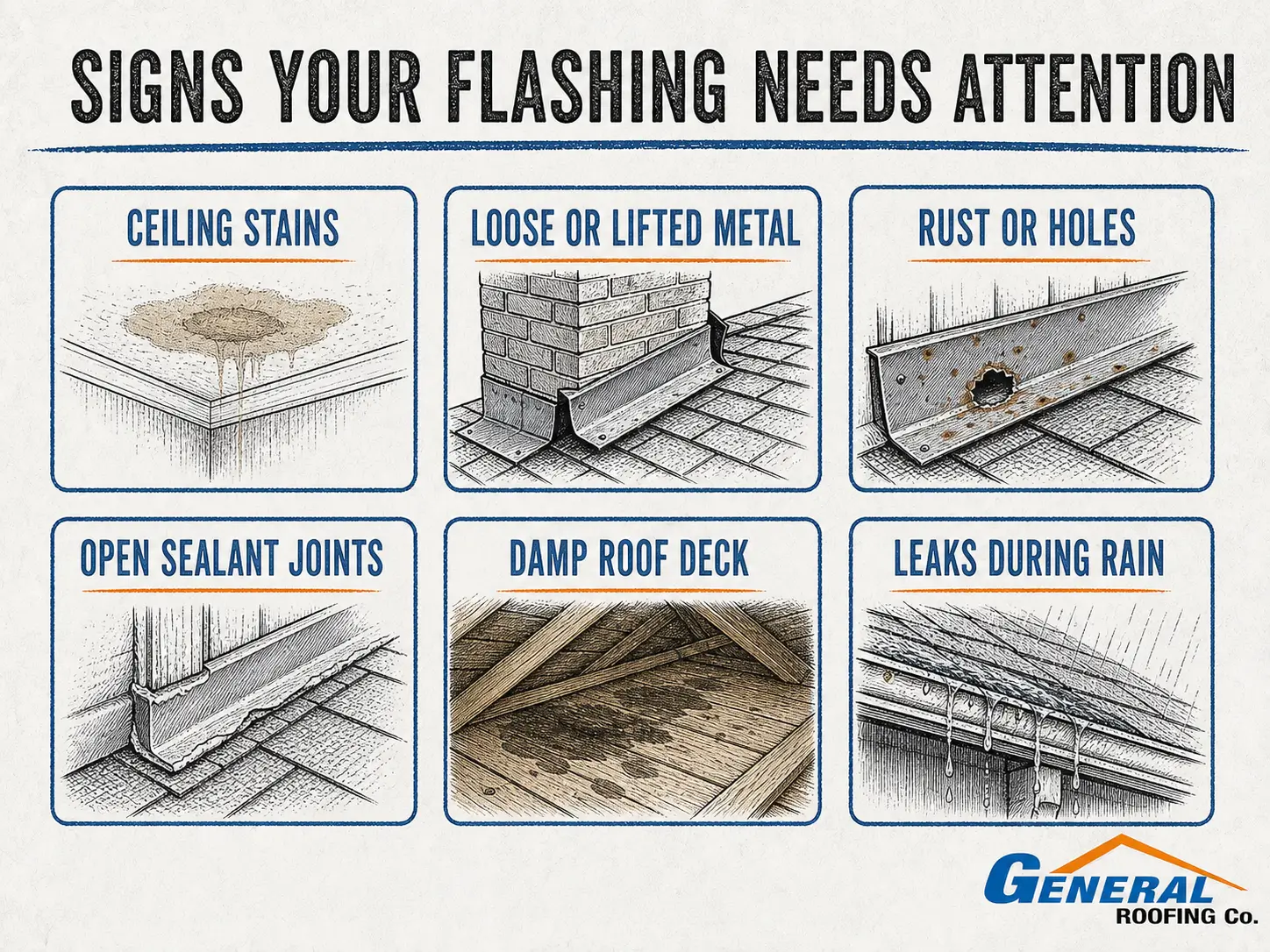
Watch for these clues:
- Water stains near a chimney, skylight, vent, or exterior wall
- Damp insulation or dark marks on the underside of the roof deck
- Peeling paint, bubbling drywall, or a musty smell indoors
- Rust, holes, cracks, or open seams in visible metal flashing
- Flashing that looks bent, lifted, loose, or missing
- Gaps in sealant around penetrations
- Mortar deterioration where chimney counterflashing meets masonry
- Recurring leaks during wind-driven rain
GAF’s roof leak guidance lists damaged flashing around chimneys, skylights, vents, and other penetrations as a common route for moisture. Still, a stain beside a chimney does not prove the flashing is at fault. Cracked masonry, damaged roofing, blocked drainage, or condensation can look similar.
Replacing a piece of metal without tracing the water path can leave the actual opening untouched.
What causes flashing to fail?
Movement and weather exposure
Roofing materials expand and contract as temperatures change. Buildings move slightly too. Over time, fasteners loosen, seams tire, and flashing pulls away from nearby materials. Strong wind and falling debris can also bend exposed pieces.
Corrosion or material damage
Metal flashing can corrode when its coating wears away or moisture stays trapped. Even a small rust hole can become an entry point. Membrane flashing on low-slope roofs can split, blister, or separate at a seam.
A failed sealant joint
Sealant has a useful role, but it is not a substitute for a properly built flashing assembly. A bead of caulk exposed to sun and movement will eventually crack or pull loose. If the detail depends entirely on surface sealant, repeated patching may only buy a little time.
Poor installation
Flashing can fail early when pieces are too short, laps face the wrong direction, fasteners sit in the water path, or the detail does not match the roof manufacturer’s requirements. Reusing worn flashing during reroofing can also create a weak point in an otherwise new system.
Debris and drainage problems
Leaves and dirt can hold water against flashing or force runoff into a seam. This comes up often around valleys, gutters, scuppers, and low-slope roof penetrations. Keeping drainage paths clear is a small maintenance job with real value.
How roof flashing repair is handled
The right repair depends on the roof type, the flashing detail, and the condition of the materials around it.
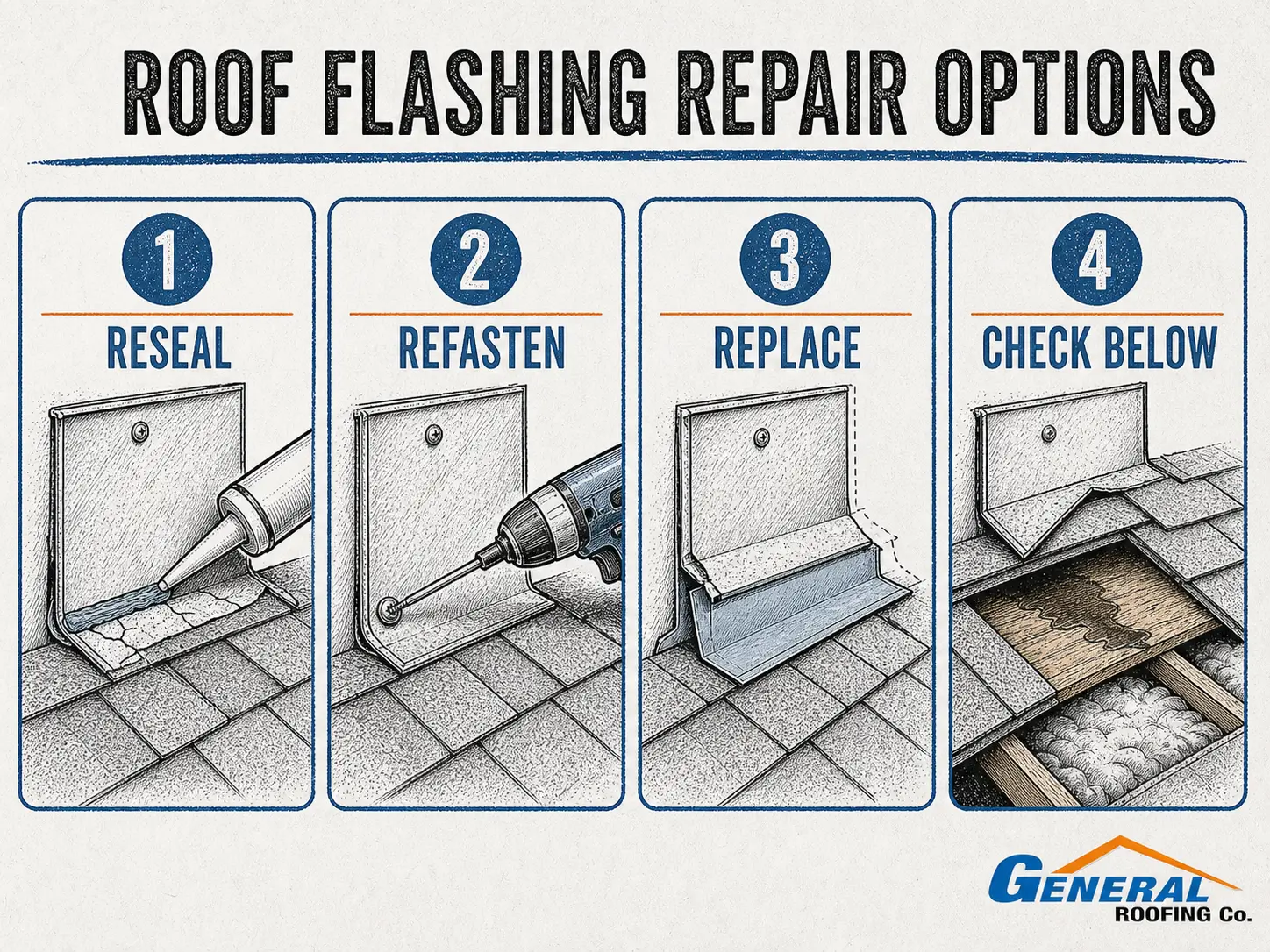
Resealing a sound detail
If the flashing is secure and undamaged, a roofer may remove failed sealant, clean and prepare the joint, and apply a compatible roofing sealant. Compatibility matters. A product that does not bond to the existing metal, membrane, or masonry can fail quickly.
Refastening loose flashing
Loose flashing may be repositioned and secured when the metal is still serviceable and the surrounding roof can accept a proper repair. The roofer should also determine why it moved so the same problem does not return.
Replacing damaged flashing
Cracked, badly corroded, undersized, or incorrectly installed flashing often needs replacement. This can require lifting shingles, opening part of a membrane assembly, cutting a masonry joint, or temporarily removing material around a penetration. The goal is to integrate the new flashing into the roof, not simply place it over the leak.
Repairing nearby water damage
Once water gets beneath the roof covering, wet insulation, deteriorated decking, damaged underlayment, or rotten framing may need attention. The scope can change after the area is opened.
Roof flashing repair cost: what changes the price?
A flat price would be misleading. Replacing a reachable pipe boot is a different job from rebuilding counterflashing around a tall brick chimney or repairing membrane flashing beneath rooftop equipment.
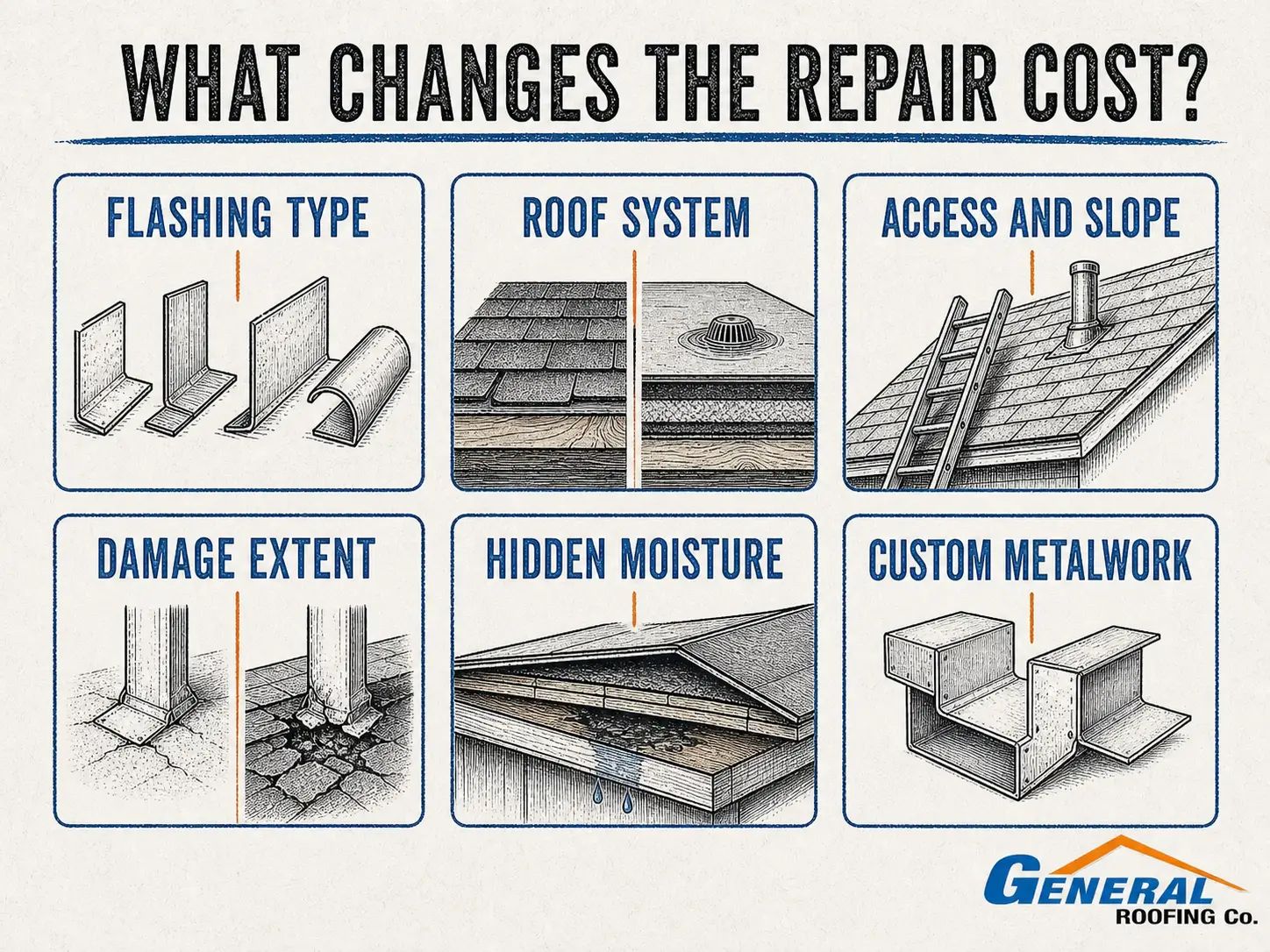
| Cost factor | Why it matters |
|---|---|
| Type of flashing | Pipe boots, valleys, chimneys, walls, edges, and equipment curbs require different materials and labor. |
| Roof system | Asphalt shingles, tile, metal, modified bitumen, TPO, PVC, and other systems need different repair methods. |
| Access and slope | Steep, high, or hard-to-reach areas require more setup and safety measures. |
| Extent of damage | A loose edge may be repairable, while corroded or poorly installed flashing may need full replacement. |
| Materials around the detail | Removing and reinstalling shingles, tile, membrane, siding, or masonry increases the scope. |
| Hidden moisture damage | Wet insulation or damaged decking adds work that may not be visible before the roof is opened. |
| Custom fabrication | Some commercial edges, curbs, parapets, and chimney details require made-to-fit metal. |
For a realistic number, a roofer needs to inspect the detail and surrounding roof. Photos help, but they rarely show how the layers were assembled or where water is traveling. Our roof estimate process starts with the actual roof conditions.
Can flashing be repaired, or should it be replaced?
Repair makes sense when the flashing is sound, the failure is limited, and the surrounding roof still has useful service life. Replacement is usually better when the metal has holes, the detail was built incorrectly, or the same spot keeps leaking.
The whole roof matters too. Installing a complicated new detail beside roofing near the end of its life may not be a good use of money. One failed penetration does not automatically mean the entire roof needs replacement, though. The National Roofing Contractors Association’s homeowner guidance notes that leaks can come from loose flashing or local damage rather than complete roof failure.
If the decision is not obvious, compare the roof’s remaining life, repair history, and moisture damage. Our guide to roof repair versus replacement covers that larger decision.
Why roof flashing repair is usually not a DIY job
More caulk can stop a drip for a while. It can also hide the symptom without fixing the way flashing overlaps the roof covering.
There are safety concerns as well. Walking on a roof creates a fall risk and can damage shingles, tiles, coatings, or membrane seams. NRCA recommends keeping homeowner maintenance to safe visual checks and calling a professional for most roof work.
A roofer can inspect from above and below, trace drainage problems, and choose materials that work with the existing roof. On a commercial building, one penetration may involve base flashing, counterflashing, insulation, membrane, and equipment supports.
How to reduce future flashing problems
You do not need to climb onto the roof. After a major storm, look from the ground for lifted metal, displaced roofing, or debris near drainage points. Check ceilings and accessible attic areas for new stains or damp odors.
Periodic inspections can catch loose seams and deteriorated flashing before water damage spreads. Schedule one after rooftop equipment work too. Tools and foot traffic can puncture a membrane or disturb flashing.
If your building has a low-slope roof, include curbs, parapets, drains, scuppers, and pipe penetrations in the maintenance plan. Our roof repair and maintenance service covers both residential and commercial systems throughout the greater San Francisco Bay Area.
Frequently asked questions
Can you repair flashing without replacing the roof?
Often, yes. A roofer may be able to reseal, secure, or replace a localized flashing detail while preserving the rest of the roof. The answer depends on access and on whether the surrounding roofing can be removed and reinstalled without damage.
Does leaking around a chimney always mean bad flashing?
No. Chimney leaks can also come from cracked mortar, a damaged chimney cap, porous masonry, or nearby roofing. The water path should be diagnosed before repairs begin.
Is roof flashing only used on shingle roofs?
No. Low-slope and commercial roofs use flashing at walls, parapets, curbs, drains, edges, and penetrations. The materials and installation details differ from those used on steep-slope shingle roofs.
Will caulk stop a flashing leak?
It may help when failed sealant is the only problem and the flashing assembly is otherwise sound. It is not a dependable fix for corroded metal, incorrect laps, movement, or a badly built detail.
Final thoughts
Roof flashing repair has to address the water path rather than cover the most obvious gap. Stains near a chimney, skylight, wall, or vent deserve a closer look, especially when they return during wind-driven rain. An inspection can show whether the detail needs a reseal, replacement, or work on the surrounding roof.
If you are seeing signs of a flashing leak in the greater San Francisco Bay Area, our team can inspect the area and explain the practical options without jumping straight to a full replacement.
Recent Comments